Oil prices jump over 1% as Iran tensions persist, supply fears linger

Oil prices jump over 1% as Iran tensions persist, supply fears linger
Sayantan Sarkar
01 Apr 2026, 16:13 PM
  • Brent futures extend record 64% March gain despite conflict de-escalation.
  • Analysts caution infrastructure damage ensures a sustained tight oil supply.
  • Hormuz partially opens, prioritizing allied ships; US output sharply declines.

Oil prices climbed over 1% on Wednesday, with Brent futures building on their record March gains. 

Wednesday’s rise was fueled by continued Middle East instability, which kept markets unsettled, despite indications that the conflict involving the US, Israel, and Iran might be drawing to a close.

The front-month Brent contract for June saw an increase of $1.40, or 1.4%, reaching $105.37 per barrel at the time of writing.

This follows Brent's record-breaking monthly gain of 64% in March, according to LSEG data, which began tracking the commodity in June 1988.

US West Texas Intermediate (WTI) crude futures for May experienced a gain of $1.59, or 1.6%, reaching $102.97 per barrel.

Conflict de-escalation and supply recovery outlook

Crude oil prices saw a partial recovery after Tuesday's sharp decline, which saw Brent June futures drop over $3.

That earlier sell-off followed unconfirmed reports in the media suggesting the Iranian president was prepared to cease hostilities.

US President Donald Trump offered his clearest signal yet of his desire to conclude the month-long war, telling reporters on Tuesday that the US could wrap up the military campaign within two to three weeks and that a formal deal with Iran was not necessary to end the conflict.

However, analysts caution that even if the fighting concludes, the extent of infrastructure damage is likely to sustain tight supply conditions.

Priyanka Sachdeva, a senior market analyst at Phillip Nova, stated that the trajectory of oil prices will be determined by the speed at which supply chains recover after the event.

"Even if it starts to de-escalate, the flow of tankers won't resume right away ... shipping costs and ‌insurance, tanker movement will take time to return to normal," Sachdeva said.

According to a report in the Wall Street Journal, Trump has suggested that the war could be concluded before the reopening of the Strait of Hormuz.

This strait is a crucial shipping route, as it is the channel for 20% of the global trade in oil and liquefied natural gas.

Strait of Hormuz sees some traffic

The Strait of Hormuz may be partially reopening, as indicated by recent developments. 

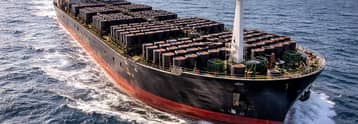
Trump stated that the Iranian leadership has consented to permit 20 cargo ships to pass through the strait. 

Furthermore, an Iranian news agency reported that the Iranian parliament has approved legislation that would allow the country to levy fees for passage.

However, US and Israeli ships, as well as vessels from countries that have imposed sanctions on Iran, are excluded from this.

“Nevertheless, this is likely to account for only a small share of oil shipments,” Thu Lan Nguyen, head of FX and commodity research at Commerzbank AG said. 

Prior to the war, approximately 8 million barrels of oil per day were directed toward Asia, primarily shipped to China and India.

“If it becomes apparent that these countries can once again source oil from the region, this could provide some relief,” Nguyen said. 

The Strait of Hormuz has seen a modest increase in vessel traffic, with over 20 vessel crossings reported since March 28, according to Argus Media data.

However, this volume is still significantly lower than typical pre-conflict levels. 

The majority of these ships have been exiting the Gulf, and Iran seems to be selectively granting passage, prioritizing vessels from nations it views as allies, such as China and Pakistan.

Meanwhile, data from the Energy Information Administration, released on Tuesday, indicated that US crude oil output in January experienced its steepest decline in two years. 

This drop was a result of a severe winter storm that shut down production across significant portions of the country.