
USD/JPY: Here’s why the Japanese yen has slumped to a 40-year low

AI Sentiment: 78/100 Bullish
This score is generated through AI-driven analysis of the article's content.

powered by

Buy USD/JPY (e.g., FX spot or USD/JPY futures). The Fed’s hawkish dot plot keeps US yields rising, while Japan’s yield gap stays wide even after BoJ hikes and heavy intervention. Price action confirms momentum: break above 160, above the 50-day MA, RSI rising—market is set up to push toward 162.
Key Risk: BoJ surprises with a bigger, sustained tightening package (or credible policy shift) that meaningfully narrows the US–Japan yield gap and forces USD/JPY to reverse.
Sell JPY risk using USD/JPY call spreads (buy USD/JPY calls or sell JPY calls) to monetize continued yen weakness and volatility around the next BoJ/intervention headlines. The thesis is that intervention hasn’t stopped the trend, so rallies in USD/JPY likely keep getting bought; options capture that without needing a perfect spot entry.
Key Risk: BoJ intervention escalates into a clear, durable policy regime change that quickly crushes USD/JPY volatility and reverses the trend.
- The USD/JPY pair continued its strong rally this year.
- The Federal Reserve delivered its interest rate decision.
- The Bank of Japan will likely intervene as the yen has slumped to a multi-decade low.
The USD/JPY exchange rate continued its strong rally last week, reaching its highest point since 1986. It peaked at 161.81, up by 15% from its lowest level in May last year, putting investors on edge as they wait for the next actions by the Bank of Japan (BoJ).
USD/JPY jumps after the hawkish Fed
The USD/JPY pair soared last week after the Federal Reserve delivered a highly hawkish interest rate decision in its response to the elevated consumer and producer inflation in the country.
In Kevin Warsh’s first meeting, officials decided to leave rates unchanged between 3.50% and 3.75%, in line with what analysts were expecting. The main change was the dot plot, which showed that nine officials believe that the bank will hike interest rates later this year.
Analysts are now predicting that the Fed will hike rates as soon as in the September meeting. Officials believe that inflation remains at an elevated level, with the recent data showing that the headline consumer and producer inflation rose to 4.2% and 6% in May this year. It has remained above the 2% target since 2021.
BoJ actions have not salvaged the yen
The Japanese yen has continued falling in the past few months despite the ongoing interventions by the BoJ. In April, the bank intervened by as much as $35 billion. It has spent over $70 billion defending the currency in the past few months.
At the same time, the bank made headlines by hiking interest rates by 0.25% to 1%, its highest level in over 30 years. It was one of the few central banks that has hiked interest rates this month. Still, despite this, the gap between the US and Japan yields remains at an elevated level.
In theory, interest rates should boost a currency by making it more attractive to investors. In Japan’s case, this should lead to more demand from foreigners, who, for the first time are generating yield in the country.
The currency has weakened as its demand for its safe-haven role waned and as the crisis in the Middle East continued. This crisis pushed energy prices to the highest level in years. Recently, however, prices have retreated after the US announced a deal with Iran.
Therefore, all eyes are on the BoJ, which may launch more intervention measures later this month.
"The yen is going to be under additional pressure to depreciate, in which case then I think the authorities are going to have to step in and intervene once again to support that currency."
USD to JPY technical analysis
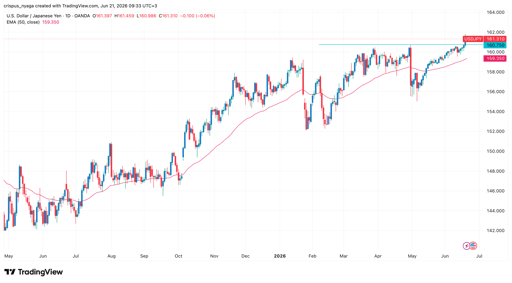
USDJPY chart | Source: TradingView
The daily chart shows that the USD to JPY exchange rate has been in a strong uptrend in the past few months. It crossed the important resistance level of 160, the highest swing in April this year.
The pair has jumped above the 50-day moving average, while the Relative Strength Index (RSI) has continued rising. Therefore, the pair will continue rising as bulls target the key resistance at 162.

Pinterest stock crashes below key price: Is it a bargain or a value trap?

Cloudflare stock analysis: bullish outlook, but key valuation risk remains

AeroVironment stock forecast as its revenue and backlog jumps
AeroVironment stock forecast as its revenue and backlog jumps

US 10-year Treasury yield jumps as Trump floats $5,000 dividend checks
No results found
Loading articles...
Failed to load articles. Please try again.