
Micron, SK Hynix, other memory stocks fall as TSMC outlook sparks chip selloff
AI Sentiment: 18/100 Bearish
This score is generated through AI-driven analysis of the article's content.

powered by

Buy MU. TSMC’s capex shock is hitting memory broadly, but Micron’s fundamentals are strong (revenue up sharply, margins at a 3-year high). The CXMT threat is real for commodity DRAM, yet export limits keep CXMT from competing effectively in the most advanced AI-server memory. That means the selloff is likely over-discounting near-term pricing risk versus Micron’s ability to defend higher-end mix and ride demand from AI-enabled devices.
Key Risk: A real DRAM price collapse from a supply glut that overwhelms Micron’s mix advantage (not just standard DRAM pressure).
Sell SK Hynix. The article flags a sharper drop (~8%) and the market is treating memory as a single trade on capex/AI-spend caution. Hynix is more exposed to the DRAM cycle and is less insulated by the kind of specific long-term automotive supply anchors Micron highlighted. If AI infrastructure spending slows even modestly, memory pricing and utilization can fall quickly, and Hynix’s earnings sensitivity makes it the cleaner downside bet.
Key Risk: AI infrastructure spending re-accelerates fast enough to prevent a memory pricing downturn (utilization stays high).
- Memory chip and storage stocks fell on TSMC's higher capex guidance.
- Micron also faces concerns over competition from China's CXMT.
- Experts say rally in semiconductor stocks apears to be cooling.
Memory chip and storage stocks fell sharply on Thursday as investors extended a broad semiconductor selloff following Taiwan Semiconductor Manufacturing Co.'s quarterly results, despite the world's largest contract chipmaker posting record earnings.
TSMC reported its fifth consecutive quarter of record profit, beating analyst expectations.
However, investors focused instead on the company's higher-than-expected capital spending plans, a slight revenue miss, and its growing investment commitments in the United States.
US-listed shares of TSMC fell about 1.7% in morning trading after the company raised its annual capital expenditure guidance to between $60 billion and $64 billion, up from its previous forecast of $52 billion to $56 billion.
The company also highlighted its planned $100 billion investment to expand chip manufacturing in Arizona, adding another point of discussion for investors assessing future spending requirements across the semiconductor industry.
Memory stocks lead declines
The cautious reaction to TSMC's results spilled over into memory chipmakers and storage companies.
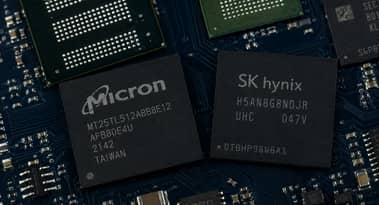
Micron Technology MU dropped more than 4%, while SanDisk declined around 8%.
Western Digital fell 5%, and Seagate Technology lost more than 5% each by mid-morning trading after steeper losses at the market open.
US-listed shares of South Korean memory giant SK Hynix slid about 8%.
The weakness was not confined to memory companies.
The Philadelphia Semiconductor Index fell more than 2.6%, while AI chipmakers Nvidia, AMD, and Broadcom also declined between 1.7% and 3%.
Investors question pace of AI spending
The pullback reflects growing caution around the pace of investment in artificial intelligence infrastructure rather than doubts about AI's long-term prospects.
Shiraz Ahmed, founder and chief executive of Sartorial Wealth Inc., told Reuters that the recent rally in semiconductor stocks appears to be cooling.
According to Ahmed, AI demand remains intact, but adoption has yet to become widespread enough to justify the pace of capital expenditure currently taking place across industries ranging from semiconductors to energy.
The combination of rising investment costs and elevated valuations has prompted investors to reassess expectations for near-term earnings growth across the sector.
CXMT adds another challenge for Micron
Micron is also facing fresh concerns over potential competition from Chinese memory manufacturer ChangXin Memory Technologies (CXMT).
The company is reportedly preparing to raise approximately $8.5 billion through a listing on Shanghai's STAR Market, almost double its initial fundraising target, implying a valuation of roughly $85.5 billion.
According to Trefis, the proceeds could provide CXMT with significant resources to expand production of commodity DRAM chips, one of Micron's core businesses.
"In the notoriously cyclical memory-chip business, a well-funded new entrant is the oldest ghost in the machine, signaling future supply gluts and potential price wars," Trefis said.
The research firm noted that Micron's financial performance remains strong, with revenue over the past 12 months increasing 86% year over year and net margins reaching a three-year high of 42%.
"By the numbers, Micron is having a fantastic run," Trefis said, however, it warned that the memory industry has historically been characterised by cycles of capacity expansion followed by oversupply and falling prices.
Still, analysts noted that CXMT remains constrained by US export restrictions that limit access to advanced chipmaking equipment.
Those sanctions prevent the company from producing the most advanced high-bandwidth memory chips used in AI servers, reducing the immediate competitive threat to Micron's higher-end products.
However, Trefis said additional capacity could still pressure pricing in the standard DRAM market, an important contributor to Micron's recent margin expansion.
Automotive partnerships offer long-term support
Separately, Micron announced long-term supply agreements with automotive partners, including Qualcomm and Harman, to provide memory and storage components for AI-enabled vehicles.
The agreements are aimed at securing supply as automakers increasingly adopt artificial intelligence features, adding another long-term growth avenue for the company even as investors remain cautious about near-term industry dynamics.

HPE stock declines 8% on Monday: here's why

Netflix stock rises as Evercore raises price target to $110

Why Wedbush and BofA issued bullish notes on Roblox stock today

AI panic triggers a rally in CrowdStrike stock

Nvidia stock: Should investors buy the dip amid AI slowdown fears?
No results found
Loading articles...
Failed to load articles. Please try again.