
Fed holds rates in 9-3 vote; Warsh says decision not a pause, but a review
AI Sentiment: 35/100 Bearish
This score is generated through AI-driven analysis of the article's content.

powered by

Fed held rates 9-3 and Warsh explicitly avoided forward guidance, signaling “data-dependent” rather than a new tightening path. That keeps the market’s base case intact: no immediate rate shock, and tighter financial conditions can come from markets, not the Fed. Buy SPY on weakness after the close drop as the “not getting in the way” message supports a rebound.
Key Risk: Energy-driven inflation re-accelerates and forces the Fed to hike before September, turning “patience” into “tighten.”
Warsh’s “review, not pause” plus the hawkish 3 dissents keeps the probability of a near-term hike alive, but the Fed also refuses to signal. That combination typically lifts front-end yields on uncertainty and keeps the curve from rallying. Sell TY (2Y exposure) to benefit from higher short-rate expectations.
Key Risk: A sharp growth slowdown or disinflation trend convinces the Fed to cut expectations quickly, driving 2Y yields down.
- Fed keeps rates unchanged in a 9-3 vote, with three policymakers calling for a quarter-point hike.
- Kevin Warsh says the central bank "will not waver" in returning inflation to its 2% target.
- US stocks reverse early gains as investors weigh a more hawkish Fed and persistent inflation risks.
The US Federal Reserve left interest rates unchanged on Wednesday in one of its most closely watched policy decisions in years, even as three policymakers broke ranks to call for another rate increase, underscoring growing divisions inside the central bank over the path of inflation.
The Federal Open Market Committee voted 9-3 to keep the benchmark federal funds rate in a range of 3.5% to 3.75%, where it has remained since January.
Cleveland Fed President Beth Hammack, Minneapolis Fed President Neel Kashkari and Dallas Fed President Lorie Logan dissented in favour of a quarter-point increase.
The decision marked the second consecutive meeting in which the same trio voted against the committee majority, highlighting a widening divide between officials who favour patience and those who believe inflation risks still warrant tighter monetary policy.
Financial markets initially welcomed the decision.
The S&P 500 briefly turned positive while the Nasdaq Composite recovered earlier losses after the Fed statement.
Treasury yields also pared gains and the US dollar weakened against a basket of major currencies.
However, optimism faded later in the session.
The S&P 500 closed down about 1.5%, the Nasdaq Composite had slipped roughly 1.7%, while the Dow Jones Industrial Average fell around 2.19% as investors digested Fed Chair Kevin Warsh's comments.
Warsh says remain committed to inflation fight but would avoid signalling for future policy moves
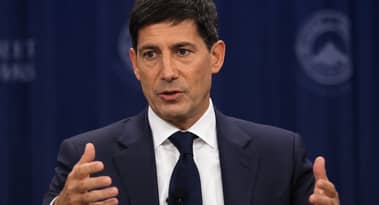
Speaking after the policy announcement, Warsh emphasised that the central bank remains fully committed to returning inflation to its long-standing 2% target, while making clear that officials would avoid signalling future policy moves.
"We've begun a new chapter and we understand that the five-plus years of inflation above target cannot be cured in nine weeks, or by a single month of modest price decreases. This Fed will not waver on getting inflation back to the 2% target.
While acknowledging market interest in forward guidance, Warsh stressed that policymakers preferred to observe incoming data and market reactions before committing to a specific policy path.
"I understand the desire for rolling forecasts and commentary from this committee, but for our part, we need to observe market reaction to developments direct and unfiltered," he said.
"I want to stress, of course, that decisions by this committee matter a great deal, and where necessary and appropriate, we will not hesitate to act."
Key questions dominating policy discussions
Warsh said policymakers spent much of the two-day meeting debating four broad questions shaping the current economic environment.
"First, we talked a lot about the implications of the past five years of high inflation on the current policy conjuncture. To echo an old phrase, has the past really passed?" he said.
"Second, my colleagues and I considered the economic shocks of recent years: strained supply chains arising from the pandemic, military conflicts, energy supply disruptions, substantial increases in tariff rates. And, yes, the surge in AI-related investment. These differ in their sources. Do they also differ in their effects on output and employment?"
Warsh reiterated that understanding how these shocks feed through into broader inflation remains one of the Fed's biggest challenges.
Warsh said he considered July's rate decision "a rigorous review of the economic situation."
"I wouldn't characterize what we did as anything like a pause. I would characterize what we did as a rigorous review of the economic situation. I would characterize what we did as a review of the big, hard questions."
Inflation remains above target
The Fed's post-meeting statement changed little from its June communication, repeating that inflation "remains elevated relative to the Committee's 2% goal."
The central bank also maintained that economic activity continues to expand at a solid pace, while labour market conditions remain resilient.
Recent inflation data have offered some encouragement.
Consumer prices unexpectedly declined 0.4% in June as petrol prices fell, marking the first monthly decline in six years.
However, that relief has proved short-lived.
Renewed geopolitical tensions in the Middle East have driven energy prices higher again in recent weeks, reviving concerns that inflation could remain stubbornly above target.
"We take these shocks seriously. There have been a series of them that have been hitting this economy. We're not looking through them and saying, 'Oh, they don't matter.' But we're trying to understand ... to what extent are these shocks broadening in their effects, broadening in their impact on prices that are quite far removed from it?"
He added that such developments "make this job and this policy conjuncture a little tougher."
Analysts see increasingly hawkish Fed
Economists said the unusually high number of dissents reflects growing concern within the Fed that inflation risks remain elevated.
"The high number of dissents underscore that policymakers are increasingly more hawkish," said Nationwide Chief Economist Kathy Bostjancic.
However, she argued that keeping policy unchanged remains the appropriate course.
"The Fed can and should remain on hold this year since higher interest rates will not solve the energy supply shock from the Middle East nor slow AI capex that is driving up prices."
Many policymakers still believe inflation could ease later this year, giving them additional time to assess incoming economic data before deciding whether further tightening is necessary.
The next policy meeting in September will provide officials with two additional months of inflation and labour market data, potentially offering greater clarity on whether price pressures are easing sustainably.
Warsh said the Fed would continue monitoring how markets respond before its next meeting.
"Markets are reacting in real time. In the period ahead, we've got important decisions to make about the policy rate. Markets in the intervening period, I think, have quite a bit of decisions to make."
"We'll be continuing to watch that market information, see how it responds to incoming events. And that can help inform our decision making when we meet in seven or eight weeks."
Markets see patience, not panic
Despite the market volatility following the announcement, some investors argued that the Fed's decision reinforces the broader investment outlook.
Jim Caron, portfolio solutions chief investment officer at Morgan Stanley Investment Management, said investors should avoid overreacting to the Fed's latest decision.
According to Caron, the Fed is effectively allowing tighter financial conditions to emerge through market movements rather than imposing them directly through higher interest rates.
"However, the long-term trend I still think for the equity markets are positive," he said during an appearance on CNBC's "Power Lunch."
"What that tells me... is we can buy into some of these dips because the Fed is telling you we're not getting in the way of this. We're likely not going to hike interest rates and kill and crush the markets."
UBS sees two Fed hikes in 2026: what should investors buy
Fed Chair Kevin Warsh warns inflation may require more rate hikes

Column: The Fed’s inflation problem is getting harder to ignore
Fed minutes show several officials favored July rate hike as inflation persists
RBI keeps repo rate unchanged at 5.25% as volatile oil prices cloud inflation outlook
No results found
Loading articles...
Failed to load articles. Please try again.