
Why Trump turned on Chevron and Exxon despite backing Big Oil
AI Sentiment: 35/100 Bearish
This score is generated through AI-driven analysis of the article's content.

powered by

Buy Phillips 66 (PSX) and selectively add to US refiners via the sector ETF (XLF). If the administration leans on majors to cut retail prices, refiners with strong operational flexibility and less direct political targeting can gain share as weaker players pass through less and lose volume. Also, tight inventories and limited spare capacity keep refining economics supported, so the political push is more likely to shift pricing power than destroy it.
Key Risk: A sustained gasoline price decline driven by demand destruction (not policy), which crushes refining margins and utilization.
Sell ExxonMobil (XOM) and Chevron (CVX). Trump’s public “too much money” rebuke raises the odds of forced retail-price pressure, political heat, and potential regulatory/contract scrutiny that can compress refining and marketing margins even if crude stays firm. The market is likely to keep rewarding earnings, but this is a headline-driven risk to near-term cash flow and multiple expansion.
Key Risk: A rapid drop in crude/gas spreads that hurts earnings more than politics does—crude falls enough that the margin squeeze overwhelms the political overhang.
- Trump accuses Exxon and Chevron of profiting too much from elevated fuel prices.
- The remarks come as gasoline prices remain high ahead of midterm elections.
- Gasoline price has increased to the current $4.10 per gallon from less than $3.
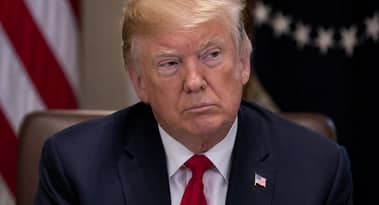
US President Donald Trump on Monday accused ExxonMobil and Chevron of making excessive profits from elevated fuel prices and urged the country's largest oil companies to lower gasoline prices for American consumers, marking a rare public rebuke of an industry that has largely backed his energy agenda.
“Based on a shortage, they’re making too much money,” Trump told reporters in the Oval Office Monday. "I don't like it."
“Chevron, too much money. Exxon Mobil, too much, too much money,” Trump said. “They ought to give some of that back to the public, and they better cut the retail price, the consumer price."
The remarks represent a notable shift in tone from Trump, who has consistently promoted expanded domestic oil production and encouraged more drilling since returning to office.
“I don’t like it, and I should be the last one to say because I’m a big free enterprise guy — nobody bigger," he said.
They come as the White House faces mounting political pressure over persistently high gasoline prices ahead of the November midterm elections, and at a time when his fellow Republicans are seeking to retain control of Congress.
Oil companies benefit from higher crude prices
The pressure comes after Exxon and Chevron reported bumper quarterly earnings, supported by higher crude oil prices and stronger refining margins.
The ongoing conflict involving Iran has disrupted global energy supplies, pushing up oil prices and allowing major producers and refiners to benefit from elevated margins.
Chevron reported its highest quarterly profit in at least six years in the second quarter as adjusted earnings of USD 12 billion (approx. $17.5 billion), or $6.06 per share beat the average analyst estimate of $5.56 per share, according to data compiled by LSEG.
While the energy sector has welcomed Trump's pro-production policies, the administration is increasingly facing political pressure over persistently high gasoline prices, with the midterm elections drawing closer.
The average US retail gasoline price has remained around $4.10 per gallon over the past week, compared with less than $3 before the United States and Israel launched attacks against Iran on February 28.
Trump's criticism also comes as he faces growing scrutiny over the economic impact of the conflict, particularly its effect on household fuel costs.
Conflicting statements continue to keep oil prices volatile
Trump on Sunday abruptly called off what he described as the "biggest attacks since World War II" against Iran in favour of renewed negotiations, the latest in a series of rapid shifts in US policy toward the conflict.
However, crude prices eased only slightly following the announcement, while gasoline prices remained largely unchanged.
Oil prices edged higher early Tuesday as optimism over a diplomatic resolution to the conflict began to fade, prompting traders to reassess the outlook for global energy markets.
West Texas Intermediate crude futures rose 1.29% to $81.38 a barrel as of 1:35 a.m. ET, while Brent crude, the international benchmark, gained 1.73% to $85.23 a barrel.
The increase came as Trump on Monday said that talks were ongoing at the request of Iran, Saudi Arabia, the UAE, Qatar, and others.
He said it was a "last chance for them (Iran) to sign a good document".
However, Tehran continued to deny that any direct negotiations with the US were taking place, or there were plans for them to take place in the future.
Analysts warn that Trump's ability to influence markets through public statements may be weakening as supply conditions tighten and the election approaches.
Limited tools remain to control prices
The administration has relied on several measures to cushion consumers from rising fuel costs.
Reduced Chinese oil imports, the rerouting of roughly 7 million barrels per day of Saudi crude through the Red Sea, and releases from the Strategic Petroleum Reserve have all helped limit further increases in gasoline prices.
Last week, the administration released nearly 3 million barrels of oil from the Strategic Petroleum Reserve, bringing stockpiles to their lowest level since February 1983, according to Department of Energy data.
Roughly half of the 172 million barrels the department said would be made available to the market has now been withdrawn from storage facilities along the Gulf Coast.
Still, industry observers caution that those measures offer only temporary relief.
Global crude inventories remain tight, the prolonged conflict continues to threaten energy flows, and refiners are operating with limited spare capacity, leaving the administration with fewer options to bring down prices.
High fuel costs remain a political risk
Trump has made boosting domestic energy production one of the defining pillars of his economic agenda, but his latest comments illustrate the balancing act between encouraging producers to expand output while also demanding that consumers benefit from lower prices.
That tension is likely to intensify as the election season approaches.
With the summer driving season nearing its end, motorists are also expecting gasoline prices to decline.
According to Patrick de Haan, head of petroleum analysis at pricing service GasBuddy, if the national average price of gasoline remains above $4 per gallon by Saturday, it would mark the latest point in the calendar year that prices have stayed at that level, setting a new record, he said in a Politico report.
For the White House, that prospect risks adding further pressure as voters continue to rank the cost of living among their biggest concerns heading into the November midterm elections.

Crypto, AI and betting firms drive record US midterm spending

TLT ETF slumps as US debt nears $40 trillion, 30-year yield jumps

Forever war fears mount as experts urge Trump to 'admit it was a mistake' on Iran

Here’s why Donald Trump paused his attacks against Iran

FTSE closes lower as Andy Burnham unveils cabinet
No results found
Loading articles...
Failed to load articles. Please try again.