
Archer Aviation stock jumps 15% on acquisition of Boeing's 3 subsidiaries
AI Sentiment: 78/100 Bullish
This score is generated through AI-driven analysis of the article's content.

powered by

Buy Archer Aviation (ACHR). The deal adds Wisk autonomy plus SkyGrid airspace management and Insitu drones, turning ACHR from a single-product eVTOL story into an “end-to-end physical AI” platform. Boeing’s ~20% stake and board seat validate the tech and reduce financing risk. The stock already jumped, but the fundamental rerating is the real catalyst: autonomy + airspace + defense revenue optionality.
Key Risk: Regulators delay or reject pilotless/autonomous approvals, making Wisk/SkyGrid tech commercially unusable for years.
Sell Boeing (BA). Boeing is simplifying and this transaction locks in exposure to a high-risk, pre-commercial eVTOL/autonomy bet via its Archer stake and share-purchase option. Even if Boeing gets strategic access, the market will keep pricing BA on execution of core aircraft/defense, while Archer upside is uncertain and dilutive to focus.
Key Risk: Archer’s autonomy/delivery timeline slips badly, turning Boeing’s stake into a long-duration overhang and forcing further capital/attention.
- Archer to acquire Wisk Aero, Insitu and SkyGrid to diversify beyond air taxis.
- Boeing gets an almost 20% stake in the combined company, among other benefits.
- The deal is one of the biggest consolidations in the eVTOL industry.
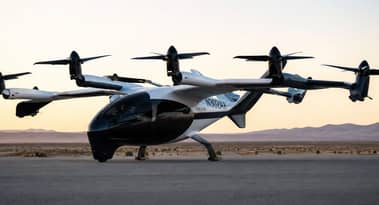
Archer Aviation ACHR shares surged nearly 15% on Monday after the announcement that the electric air taxi maker would acquire Boeing’s autonomous aviation unit Wisk Aero, along with drone business Insitu and airspace technology provider SkyGrid.
The all-stock transaction will leave Boeing with a nearly 20% stake in the combined company while also giving the aerospace giant continued access to Wisk’s autonomous flight technology through a long-term collaboration agreement.
The deal marks one of the biggest consolidations in the emerging electric vertical takeoff and landing (eVTOL) industry, as companies race to commercialize urban air mobility and autonomous aviation technologies.
Archer expands beyond air taxis
The acquisition significantly broadens Archer’s business beyond commercial electric air taxis.
Last month, it also unveiled a new autonomous aircraft platform developed jointly with defense technology company Anduril Industries.
Besides Wisk’s autonomous flight platform, Archer will add Insitu’s military-grade unmanned aircraft systems and SkyGrid’s airspace management capabilities, helping the company strengthen both its commercial aviation and defense businesses.
The companies said the combination would create an integrated platform spanning autonomous flight, artificial intelligence, drones and air traffic management.
"Wisk, SkyGrid and Insitu have pioneered and incubated core autonomous flight technologies for the future that, in combination with Archer’s air taxi, UAS and AI technologies, will bring new and innovative solutions to the market," the companies said in a joint statement.
According to the statement, the three businesses together bring nearly two million combined flight hours, creating what Archer described as a strong foundation for its ZEE artificial intelligence platform.
"These companies, with nearly two million combined flight hours, are expected to bring a deep autonomy foundation to Archer’s ZEE artificial intelligence platform. This positions Archer to deliver an end-to-end physical AI platform across commercial aerospace, defense and air traffic management that can lead the next generation of aviation," the statement added.
Archer founder and chief executive Adam Goldstein described the acquisition as transformational.
"This is a watershed moment for Archer and the future of physical AI in aerospace and defense. This is the next big step forward in becoming a diversified platform, rapidly growing our revenue base and bringing scale to our business," Goldstein said.
Boeing sharpens focus on core operations
For Boeing, the transaction fits into chief executive Kelly Ortberg’s strategy of simplifying the company and concentrating resources on its commercial aircraft, defense and space businesses.
Under the agreement, Boeing will not only receive nearly one-fifth ownership in Archer but will also gain the right to purchase up to USD 200 million (approx. $291.5 million) worth of Archer shares over the coming years at predetermined prices.
The aerospace manufacturer will also secure a seat on Archer’s board while retaining access to Wisk’s autonomous flight technology for future commercial and military aircraft through a technology-sharing agreement.
Brian Yutko, Boeing vice president and former chief executive of Wisk, said the partnership would benefit both companies.
"This transaction is a win-win for Boeing and Archer," Yutko said.
"Having worked with the incredible teams in these companies firsthand, it’s clear this transaction will create an industry leader in the advanced aviation market."
Since assuming the role of chief executive in August 2024, Ortberg has repeatedly emphasized the need to simplify Boeing’s structure after years of operational and financial challenges.
Just months after taking charge, he outlined the company’s restructuring priorities.
"We need to reset priorities and create a leaner, more focused organization," Ortberg said in October 2024.
Former rivals become partners
The agreement also marks a dramatic turnaround in the relationship between Archer and Wisk.
The two companies were locked in a high-profile legal dispute in which Wisk accused Archer of stealing proprietary information.
That conflict ended in 2023 after both firms reached a settlement, with Boeing making an undisclosed investment in Archer as part of the agreement.
Wisk itself was established in 2019 through a partnership between Boeing and Kitty Hawk, the aviation startup backed by Google co-founder Larry Page.
Since then, Wisk has focused on developing autonomous eVTOL aircraft, while Archer has concentrated on piloted electric air taxis.
Archer is targeting commercial eVTOL operations by late this year or early next year, making autonomous flight capabilities increasingly valuable as regulators gradually move toward approving pilotless aircraft.
The addition of Wisk, SkyGrid and Insitu gives Archer technologies covering aircraft autonomy, drone operations and airspace management, potentially positioning the company as a broader advanced aviation platform rather than solely an urban air taxi developer.
For Boeing, the transaction allows it to reduce exposure to non-core businesses while maintaining a strategic interest in autonomous aviation through its investment in Archer and continued access to Wisk’s technology.
The deal reflects a growing convergence between commercial aviation, defense systems, artificial intelligence and autonomous flight, areas that many industry executives expect to define the next phase of aerospace innovation.

Kospi Index at a crossroads as Samsung, SK Hynix leverage bets reverse

How Meta’s $18B teen safety settlement could reshape social media regulation
Nvidia is using its balance sheet to fuel the AI boom. Is it a double-edged sword?

Dow holds weekly gain as Warsh inflation warning lifts rate hike bets

Workday stock jumps 5% after earnings beat, but analysts split on AI growth outlook
No results found
Loading articles...
Failed to load articles. Please try again.