
S&P 500 Index in focus as bond vigilantes push US yields to a two decade high

AI Sentiment: 22/100 Bearish
This score is generated through AI-driven analysis of the article's content.

powered by

Buy TLT. The setup is “bond vigilantes pushing yields higher,” but the second-order path is that higher yields + weaker growth + housing hit forces investors to seek duration as the market starts pricing a slower economy and eventual easing. That creates a tradable bounce in long Treasuries even while the initial move in yields is up.
Key Risk: Inflation re-accelerates or fiscal concerns worsen so yields keep grinding higher with no duration bid.
Sell SPY. The article flags bond-yield volatility at a 20-year high, which typically pressures equity multiples and growth stocks. SPX is already breaking down toward key support (7,620 then 7,500) with RSI rolling over and MACD weakening—momentum favors more downside before any rebound.
Key Risk: Yields suddenly fall fast (or the Fed regains control), triggering a sharp risk-on rally that lifts SPX back above the recent highs.
- The S&P 500 Index retreated amid jitters in the bond market.
- The 30-year bond yields have started rising this week.
- Some of the top gainers this week are SanDisk and Marvell.
The S&P 500 Index has wavered this week as investors started focusing on the bond market, which has become highly volatile. After peaking at 7,820 last week, the SPX has dropped to 7,640. It remains 11% higher than where it started the year. This article highlights what to expect as US government bond yields jump.
US bond yields are soaring
The S&P 500, Dow Jones, and Nasdaq 100 indices have become highly volatile this week as investors focus on the bond market. For one, data shows that the US public debt jumped to over $40 trillion, and this trend will likely continue as the US deficit widens.
This soaring debt has coincided with the ongoing slowing of economic growth. Recent data showed that the US economy lost over 23,000 jobs last month, while the unemployment rate improved to 4.2% as more people stopped looking for work. Retail sales tumbled during the month.
Worse, the US-Iran war has moved into a stalemate, with the two sides heightening their rhetoric. Trump is focusing on economic warfare, while Iran’s plans are for escalating the military situation. As a result, there is a likelihood that the next move will be attacks against US bases in the region or even Israel.
Scott Bessent, the Treasury Secretary, moved to intervene in the bond market by announcing more buybacks. This is a situation where the government buys its own long-term debt, while issuing more of it.
There is a risk that bond vigilantes will push US short-term and long-term bond yields higher over time. This, in turn, will make the Federal Reserve a less effective player in the US economy.
At the same time, the rising bond yields may hit the housing sector as mortgage rates jump. Data shows that a 30-year rate is averaging between 6.65% and 6.75%.
Key SPX Index movers this week
Some notable players in the S&P 500 Index have jumped this week. Moderna stock rose by 108% in the last week, helped by a major milestone in skin cancer disease. Despite the weekly gain, the index pulled back by 24% on Thursday as valuation concerns remained.
SanDisk stock jumped by 20% this week as investors rotated back to memory companies. Meanwhile, Coinbase stock surged as investors rotated to crypto companies as Bitcoin and altcoins rebounded.
Marvell Technology stock jumped after reaching a major deal with Google, while energy companies like Targa and Devon Energy jumped as crude oil prices soared.
On the other hand, some of the top laggards this week were Steel Dynamics, Coherent, CrowdStrike, Hewlett Packard Enterprise, Jabil, and Dell Technologies.
S&P 500 Index technical analysis
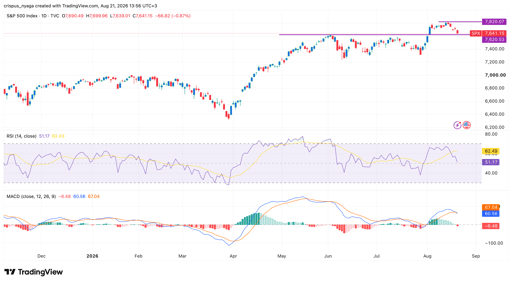
SPX Index chart | Source: TradingView
The daily chart shows that the SPX Index has pulled back in the past few days, moving from a high of 7,820 last week to the current 7,641. It is about to retest the important support level of 7,620, its highest swing on June 2nd.
The Relative Strength Index (RSI) has dropped and is about to move below the neutral level of 50 and is pointing downwards. Also, the two lines of the MACD indicators have pulled back. Therefore, the index will likely continue falling in the near term, potentially to the key support level of 7,500. It will then rebound and retest the all-time high.

Dow futures surge 180 points: 5 things to know before Wall Street opens

Why is Samsung planning a record $80B payout after SK Hynix’s giant buyback?

Should you buy Walmart stock after its 9% post-earnings drop?

'Just don't use leverage': David Morrison warns AI investors on 'Zero Sum'

FTSE 100 powers ahead as mining giants surge while Europe struggles to keep up
No results found
Loading articles...
Failed to load articles. Please try again.