
Moonshot AI discusses Kimi K3 hosting deals with Microsoft, Amazon, Google: report
AI Sentiment: 72/100 Bullish
This score is generated through AI-driven analysis of the article's content.

powered by

Buy: Microsoft (MSFT) and Amazon (AMZN) cloud exposure to Chinese open-weight AI distribution. If Kimi K3 gets hosted on Azure/AWS, it drives incremental inference demand (usage-based tokens) and strengthens their “model marketplace” positioning with enterprise buyers seeking lower-cost alternatives. The key is revenue-sharing: it signals real commercial traction, not just pilots.
Key Risk: US export/trade restrictions or blacklisting that blocks Moonshot models from being hosted or sold in enterprise channels.
Sell: Moonshot AI-linked upside via Alibaba (BABA) as a proxy. Alibaba is also pushing open-source AI distribution, but this news highlights regulatory and audit friction (token tracking, data access) plus political risk around Chinese AI. If Moonshot faces delays/denials, the market will re-rate the whole “Chinese model monetization” theme lower.
Key Risk: A regulatory action (blacklist, chip access limits, or enforcement) that freezes revenue-sharing talks and makes enterprise adoption impossible.
- Moonshot seeks up to 30% of Kimi K3 revenue from major US cloud platforms.
- Deal could give Moonshot access to a much larger pool of enterprise customers.
- Chinese AI models see growing appeal in international markets.
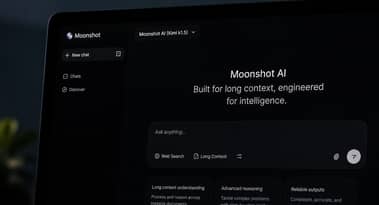
China's Moonshot AI is negotiating revenue-sharing agreements with Microsoft, Amazon and Alphabet's Google that would allow the US cloud giants to host its Kimi K3 artificial intelligence model, Reuters reported, citing three people familiar with the talks.
The discussions could result in the first major revenue-sharing arrangement between a Chinese AI company and a leading US cloud provider, potentially giving Moonshot access to a much larger pool of enterprise customers.
Moonshot is seeking as much as a 30% share of revenue generated from Kimi K3-related services hosted on Microsoft's Azure, Amazon Web Services and Google Cloud, according to sources who spoke on condition of anonymity because the discussions are private.
The proposed terms would be consistent with arrangements the startup has outlined for major customers using its open-weight model.
The talks remain at an early stage and may not ultimately result in agreements, the sources said.
Moonshot did not respond to Reuters' request for comment, while Microsoft, Google and AWS declined to comment.
Deals come amid US-China AI tensions
The negotiations highlight the growing appeal of Chinese AI models in international markets, particularly as developers look for lower-cost alternatives to leading Western systems.
They also underscore the complicated relationship between Chinese AI developers and US technology companies.
Washington has imposed restrictions on exports of advanced AI chips to China because of national security concerns, while US officials have increasingly scrutinized Chinese AI companies and their access to computing resources.
Moonshot has come under criticism from US Treasury Secretary Scott Bessent, who said last month that he could consider adding the company to a trade blacklist.
US officials have also accused the Beijing-based startup of stealing from Anthropic's most sophisticated model, Fable, to help develop Kimi K3 and of illegally obtaining Nvidia chips.
Moonshot has rejected claims that its model's performance resulted from distillation.
The company told China's National Business Daily last month that improvements in Kimi K3 came from original changes to its underlying architecture.
Revenue split remains unresolved
Several issues remain unresolved in Moonshot's negotiations with the US cloud providers, including how revenue would be divided, data access and the auditing of token usage, according to one of the sources.
Tokens are the units of text processed by AI models, and tracking their use is critical to determining revenue under usage-based pricing arrangements.
The potential agreements would give Moonshot another route to enterprise customers.
Although Kimi K3 is an open-weight model that can be downloaded and modified, analysts expect relatively few companies to operate a system with 2.8 trillion parameters on their own infrastructure because of the substantial computing requirements.
Moonshot has already signed similar agreements with smaller cloud platforms, according to the sources.
In July, Chinese IT services company Chinasoft International said it had reached a revenue-sharing agreement with Moonshot, although it did not disclose the financial terms.
Kimi K3 gains attention
Kimi K3 has posted strong results in third-party evaluations.
Arena.ai ranked the model first in a benchmark focused on web interface-building capabilities, while Artificial Analysis said its performance was comparable to OpenAI's GPT-5.5 and Anthropic's Claude Opus 4.8 on tests involving complex, multi-step tasks.
Founded in 2023 by Carnegie Mellon-trained AI researcher Yang Zhilin, Moonshot is backed by Chinese technology companies including Alibaba.
The startup raised more than $2 billion in May and is preparing for a potential Hong Kong listing, according to sources.
Alibaba is also seeking revenue-sharing agreements with major users of its own new open-source AI model, highlighting the growing importance of commercial distribution channels for China's AI developers.

Why SpaceX stock is surging over 2% today

Why Nvidia stock is rebounding 2% today after a 7-day losing streak

Interview: Aptos CEO on AI agents, stablecoins and the future of machine commerce

Why Nvidia stock is slipping over 2% on Monday

'Just don't use leverage': David Morrison warns AI investors on 'Zero Sum'
No results found
Loading articles...
Failed to load articles. Please try again.