
FTSE 100 edges higher as energy stocks offset consumer losses
AI Sentiment: 58/100 Bullish
This score is generated through AI-driven analysis of the article's content.

powered by

Buy BP and Shell. Oil is up sharply on Middle East escalation, and the article shows the market is already pricing higher inflation and less rate-cut optimism—typically supportive for cash flows and near-term earnings for integrated oil. Energy is leading the FTSE 100 today, so momentum + fundamentals align.
Key Risk: A fast de-escalation in the Middle East that drives Brent back down, crushing the oil-price tailwind.
Buy Lloyds Banking Group and/or Barclays. The piece flags that banks are rising with “higher interest rate expectations,” and that geopolitical uncertainty is supporting the view that rates stay higher for longer. That usually helps net interest income and improves sentiment toward UK financials.
Key Risk: Central banks turn dovish (BoE/Fed/ECB signal faster rate cuts), collapsing the higher-for-longer rate narrative.
- FTSE 100 rises as energy stocks gain on oil price surge.
- Investors await Bank of England, Fed and ECB policy decisions.
- Whitbread climbs while Seraphim Space shares slump on fundraising plan.
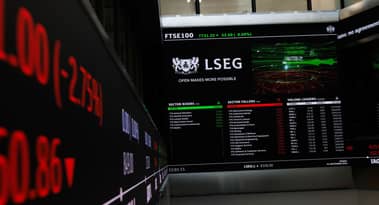
London’s benchmark FTSE 100 index edged higher on Monday, supported by gains in energy and financial stocks, while losses in consumer staples and mining sectors limited broader upside.
Investors remained cautious ahead of major central bank decisions expected later this week.
The blue-chip FTSE 100 index rose 0.2% to 10,393.85 points by 1005 GMT.
The mid-cap FTSE 250 index also climbed 0.2%, reflecting modest optimism across UK equities.
Energy sector leads amid oil price surge
Energy stocks were the top performers, rising 1% as oil majors BP and Shell advanced around 1% each.
The gains came as global oil prices surged, driven by escalating geopolitical tensions in the Middle East.
Prospects for peace in the region weakened over the weekend after US President Donald Trump indicated that Iran would need to initiate contact if it wished to negotiate an end to the ongoing conflict, now in its second month.
Brent crude futures climbed 2.4% to $107.84 per barrel, intensifying inflation concerns and prompting traders to scale back expectations for interest rate cuts across major economies this year.
Banking and defence stocks also advance
Financial stocks also contributed to the index’s gains.
The banking sector rose 0.5%, while aerospace and defence stocks climbed 0.9%.
These sectors often benefit from higher interest rate expectations and geopolitical uncertainty, which appeared to support investor sentiment on Monday.
Focus shifts to central bank policy decisions
Investor attention is now firmly on upcoming monetary policy announcements from major central banks.
The Bank of England is widely expected to keep interest rates unchanged later this week, while assessing economic risks linked to the ongoing geopolitical tensions.
Market participants are also closely watching decisions from the US Federal Reserve and the European Central Bank for further guidance on the global interest rate outlook.
Consumer staples and miners weigh on gains
Despite the broader gains, some sectors remained under pressure.
UK consumer staples stocks declined, with supermarket chain Sainsbury falling 3% after Goldman Sachs issued a double downgrade on the stock,.
Meanwhile, precious metal miners slipped 0.3% as gold prices edged lower, further limiting the overall market advance.
Stock-specific moves
Among individual stocks, Whitbread, the owner of Premier Inn, rose 1.7% after a report in The Times suggested the company is planning to sell several hotel properties and return £1.5 billion ($2.03 billion) to shareholders.
In contrast, Seraphim Space Investment Trust saw its shares tumble 11.6% after announcing plans to raise up to 350 million pounds ($473.83 million) through the issuance of new ‘C’ shares priced at 100 pence each.
Overall, the UK equity market showed cautious resilience, with gains in energy and financial stocks helping offset sectoral weakness, as investors positioned themselves ahead of a crucial week for global monetary policy.

How Meta’s $18B teen safety settlement could reshape social media regulation

Nvidia is using its balance sheet to fuel the AI boom. Is it a double-edged sword?

Dow holds weekly gain as Warsh inflation warning lifts rate hike bets

Workday stock jumps 5% after earnings beat, but analysts split on AI growth outlook

Evening digest: Warsh signals inflation fight, gold and oil slide
No results found
Loading articles...
Failed to load articles. Please try again.