
Why Tesla stock is down around 2% today
AI Sentiment: 35/100 Bearish
This score is generated through AI-driven analysis of the article's content.

powered by

Buy Tesla (TSLA). The stock is being sold mainly on “AI timeline” anxiety, even after upside delivery prints (about 480k vs expectations). If robotaxi expansion continues to broaden geographically, the market will re-rate TSLA from “auto company with AI optionality” to “AI/robotics platform with monetization path.”
Key Risk: Robotaxi/Optimus fails to reach real, scalable revenue—regulators or safety issues stall deployments and the AI narrative collapses.
Buy TSLA for merger/strategic-ties optionality. JPMorgan flags a coherent strategic fit (shared AI, robotics, Terafab), and even without a deal, the market can price higher probability of operational integration and capital-market leverage from SpaceX’s IPO currency.
Key Risk: Regulatory/governance blocks any meaningful combination and the market decides the “SpaceX tie-up” story is dead money.
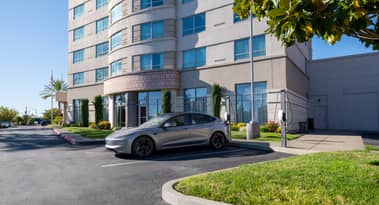
- Tesla shares fell despite launching the long-wheelbase Model Y L.
- Investors remain focused on robotaxis, Optimus and broader AI initiatives.
- JPMorgan said a SpaceX-Tesla merger faces significant regulatory hurdles.
Tesla stock (TSLA) fell on Wednesday as investors continued to look past the electric-vehicle maker's core automotive business and instead focused on the company's long-term artificial intelligence ambitions.
Shares were down 2.2% at $393.91 in midday trading after falling 4% on Tuesday.
The S&P 500 declined 0.8%, while the Dow Jones Industrial Average lost 1.5%.
AI remains the primary focus for investors
Despite reporting stronger-than-expected second-quarter deliveries earlier this month, Tesla's shares have remained under pressure.
The company recently reported stronger-than-expected second-quarter deliveries, selling about 480,000 vehicles worldwide, roughly 70,000 more than Wall Street had projected and 25% higher than a year earlier.
Even so, Tesla shares have declined since the delivery report and remain down about 10% for the year.
Investors continue to place greater emphasis on Tesla's long-term AI strategy, particularly the expansion of its robotaxi network and development of its Optimus humanoid robot.
Tesla launched its AI-trained robotaxi service in Austin about a year ago and now operates across three states.
Investors are waiting for the autonomous ride-hailing business to begin generating meaningful revenue and earnings.
The company is also developing the third generation of its Optimus humanoid robot, another project viewed as central to Tesla's long-term growth story.
For many investors, progress in robotaxis and robotics is expected to have a greater impact on Tesla's valuation than incremental improvements in vehicle sales.
JPMorgan weighs potential SpaceX merger
Separately, JPMorgan analyst Rajat Gupta said on Tuesday that a potential merger between Tesla and SpaceX appears "strategically coherent on paper" but would face significant regulatory and governance challenges.
According to Gupta, combining the two Elon Musk-led companies would unify leadership across businesses spanning artificial intelligence, robotics, transportation, energy, and space, while leveraging shared assets such as the Terafab semiconductor facility.
The analyst noted that SpaceX recently completed a record initial public offering that raised approximately $85 billion at $135 per share, valuing the company at around $2 trillion. Tesla's market capitalization is approximately $1.25 trillion.
Gupta said SpaceX's public listing provides valuable acquisition currency but identified several obstacles to any potential transaction.
He cited China as a major regulatory challenge because of SpaceX's US government and defense contracts alongside Tesla's extensive manufacturing operations in the country.
The analyst also highlighted governance concerns, noting that Musk controls roughly 85% of SpaceX's voting power but about 20% of Tesla's, potentially complicating any merger and raising dilution concerns for Tesla shareholders.
Gupta added that the size difference between the two companies could make the transaction resemble a SpaceX acquisition of Tesla rather than a merger of equals.
Even without a formal combination, the analyst said operational ties between the companies are already extensive through shared engineering talent, artificial intelligence infrastructure, and the Terafab facility in Texas.
Nvidia supplier Wistron is spending big on AI: why is the stock falling?

Why investors see more upside for SanDisk's 500% rally
DRAM ETF gained 18% last month: can it continue its outperformance
UBS sees two Fed hikes in 2026: what should investors buy
Broadcom stock: Why the AI chipmaker’s growth story is gaining steam
No results found
Loading articles...
Failed to load articles. Please try again.