
DRAM: Here’s why this SK Hynix, Micron, Samsung ETF is falling today

AI Sentiment: 18/100 Bearish
This score is generated through AI-driven analysis of the article's content.

powered by

Buy DRAM on the next selloff. The article shows a sharp, sentiment-driven break (down >8% premarket) plus bearish technicals (below neckline and 50-day MA). With memory fundamentals still strong (Micron/Samsung profitability and revenue growth), this is a classic “overreaction then mean reversion” setup. Target a bounce off the $50 psychological area and then toward ~$45 resistance-to-support reversal.
Key Risk: Memory prices actually roll over fast enough to force earnings downgrades across the group, not just profit-taking.
Sell Micron short into weakness. MU is already falling (down ~4% premarket) while the ETF is signaling further downside (head-and-shoulders breakdown). If the market is pricing “peak memory spending,” MU—high beta to DRAM pricing—will likely underperform on any additional risk-off headlines. Target the next technical support after the breakdown; cover on stabilization in DRAM ETF.
Key Risk: Micron’s next guidance confirms demand acceleration (AI/servers) and DRAM pricing holds up, reversing the “peak spending” narrative.
- The DRAM ETF continued its strong downtrend in the pre-market.
- SK Hynix and Samsung stocks fell by double digits in South Korea.
- Other memory stocks like Micron and Sandisk tumbled in the pre-market.
The Roundhill Memory ETF (DRAM) slumped by over 8% in the pre-market session as the volatility in the industry escalated. It dropped to $937, down by 25% from its highest point this year.
SK Hynix stock crashed in South Korea
DRAM ETF is a relatively new fund that was launched in April to give investors an exposure to the booming memory industry. It is made up of the biggest names in the sector, including South Korea’s Samsung and SK Hynix.
DRAM has become one of the most successful ETF launches ever, with its assets under management rising to over $24 billion in three months. This surge happened as demand for memory products continued rising amid the ongoing artificial intelligence boom.
The ETF is slumping today after SK Hynix stock tumbled by over 15% in South Korea. It was its worst single-day performance on record and is a sign that investors are booking profits after its recent gains as it moved towards the US debut.
Samsung Electronics stock dropped by over 10%, as sentiment in the industry waned. The same trend happened in Japan, where Kioxia Holdings tumbled by over 12%.
Similarly, most American memory stocks are in a freefall, with Micron falling by 4% in the premarket. SanDisk stock plunged by over 4.6%, while Seagate Technology fell by 3.45%. Western Digital fell by 4.7%, with most of these names being down by over 10% from their peak this year.
DRAM is highly exposed to the crisis because of its composition. According to its website, Samsung accounts for 25.55% of the fund, while Micron Technology and SK Hynix have 24.8% and 23.60%, respectively. These companies account for about 74% of the fund, with another 14% being in an open-ended money market fund.
Memory companies are still growing
Still, fundamentals of these companies are substantially strong, with most of them reporting strong revenue and profitability growth. In its recent earnings report, Micron said that its revenue jumped by 300% to over $40 billion, with the management expecting the fiscal fourth quarter revenue to hit $50 billion.
Samsung Electronics also published strong numbers last week, with its revenues and profits soaring in the last quarter. Its operating profit soared to $58.5 billion, while revenue hit $112 billion.
Other memory companies are expected to publish strong financial results in the coming weeks. For example, Yahoo Finance data shows that Micron’s revenue is expected to come in at $50.76 billion, up by 348% YoY. Its annual revenue is expected to jump by 246% to $129 billion.
Sandisk’s annual revenue is expected to hit $20 billion, up by 168% YoY, while Western Digital’s figure will hit over $12 .87 billion. Their margins are also expected to jump because of the rising memory prices in the US and other countries.
Therefore, these stocks are falling because of the rising fear that memory spending is nearing its peak. Also, traders are starting to book profits since most of these shares have more than doubled this year.
DRAM ETF technicals point to more weakness
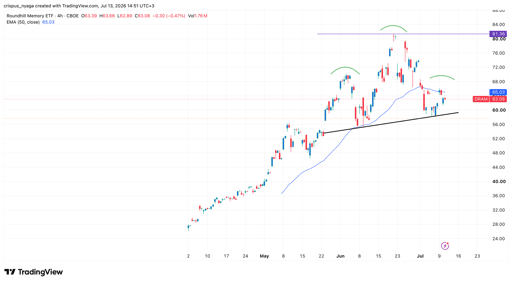
DRAM chart | Source: TradingView
The four-hour chart shows that DRAM has slumped in the past few days, and this trend may continue in the near term. It formed a head-and-shoulders pattern, a common bearish reversal sign in technical analysis. It has moved below the neckline of this pattern and the 50-period moving average.
Therefore, the fund will likely continue falling, potentially to the psychological level of $50. A move below that level will point to more downside, potentially to $45.

Why SpaceX stock is up around 1% on Friday

Should you buy the dip in OKLO stock today?

Analyst: Adobe stock's post-earnings dip isn't about AI disruption fears only

Dow surges 500 points after four-day slide as oil prices retreat

Here’s why the Enbridge stock is in a strong downward trend
No results found
Loading articles...
Failed to load articles. Please try again.