
DRAM ETF inflows rise as Micron, SanDisk, SK Hynix, Samsung lead rally amid risks

AI Sentiment: 72/100 Bullish
This score is generated through AI-driven analysis of the article's content.

powered by

Buy DRAM ETF. The news shows broad-based memory strength (Micron, Samsung, SK Hynix) plus massive ETF inflows ($10B+ in a month). The fundamental anchor is hyperscaler capex staying high (Alphabet $205B), supporting the “demand > supply” narrative and keeping prices firm into the next earnings wave.
Key Risk: Hyperscalers cut data-center spending after earnings, flipping demand expectations and crushing DRAM pricing.
Buy Micron. It’s the clearest high-beta beneficiary of the compute-supply imbalance and the rally in DRAM names, with analyst targets materially above the current price. If the next earnings confirm tight supply and strong pricing, MU should outperform the ETF because it’s more sensitive to sentiment and memory-cycle turns.
Key Risk: DRAM pricing reverses fast (capacity ramps or demand disappoints), causing Micron guidance to roll over.
- The DRAM ETF has jumped a bit in the past few days.
- Top memory stocks have rebounded this week.
- DRAM faces substantial risks, including concentration.
Investors are piling into the Roundhill Memory ETF (DRAM) as top stocks in the industry bounce back. DRAM jumped to $59.23, up by 20% from its lowest level this month.
DRAM ETF inflows are soaring as top stocks jump
The Roundhill Memory ETF jumped as top companies in the memory sector bounced back. In South Korea, Samsung Electronics stock rose by over 12% from its lowest point this month. SK Hynix rose to 1,919,000, up by 14% from its lowest point this month.
Other top companies in the industry have bounced back. This includes popular companies like Micron, SanDisk, Kioxia, and Seagate Technologies.
The ongoing rally is happening as companies start buying the dip, with many analysts remaining bullish on the sector. In a recent note, analysts at UBS said:
“Demand for compute continues to exceed available supply, while capacity constraints along the supply chain are unlikely to ease quickly.”
The analysts added that they were not seeing any panic in the semiconductor and memory industries, with hyperscalers continuing their spending spree.
This view was confirmed last night when Alphabet published its financial results, noting that it would boost its capital expenditure this year to $205 billion. Most of these funds will go towards its data center spending.
Most analysts have maintained a bullish outlook for some of the biggest memory companies. For example, the average target for Micron stock among analysts is $1,268, up sharply from the current $960. The most optimistic analysts are from DA Davidson, Susquehanna, and Barclays, who have a target of $2,000.
All Wall Street analysts tracking SanDisk have a bullish rating on the company, with the average target being at $1,820, up moderately from the current $1,600. Susquehanna’s Mehdi Hosseini expects it to jump to $3,250.
These metrics explain why investors are buying the DRAM ETF. ETF Db data shows that the fund has had over $10 billion in inflows in the last month. Its three-month inflows jumped to nearly $24 billion, bringing its assets under management to $23 billion.
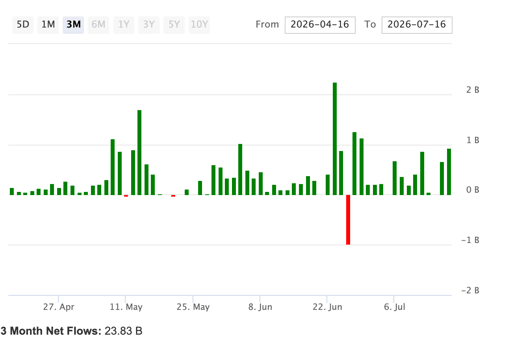
Key earnings ahead as risks remain
The next few weeks will be important for the DRAM ETF as some of its top constituents and clients publish their earnings. Alphabet has already published its numbers, while other big-tech companies like Amazon, Meta Platforms, Apple, and Microsoft will release their numbers next week. These results will provide further clues about whether they are boosting their spending.
Micron and Samsung Electronics have already announced their reports, with their revenues soaring by triple digits. Seagate Technology and SK Hynix will release their earnings on July 28 and 29, respectively.
Japan’s Kioxia will release the numbers on July 31st, while SanDisk will publish its numbers on August 5. Other constituent companies include Western Digital, GigaDevice, and Nanya Technology, which will also release their numbers soon.
Still, the DRAM ETF faces three major risks as we have written before. The biggest one is its substantial concentration, with three of the biggest companies accounting for over 70% of the fund.
Another risk is that the memory industry is highly cyclical, as we saw in 2023. Periods of high demand lead to increased production, which in turn drives prices lower. In 2023, most companies saw a significant decline in revenue.
Further, there is a risk that some of the top hyperscalers will start reducing their spending in the coming months or years, which will hit demand.
There is also a risk that the ongoing DRAM ETF rebound is a dead-cat bounce, a situation where a falling asset rebounds a bit and then resumes the downtrend.

Dow falls 400 pts as oil prices surge and Fed rate hike bets rise

Evening digest: US's Iran strikes lift oil, Apple welcomes new CEO

Micron stock falls 3% as Taiwan unions threaten strike over bonuses

Duolingo stock jumps as charts flash warning amid transition from growth to value

Tesla stock falls 3%: here's what's dragging the stock down today
No results found
Loading articles...
Failed to load articles. Please try again.