
DRAM ETF gained 18% last month: can it continue its outperformance
AI Sentiment: 78/100 Bullish
This score is generated through AI-driven analysis of the article's content.

powered by

Buy Invesco Semiconductor ETF (SMH). The news points to a multi-year AI memory demand shift (HBM pulling capacity from DDR5), with DRAM spot prices surging and capex share rising through 2027. SMH gives you the same AI-memory tailwind while spreading single-name risk across the broader semiconductor complex.
Key Risk: AI capex pauses or hyperscalers cut memory-intensive buildouts, crushing demand expectations and dragging memory pricing down fast.
Buy Micron Technology (MU). MU is a direct beneficiary of tightening DRAM supply and HBM growth, and the article highlights improving profitability across the big three as prices rise. With the ETF’s move driven by fundamentals (not just forced liquidation), the next leg should come from continued pricing power and capacity reallocation toward HBM.
Key Risk: HBM demand growth slows sooner than expected (or supply ramps faster than demand), forcing DRAM/HBM prices to fall and wiping out the margin expansion thesis.
- Roundhill Memory ETF gains nearly 18% in a month.
- AI demand is driving higher HBM and DRAM demand.
- Memory stocks face strong demand but remain highly cyclical.
The Roundhill Memory ETF has gained almost 18% over the past month as investors focus on tightening memory supply and rising demand for high-bandwidth memory (HBM) used in artificial intelligence infrastructure.
AI buildout drives memory demand
A Seeking Alpha report highlighted the growing importance of memory in the AI infrastructure buildout, citing research from Taiwan-based semiconductor market research firm TrendForce.
TrendForce reported that DRAM and NAND Flash are expected to account for 47% of cloud service providers’ total capital expenditure in 2026, with that share projected to rise to 68% in 2027.
The research linked the tightening DRAM market to increasing HBM demand.
HBM is widely used in AI workflows, while each HBM unit requires roughly three to four times the wafer capacity of traditional DDR5 memory.
As manufacturers shift production capacity toward HBM, less capacity remains available for conventional DRAM.
The memory industry has historically experienced sharp boom-and-bust cycles, contributing to periods of underinvestment and consolidation.
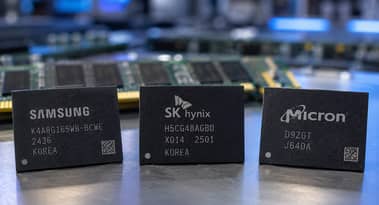
Samsung Electronics, SK hynix and Micron are now the three major companies remaining in the DRAM and HBM market.
DRAM prices surge as supply remains tight
The supply-demand imbalance has also been reflected in memory prices.
The Seeking Alpha report said spot prices for DDR5 16G DRAM increased from $6.20 per unit in early August 2025 to $54 as of September 3, 2026, representing a 775.6% increase.
The report also noted that higher memory prices have helped major manufacturers improve profitability. It cited Samsung’s recent rise to the top of a ranking of the world’s most profitable companies, overtaking Nvidia.
Despite the favorable industry backdrop, the Roundhill Memory ETF previously suffered a significant decline from a peak above $80. The selloff was due to forced liquidation linked to leveraged retail positioning in South Korea rather than deterioration in industry fundamentals.
The report said that valuations and shareholder-return programs at the three major memory manufacturers could provide additional support. The ETF offers a way for investors to gain exposure to Samsung, SK hynix and Micron without selecting an individual company.
Concentration creates both opportunity and risk
Samsung, SK hynix and Micron account for about 73% of the Roundhill Memory ETF’s assets.
That concentration gives investors targeted exposure to major memory companies but also increases the impact of company-specific developments.
The ETF faces several risks. A weaker quarter from one of its largest holdings or a reduction in AI infrastructure spending by a major hyperscaler could weigh disproportionately on the fund. Memory prices are also cyclical and can change quickly.
Still, the Seeking Alpha analyst argued that the current cycle could differ from earlier memory booms because HBM is increasingly important to AI workloads.
The analysis said that while AI infrastructure spending could eventually normalize, a collapse in HBM demand appears unlikely as long as major cloud providers continue expanding.
The Roundhill Memory ETF therefore offers investors concentrated exposure to a memory industry benefiting from AI-related demand, while its performance remains sensitive to semiconductor cycles, valuations and spending by major technology companies.
Passive investors looking to capitalise on the memory chip boom can invest in DRAM or other thematic funds like this through ETF platforms.

UBS sees two Fed hikes in 2026: what should investors buy

Broadcom stock: Why the AI chipmaker’s growth story is gaining steam

Is Oracle stock a buy before earnings as analysts turn bullish?

Apple to release folded iPhone this week: what to expect

Wall Street is about to lose a $1.1 trillion buyer: why stocks could get bumpier
No results found
Loading articles...
Failed to load articles. Please try again.