
Asiatiske flyselskabsaktier falder, da Iran-konflikt øger oliepriser og forstyrrer rejser
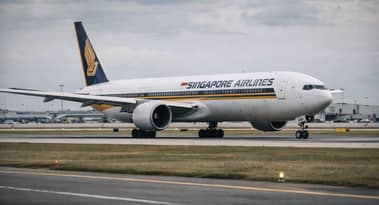

- Asiatiske flyselskabsaktier falder, efter at Iran-konflikten løfter oliepriser og forstyrrer flyvninger.
- Lukkede luftrum og brændstofomkostninger truer flyselskabers indtjeningsudsigter.
- Energi, forsvar og guld stiger, efterhånden som markeder skifter til risikoaversion.
Asiatiske flyselskabsaktier faldt kraftigt i starten af ugen, da den eskalerende konflikt med Iran rystede rejsemarkederne, pressede oliepriser op og førte investorer mod defensive sektorer.
Aktier i luftfartsselskaber i hele regionen førte faldet, mens energi- og forsvarsselskaber steg, hvilket tydeliggjorde et hurtigt skift mod risikoaversion på de globale markeder.
Singapore Airlines faldt mere end 4.46%, og var førende for sektorens tab.
Japans ANA og JAL faldt hver over 5.5%, Hongkongs Cathay Pacific gled 2.93%, og Australien’s Qantas, Taiwans Eva Air faldt også mere end 5%, mens Indiens Interglobe Aviation styrtdykkede 4%, efterhånden som investorer vurderede effekten af højere brændstofomkostninger og operationelle forstyrrelser.
Reaktionen kom, efterhånden som kampene intensiveredes i Mellemøsten.
Den amerikanske præsident Donald Trump sagde søndag, at kampoperationer i Iran vil fortsætte, efter at tre amerikanske militærpersonel blev dræbt.
Hændelserne øgede bekymringen for, at lukkede luftrum og stigende oliepriser kan forstyrre global rejseaktivitet.
Airlines hit by fuel costs and airspace closures
Airlines faced pressure from both operational disruption and rising input costs.
Several countries across the Middle East closed their airspace — including Iran, Israel, Iraq, Jordan, Qatar, Bahrain, Kuwait and the United Arab Emirates — while Syria restricted part of its southern airspace.
Dubai International Airport sustained damage during the attacks, and airports in Abu Dhabi and Kuwait were also struck.
Thousands of flights were affected, according to flight-tracking platform FlightAware.
Carriers across the Persian Gulf extended flight suspensions, complicating global aircraft scheduling and increasing operating costs.
Higher oil prices immediately raised concerns about airline profitability.
Each 5% change in Jefferies’ estimate for fuel prices in 2026 translates to a 5% to 10% impact on Delta’s and United Airlines Holdings Inc.’s earnings per share.
The conflict could weigh on demand as well as costs.
Rising geopolitical tensions present a clear headwind for travel and tourism equities.
Flight disruptions, rerouting and cancellations are likely to increase airline operating expenses, particularly fuel and crew costs.
At the same time, uncertainty could weaken travel demand, leading to booking cancellations and slower reservations, putting pressure on revenues and near-term earnings visibility across the sector.
Oil surge drives energy and defense gains
Oil markets reacted quickly to the geopolitical developments.
Futures initially jumped about 8% before trimming gains to roughly 6%.
West Texas Intermediate traded around $71.05 a barrel and Brent crude near $77.21.
Gold futures rose 1.63% as investors sought safe-haven assets.
The increase in crude prices supported energy producers.
Australia’s Woodside Energy, Japan’s Inpex, and China National Offshore Oil Corporation gained more than 6%, 5%, and 3% respectively.
Defense stocks also rose modestly, including Mitsubishi Heavy Industries and Kawasaki Heavy Industries, while Singapore’s ST Engineering advanced about 3.4%.
Higher crude improves revenue outlooks for producers but squeezes airline margins because jet fuel is one of the industry’s largest expenses.
Broader markets turn risk-off
Equity markets across Asia moved lower as investors reassessed geopolitical risks.
Japan’s Nikkei 225 slipped around 1.5%, the Hang Seng opened lower, and Australia’s S&P/ASX 200 declined, though mining gains limited losses.
US stock futures also dropped, with Dow Jones futures falling about 0.74%.
The pattern was consistent across sectors: energy and defense companies benefited from expectations of increased military spending and higher commodity prices, while airlines and tourism stocks weakened.
Investors now face a dual uncertainty — the possibility of supply disruptions in global energy markets and the prospect of reduced travel demand.
Rising fuel costs, rerouted flights, and booking cancellations together threaten near-term airline earnings visibility.
For the aviation sector, the conflict has introduced immediate operational challenges and longer-term demand risks.
Until clarity emerges on the duration of hostilities and the stability of regional airspace, airline stocks are likely to remain sensitive to developments in the Middle East.

Hvorfor stiger Amazons aktie 4% i dag

Er ServiceNow-aktien et køb, når et sjældent golden cross nærmer sig?

Adobe-aktieanalyse: Golden cross-mønster tager form før regnskabet

Rubrik-aktien falder efter marginfald: Er udrensningen en købschance?

Affirm-aktien stiger efter rekordoverskud: derfor vurderer BofA næsten 35% potentiale
Ingen resultater fundet
Indlæser artikler...
Failed to load articles. Please try again.