
Diet Coke shortage in India has a surprising Iran war link: here’s how
AI Sentiment: 18/100 Bearish
This score is generated through AI-driven analysis of the article's content.

powered by

Buy Coca-Cola India (CCIL). The Iran-linked can shortage is hitting Diet Coke hardest because it’s can-only, and Coca-Cola’s no-sugar lineup is a record share of volumes. Rationing plus constrained packaging should keep pricing power and reduce competitive share loss in the near term while demand keeps rising. Expect better-than-peer volume resilience and margin support from mix (no-sugar is growing fast).
Key Risk: The can supply normalizes quickly (shipping route opens or can makers add capacity faster than expected), removing the scarcity premium and letting competitors catch up.
Buy Ball Beverage Packaging (BALL) and/or Canpack (CANPACK via local listing if available). The news is a direct, multi-month demand shock for aluminium cans: delayed Gulf shipments, limited global can capacity, and 10–12 month lead times for new lines. Second-order effect: beverage makers will pay up for scarce can supply and lock in longer contracts, lifting utilization and pricing for can suppliers.
Key Risk: New can capacity comes online sooner than 10–12 months or aluminium can demand falls as consumers revert to cheaper formats (bottles/plastic) and companies switch packaging.
- Around 9% of global aluminium supply is disrupted, hitting the availability.
- Coca-Cola rations Diet Coke, which has doubled in sales volume since last year.
- Zero-sugar drinks now form about 30% of sales, up from 5% in 2020.
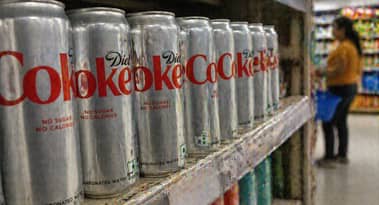
Diet Coke is becoming increasingly hard to find across parts of India, as supply disruptions triggered by the Iran war strain the availability of aluminium cans, colliding with a sharp rise in demand for sugar-free beverages in the country.
The shortage stems from delays in aluminium shipments from the Gulf, which accounts for around 9% of global production.
Since the end of February, supplies have been constrained by Iran’s de facto blockade of the Strait of Hormuz, a key shipping route, tightening the availability of cans used by beverage companies.
Supply disruptions ripple through market
Unlike most soft drinks in India that are sold in both plastic bottles and cans, Diet Coke is available only in cans, making it particularly vulnerable to packaging shortages.
Distributors say Coca-Cola has begun rationing supplies and is unable to fulfil all orders.
"We've been placing orders but have been told there is a shortage due to war," said Sanjay, one of the distributors in a Reuters report.
Coca-Cola declined to comment, but retailers are already seeing the impact.
One grocery retailer in the national capital region of Delhi told the Economic Times newspaper:
We are facing acute Diet Coke stock-outs since the weekend; if supplies do come, they are being immediately picked by consumers.
The disruption extends beyond a single product.
Industry executives say beer makers and other beverage companies are also facing constraints, as aluminium can shortages ripple across the wider drinks market.
Demand boom intensifies supply strain
The timing of the shortage is significant, coming amid a surge in demand for low and zero-sugar beverages.
Zero and low-sugar beverages have climbed to a five-year peak in 2025, reinforcing their shift from a niche urban preference to a mainstream consumption trend, the Economic Times reported in February.
Coca-Cola’s no-sugar lineup — including Diet Coke, Coke Zero, Thums Up X Force (no sugar), Sprite Zero, Kinley water, along with select juice and energy offerings — made up a record 30% of its total volumes in 2025, according to figures cited by the Economic Times.
Diet Coke, which leads the category, recorded a doubling in volumes from a year earlier.
Coca-Cola continues to hold a dominant position in India’s soft drinks market, valued at over $6.5 billion.
Industry-wide, the shift has been even more dramatic.
Executives told the publication that such beverages now contribute around 30% of overall sales in 2025, up from roughly 5% in 2020.
Market research suggests the segment could reach $4.7 billion by 2030, more than doubling from 2023 levels.
Rivals are seeing similar trends.
PepsiCo’s bottling partner reported that no-sugar and mid-sugar drinks made up 59% of total volumes in the October–December 2025 quarter, up from 53% a year earlier, marking one of the strongest annual gains in the category.
Capacity constraints and rising costs
Despite rising demand, supply-side constraints are proving difficult to ease.
Industry executives told the Economic Times that leading can manufacturers such as Ball Beverage Packaging and Canpack do not currently have enough capacity to meet demand, with new production lines expected to take 10 to 12 months to become operational.
An industry executive said the Diet Coke shortage was due to some consignments of imported cans being delayed.
Production of cans and bottles in India has also become more expensive because of an energy shortage, further tightening supply.
The combination of global logistics disruptions, higher input costs and compliance-related adjustments has left beverage makers struggling to maintain steady supplies.
Social media reaction and wider implications
The shortage has sparked a wave of reactions online, with social media users drawing comparisons to past supply crunches, including shortages of essential commodities such as LPG.
LPG crisis is okay, I can't tolerate Diet Coke shortage @letsblinkit pic.twitter.com/BzwyZcXg9N
— Aditya (@UghDitya) April 21, 2026
While the country is facing Diet Coke shortage, I’m just chilling with my Diet Coke in my office terrace in a tier 2 city in Kerala. pic.twitter.com/NaYIsvqClq
— Thanseer (@Thanseethahar) April 22, 2026

Is Papa Murphy’s in trouble as up to 50 pizza stores face closure?

Nio, XPeng, Li Auto, BYD, Polestar: Why are China EV stocks tumbling?

Starbucks stock hits 52 week high: why this analyst is so bullish on the stock

McDonald's tops Q1 estimates, shares surge 3% in premarket trading

FMCG giants Nestle, P&G, Colgate have lost their shine: what next
No results found
Loading articles...
Failed to load articles. Please try again.