
Brent crude drops below $80 as Iranian oil comeback lifts market mood

AI Sentiment: 72/100 Bullish
This score is generated through AI-driven analysis of the article's content.

powered by

Buy US 2-year Treasuries as the article shows bonds reacting faster than stocks to the inflation read-through from cheaper oil. Lower yields in Asia and the US fit a “rates stay lower” path ahead of Warsh’s first communication, where he can’t easily re-accelerate inflation expectations without contradicting the crude-driven relief.
Key Risk: Warsh turns hawkish in projections/communication and pushes the market back toward a later-year hike, lifting 2Y yields.
Sell USO (or short Brent futures) as Iranian supply waivers cap crude near-term. Brent below $80 signals the market is moving from “shock” to “disinflation,” and that typically keeps energy risk premia compressed until inventories rebuild. Key thesis: sanctions waiver reduces tail risk of another Hormuz spike, and low emergency reserves won’t matter if the next shock probability falls.
Key Risk: Iranian exports don’t actually ramp (shipping/banking delays or deal breakdown), and crude snaps back above $85.
- Oil drop eases inflation fears as Iran supply hopes gather pace in trade.
- Bond yields slip while traders await Warsh's first Fed message on policy.
- Asia stocks hold near flat as chip weakness offsets cheaper crude relief.
Oil prices fell sharply on Wednesday as prospects of renewed Iranian supply eased inflation worries and pulled government bond yields lower, while global equities traded cautiously before Kevin Warsh’s first Federal Reserve policy decision as chair.
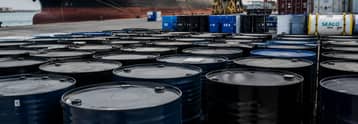
Brent crude dropped below $80 a barrel, its weakest level since the US-Iran conflict began in March, after a senior US official said Washington would waive sanctions on Iranian oil under a deal aimed at ending the war.
The move offered investors a rare relief signal after months of energy disruption, though details of the agreement remain limited. The shift lifted hopes across assets.
Oil turns from shock to possible disinflation
The prospect of Iranian barrels returning to the market changed the tone across commodities.
For much of the past three months, the Strait of Hormuz had been the central risk for investors, keeping energy prices elevated and draining inventories.
The latest headlines suggest that pressure may be easing, but traders are not treating the reopening of supply routes as immediate.
“Markets appear to be pricing in a relatively high probability of a full Hormuz flow normalisation,” Kim Fustier, senior oil and gas analyst at HSBC, told Reuters.
HSBC expects the process to take until the end of September.
That caution matters as US emergency oil reserves have fallen to their lowest level since 1983, leaving limited room for another supply shock.
A faster return of Iranian exports would help cool headline inflation, but delays in shipping or banking channels could keep crude volatile.
Bonds react faster than stocks
Bond markets moved quickly on the inflation read-through. US Treasury yields slipped, while Asian rates followed.
Japan’s 10-year yield eased 1.5 basis points to 2.63%, and Australia’s equivalent fell almost 5 basis points to 4.787%.
Equity markets were less decisive. Wall Street showed a split tone overnight as investors reduced exposure to heavily owned technology and semiconductor names.
The Nasdaq fell 1.15%, while gains in financial and industrial stocks helped the Dow close at a record.
In Asia chip-heavy markets in Taiwan and South Korea edged lower. MSCI’s broad Asia-Pacific gauge outside Japan slipped about 0.3%, while Japan’s Nikkei gained 0.4%.
Warsh faces his first communication test
The dollar was little changed as traders waited for Warsh’s first press conference.
The Fed is widely expected to keep rates unchanged, making the projections and tone of his remarks more important than the decision itself.
Warsh must balance President Donald Trump’s preference for lower rates against market pricing that has shifted towards the possibility of a hike later this year.
The analysts said that any embrace of rate-hike risks without pushing back against market pricing would be read as hawkish.
That leaves Warsh with a narrow path: sound vigilant on inflation, without undoing the market relief created by cheaper crude.

Hormuz is reopening, so why are oil prices still racing towards $100?

Will gold surge past $4,500 if US jobs data kills September rate hike bets?

Why is gold back above $4,400 and could payrolls send it even higher?
Crude oil price forecast as Iran ramps up attacks on Kuwait

Oil pushes toward $100 as US-Iran strikes flare: what could drive it higher?
No results found
Loading articles...
Failed to load articles. Please try again.