
CAT stock hits $1,000 on AI demand: Here are two other stocks powering the boom
AI Sentiment: 82/100 Bullish
This score is generated through AI-driven analysis of the article's content.

powered by

Buy CAT. The Power & Energy division is now the growth engine: Power & Energy revenue $7.03B (+22% YoY) and power generation sales +41%, with a record $63B backlog (+79%) driven by AI data-center power. The thesis is that AI demand is pulling forward long-cycle power equipment orders, and CAT is capturing that spend as its power segment becomes ~40% of revenue.
Key Risk: AI data-center power capex slows or gets delayed, shrinking new orders and forcing backlog to stop growing.
Buy GE Vernova. It’s the cleanest “grid build” beneficiary: management targets $200B power generation + electrification backlog by end-2027 (one year ahead of prior plan). Q1 data-center electrification orders were $2.4B—more than all of 2025—supporting a multi-year earnings re-rate as electricity investment stays elevated.
Key Risk: Utilities and data-center customers pause grid/electrification spending, breaking the backlog acceleration and earnings outlook.
- Some power generation cos have surged this year on demand from AI data centers.
- Caterpillar crossed the $1000 mark on Monday with the stock gaining 70% YTD.
- Multi-year growth opportunities seen as hyperscalers invest heavily in power.
The artificial intelligence boom has created enormous wealth for chipmakers and cloud computing giants.
Yet some of the stock market's biggest winners this year have been companies selling products that look more at home in industrial equipment catalogues than in Silicon Valley.
Shares of Caterpillar, GE Vernova, and Bloom Energy have posted returns rivalling many technology leaders in 2026, as investors increasingly focus on one of the biggest constraints facing artificial intelligence development.
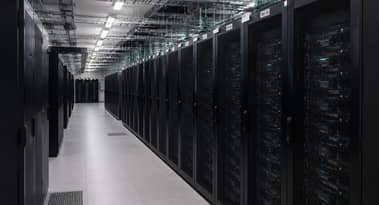
The rapid construction of AI data centers has created unprecedented demand for reliable, round-the-clock power at a time when electricity grids around the world are struggling to keep pace.
Investors increasingly see the AI infrastructure buildout as part of a broader industrial transformation.
"If we go back five years or so, the opportunity was we're building more roads, we're building more bridges, and infrastructure was stage one," Chris Semenuk, an investment partner at Tema ETFs, said on an episode of the "Other People's Money" podcast last week.
With that infrastructure now built, the focus is broadening out, he noted.
Semenuk pointed to "unprecedented" backlogs at companies like Caterpillar and GE Vernova as evidence of the "reindustrialization" theme.
Caterpillar's power business becomes growth engine
Caterpillar, best known for its yellow construction equipment, crossed a major milestone on Monday as its shares traded above $1,000, making it one of only two stocks in the S&P 500 with a four-digit share price.
The stock has gained more than 70% this year.
The company reported first-quarter revenue of $17.4 billion, up 22% from a year earlier, while adjusted earnings per share of $5.54 comfortably topped Wall Street expectations of $4.64.
The surprise driver of that growth was not construction activity but demand for power equipment.
Caterpillar's Power & Energy division, now the company's largest and fastest-growing business, generated revenue of $7.03 billion during the quarter, rising 22% year-on-year.
Within that segment, power generation sales jumped 41% to $2.82 billion, largely driven by data center projects.
The company's total backlog reached a record $63 billion, up 79% from a year earlier, primarily due to AI-related infrastructure spending.
Caterpillar's power and energy segment "is becoming increasingly dominant as demand for its large reciprocating engines and turbines swells with data-center/AI capital spending," Gimme Credit analyst Carol Levenson wrote in a recent note to clients.
The division now contributes roughly 40% of Caterpillar's revenue, matching the contribution from its traditional construction business.
Semenuk believes the opportunity is still in its early stages and said Caterpillar could be generating at least $10 in quarterly earnings per share by 2029, nearly double its latest quarterly earnings.
GE Vernova rides historic power expansion
Among industrial companies, GE Vernova is perhaps the purest play on AI-driven electricity demand.
Spun out of General Electric in April 2024, the company manufactures gas turbines, grid equipment, and wind turbines. Its shares have risen 66% this year.
GE Vernova posted better-than-expected earnings in April and raised its full-year outlook, sending the stock sharply higher.
The company expects its backlog for power generation and electrification equipment and services to reach $200 billion by the end of 2027, roughly one year ahead of its previous target.
Demand is being fueled by the construction of AI data centers, which has triggered an electricity investment boom not seen since the post-World War II period.
In the first quarter alone, GE Vernova booked $2.4 billion in electrification equipment orders tied specifically to data centers, surpassing the total booked during all of 2025.
Wall Street expects the company to generate earnings per share of about $24 in 2027, compared with estimates near $18 only a year ago.
After the company's latest earnings, Jefferies analyst Julien Dumoulin-Smith raised his price target on the stock to $1,350 from $965 while maintaining a Buy rating, arguing that strong business conditions should persist through the end of the decade.
Baird analyst Ben Kallo was even more optimistic, increasing his target price to $1,400 from $1,008 and retaining an Outperform rating.
Bloom Energy emerges as surprise winner
The most dramatic gains have come from Bloom Energy.
Shares of the fuel-cell maker have surged roughly 250% this year as hyperscale data center operators seek alternatives to constrained power grids.
Bloom manufactures solid oxide fuel cells capable of generating electricity directly at data center campuses without relying on utility infrastructure.
The company's appeal lies not only in the amount of electricity AI facilities need but also in how quickly they can be deployed.
Grid connections for large data centers can take years to secure, while Bloom's systems can be installed in months.
Bloom recently raised its 2026 adjusted earnings forecast to between $1.85 and $2.25 per share, up from a previous range of $1.33 to $1.48.
It also lifted its revenue guidance to between $3.4 billion and $3.8 billion, implying approximately 80% growth at the midpoint.
The company was named the sole power provider for Oracle's Project Jupiter AI campus in New Mexico, which is expected to draw as much as 2.45 gigawatts of electricity from Bloom's fuel cells.
Separately, Nebius Group signed a master agreement worth up to $2.6 billion.
Despite the rally, analysts remain cautious.
Bernstein analyst Sunaina Ocalan initiated coverage with a Market Perform rating and a $276 price target, implying a 25% downside from current levels.
Bernstein said Bloom's solid fuel technology is "increasingly relevant in a scenario where grid infrastructure can't keep up with expected load growth," but added that investors need more confidence in the company's path toward sustainable cash flow and expansion capacity.
For now, the AI boom is reshaping market leadership in unexpected ways, turning power equipment manufacturers into some of Wall Street's most sought-after stocks as electricity becomes one of artificial intelligence's most valuable resources.

Can Bumble, Tinder make a comeback as users leave apps

What do Walmart's and Target’s results say about the US consumer?

S&P 500 record masks $1.5 trillion leverage trap beneath Wall Street’s AI boom

Dow closes 500 pts higher as Wall Street rebounds from Treasury yield-driven sell-off

Evening digest: Samsung buybacks rise as Bitcoin, oil rally
No results found
Loading articles...
Failed to load articles. Please try again.