
Why Micron, SanDisk and SK Hynix are suddenly at the centre of the AI selloff
AI Sentiment: 35/100 Bearish
This score is generated through AI-driven analysis of the article's content.

powered by

Buy MU. The selloff is about a potential AI capex slowdown, but the article’s real near-term driver is scarcity: inventories at major peers are under ~10 days and KB expects bit-demand to outgrow supply into 2027. With HBM4 and server DDR5 demand rising together, MU should benefit from tight supply and rising contract prices (Bernstein flags ~20% q/q price strength in the next quarter).
Key Risk: AI safety rules actually force hyperscalers to cut or delay data-center buildouts, crushing HBM/DDR demand fast enough to outweigh current tight inventories.
Buy HXSY. It’s the most levered to HBM and accelerator deployments, so it’s also the most likely to rebound if the market overreacts to safety headlines. The thesis is supported by the same scarcity setup: inventories are extremely low and supply can’t quickly catch up, while demand growth is expected to exceed supply growth by >10 percentage points into 2027.
Key Risk: HBM demand falls materially because accelerator deployments slow for longer than expected, and SK Hynix can’t keep prices rising as volumes soften.
- Micron, SanDisk and SK Hynix sink as AI slowdown fears hit memory demand.
- Memory supply remains tight despite fresh doubts over future AI spending.
- Analysts still see rising DRAM and NAND prices as inventories remain low.
Micron, SanDisk and SK Hynix are sitting at the sharp end of Monday’s AI sell-off as investors question one of the assumptions that made memory stocks the biggest winners of the infrastructure boom.
Micron and SanDisk fell more than 5% in US premarket trading, while SK Hynix plunged 7.4%.
The declines followed weekend calls from Anthropic CEO Dario Amodei and other AI leaders to slow frontier-model development over safety concerns.
Memory became one of AI’s most leveraged trades
Training and running advanced AI models requires far more than GPUs.
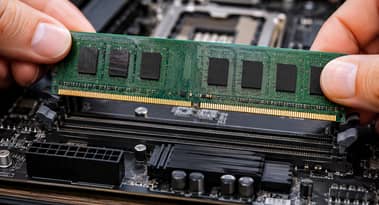
HBM feeds accelerators, conventional DRAM supports servers and enterprise NAND provides the storage needed for large inference workloads.
That demand transformed memory from a cyclical commodity business into one of AI infrastructure’s most valuable bottlenecks.
Susquehanna analyst Mehdi Hosseini told MarketWatch that memory has become the “king” of the semiconductor industry and argued that “its reign is here to stay”.
He estimates memory now represents roughly 50% to 55% of semiconductor-industry revenue, compared with a historical range of 20% to 30%.
AI data-centre investment has been a reason the industry is approaching $1.5 trillion in annual revenue.
That explains Monday’s reaction, as the stocks that became concentrated bets on relentless AI infrastructure spending are naturally among the first to be repriced when investors question that spending trajectory.
The sell-off is pricing a slowdown that has not happened
No major hyperscaler has announced a material reduction in AI capital expenditure, and frontier laboratories have not said they plan to stop buying compute.
Investors are instead pricing a new risk to future growth.
“Fundamentally, the question that would come up is whether increased AI safety means slower and lower capex spending,” Barclays strategist Emmanuel Cau told the Financial Times.
The issue matters particularly for Micron and SK Hynix because HBM demand is tied closely to accelerator deployments.
SanDisk has a similar sensitivity through NAND. At Goldman Sachs’ technology conference last week, management said data-centre demand had grown to more than half of the NAND market, calling the shift a watershed moment for the industry.
The awkward problem for bears is that memory is still scarce
The bearish argument runs into an uncomfortable reality that the memory market remains severely constrained.
KB Securities estimates finished memory inventories at Samsung Electronics and SK Hynix have fallen below 10 days of supply.
“As of the third quarter, memory inventories at Samsung Electronics and SK hynix have fallen to less than 10 days,” research head Kim Dong-won told Seoul Economic Daily, warning that sellable volumes could become “absolutely insufficient”.
KB expects 2027 DRAM and NAND bit-demand growth to exceed supply growth by more than 10 percentage points as HBM4, server DDR5 and enterprise SSD demand rise together.
Bernstein also reiterated Buy ratings on Micron and SanDisk this month, forecasting conventional DRAM and NAND contract prices could rise nearly 20% quarter-on-quarter in the third quarter.
That leaves memory stocks caught between two realities.
AI safety concerns have introduced a genuine risk to future infrastructure spending, but current supplies remain tight, prices are still rising and inventories are unusually low.

Dow opens 153 pts lower as AI selloff and oil surge hit US stocks

IREN, Nebius, CoreWeave: Here’s why these neocloud stocks are falling
Arm stock falls 7% as AI selloff, valuation risks hit chip designer

VOO & Chill: What's fueling the S&P 500 ETF's relentless run?

RUM Group stock jumps on $13.7 billion Anthropic deal: will the gains hold?
No results found
Loading articles...
Failed to load articles. Please try again.