
Dark fleet tanker share slips to 33% as Venezuela oil exports rebound
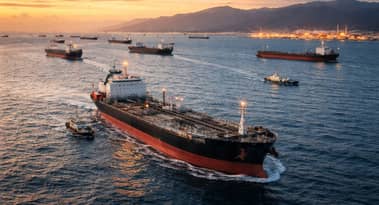

Following revisions in US energy policy toward Venezuela, crude shipments recovered and purchasers diversified, but the movement of irregular oil tankers off the country's coasts changed significantly in January 2026.
Transparency Venezuela's surveillance report revealed that irregular tankers accounted for at least 33% of all vessels spotted in Venezuelan waters in January, down from 47% in December.
A shift in the pattern of maritime activity was indicated by the rise in the number of ships sending identifying signals simultaneously.
More ships are sending signals, and fewer dark vessels
January had 114 tankers in total, which is comparable to December's 112. The fleet's makeup, however, shifted.
AIS tracking signals were activated on 99 of the vessels observed in January, the most since the start of surveillance.
Compared to December, when 81 ships were sending signals, that was an increase of 18.
Of the 99 ships that were found, 17 were flying the Venezuelan flag, and 82 were flying international flags.
In contrast, only 15 ships were found to have their AIS signals disabled, which is half as many as the 31 dark ships that were observed using satellite imagery in December.
According to the tracking, the 15 vessels without signals were the lowest monthly total ever noted.
The number of irregular vessels in January reached 38, or 33% of the tankers present, when 23 sanctioned and covert ships were added over the same time period.
In contrast, 47% did so in December.
Route changes and interceptions
The research shows that US military action in Venezuela and marine interceptions are to blame for the shifts in vessel activity.
At least 31 black ships were spotted in December as smugglers of banned oil tried to increase supplies.
More black vessels may have approached around the end of November and the beginning of December as a result of the seeming success of the tanker Seahorse, which reached Venezuelan seas on Nov. 23 and then left following an attempt by US forces to intercept it.
According to the study, the 31 dark vessels seen in December that were still stuck in Venezuelan territorial waters included the 15 dark vessels observed in January. 18 authorised and covert warships that had been there since November, one more from December, and four irregular ships—Nabiin, Volans, PVT Azura, and Olina—arrived in January to join them.
In a coordinated operation between Washington and Caracas, Olina was stopped on January 9 and ordered to return to Venezuela, while the other three stayed close to the nation's coasts.
Since at least July, when tracking started, every vessel caught since Dec. 10 had been entering and exiting Venezuela with its AIS signals disabled or sending false signals.
In order to escape being seized, several phantom tankers veered out of Venezuelan seas in December, according to the tracking.
The Boltaris was one of them; it was flying the flag of Benin and transporting Russian naphtha to Venezuela when it veered off course on December 15.
Reduced ship-to-ship transfers and shorter stays
The rise in ships staying in Venezuelan seas for less than six days in January was another change. 33 ships were involved, up from 17 in December.
Operations for ship-to-ship transfers also decreased.
January saw two detections, compared to December's five and November's thirteen.
The transfers happened in Caquetíos, a quiet neighbourhood in the western state of Falcón close to the port of Amuay, where erratic activities had been observed in the preceding months.
Buyers diversify, and exports rebound
According to a Reuters-cited article, Vortexa reported a sharp decline of about 350,000 barrels per day in December, while hydrocarbon shipments fell by over 450,000 barrels per day.
The PDVSA's onshore and offshore storage tanks were filled due to the naval embargo, which resulted in well closures and a logistical breakdown.
However, following the arrest of Nicolás Maduro and Cilia Flores, the United States directly intervened in Venezuela's energy policies, resulting in what the study called a drastic shift in January.
Buyers diversified, and exports increased to roughly 800,000 barrels per day.
China bought 156,000 barrels a day, the United States bought 284,000 barrels a day, and businesses like Repsol of Spain and Reliance of India started buying again.
The nation most impacted by the US marine "quarantine" was China, which, until November, had been the primary destination for Venezuela's opaque crude exports.
Smaller refineries in China's Shandong region that used cheap, sanctioned crude and newly established operating enterprises in Venezuela were impacted, although China as a whole did not have operational issues because of its vast storage capacity.
Concerns about increased revenues and pressures on the currency
The study pointed out that there was no accounting of how the $500 million that the United States said the interim government had received since January had been used.
According to the investigation, currency controls had encouraged corruption and misuse, and a promised wage increase declared by Delcy Rodríguez had not been implemented.
In 2025, exports increased, but the official bolívar lost 82.7% of its value.
Poverty was made worse by the difference between the official and parallel currency rates, which increased inflation and the discrepancy between prices and salaries.
According to the report, stricter resource control and market-priced Venezuelan crude payments have enhanced growth projections.
The primary improvement thus far has been a notable reduction in the exchange-rate difference, even though the official dollar rate increased from 301.57 bolívares on January 1 to 367.31 bolívares on January 31.

Meta stock wobbly after firm reaches $16.7B settlement in child safety trial

Here’s why the Zoom Video stock is crashing after its earnings report

Dow holds steady at open after inflation tops expectations as Nvidia results loom

US PCE in July higher than expected at 3.7%, but core PCE matches forecast

Workday stock forecast ahead of earnings: buy, sell, or hold?
No results found
Loading articles...
Failed to load articles. Please try again.