
Asian airline stocks fall as Iran conflict lifts oil and disrupts travel
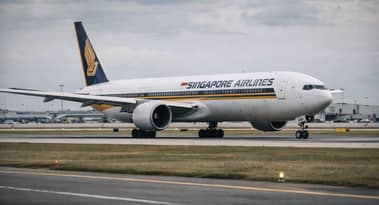

- Asian airline stocks fall as Iran conflict lifts oil and disrupts flights.
- Airspace closures and fuel costs threaten airline earnings outlooks.
- Energy, defense and gold rise as markets shift to risk-off positioning.
Asian airline stocks dropped sharply at the start of the week as escalating conflict involving Iran unsettled travel markets, drove oil prices higher, and pushed investors toward defensive sectors.
Shares of carriers across the region led declines while energy and defense companies advanced, highlighting a rapid shift toward risk-off positioning in global markets.
Singapore Airlines fell more than 4.46%, pacing sector losses.
Japan’s ANA and JAL each dropped over 5.5%, Hong Kong’s Cathay Pacific slipped 2.93%, and Australia’s Qantas, Taiwan’s Eva Air also declined more than 5% and India's Interglobe Aviation plunged 4% as investors assessed the impact of higher fuel costs and operational disruption.
The reaction came as fighting intensified in the Middle East.
US President Donald Trump said Sunday that combat operations in Iran will continue after three US servicepersons were killed.
The developments fueled concerns that airspace closures and rising crude prices could disrupt global travel activity.
Airlines hit by fuel costs and airspace closures
Airlines faced pressure from both operational disruption and rising input costs.
Several countries across the Middle East closed their airspace — including Iran, Israel, Iraq, Jordan, Qatar, Bahrain, Kuwait and the United Arab Emirates — while Syria restricted part of its southern airspace.
Dubai International Airport sustained damage during the attacks, and airports in Abu Dhabi and Kuwait were also struck.
Thousands of flights were affected, according to flight-tracking platform FlightAware.
Carriers across the Persian Gulf extended flight suspensions, complicating global aircraft scheduling and increasing operating costs.
Higher oil prices immediately raised concerns about airline profitability.
Each 5% change in Jefferies’ estimate for fuel prices in 2026 translates to a 5% to 10% impact on Delta’s and United Airlines Holdings Inc.’s earnings per share.
The conflict could weigh on demand as well as costs.
Rising geopolitical tensions present a clear headwind for travel and tourism equities.
Flight disruptions, rerouting and cancellations are likely to increase airline operating expenses, particularly fuel and crew costs.
At the same time, uncertainty could weaken travel demand, leading to booking cancellations and slower reservations, putting pressure on revenues and near-term earnings visibility across the sector.
Oil surge drives energy and defense gains
Oil markets reacted quickly to the geopolitical developments.
Futures initially jumped about 8% before trimming gains to roughly 6%.
West Texas Intermediate traded around $71.05 a barrel and Brent crude near $77.21.
Gold futures rose 1.63% as investors sought safe-haven assets.
The increase in crude prices supported energy producers.
Australia’s Woodside Energy, Japan’s Inpex, and China National Offshore Oil Corporation gained more than 6%, 5%, and 3% respectively.
Defense stocks also rose modestly, including Mitsubishi Heavy Industries and Kawasaki Heavy Industries, while Singapore’s ST Engineering advanced about 3.4%.
Higher crude improves revenue outlooks for producers but squeezes airline margins because jet fuel is one of the industry’s largest expenses.
Broader markets turn risk-off
Equity markets across Asia moved lower as investors reassessed geopolitical risks.
Japan’s Nikkei 225 slipped around 1.5%, the Hang Seng opened lower, and Australia’s S&P/ASX 200 declined, though mining gains limited losses.
US stock futures also dropped, with Dow Jones futures falling about 0.74%.
The pattern was consistent across sectors: energy and defense companies benefited from expectations of increased military spending and higher commodity prices, while airlines and tourism stocks weakened.
Investors now face a dual uncertainty — the possibility of supply disruptions in global energy markets and the prospect of reduced travel demand.
Rising fuel costs, rerouted flights, and booking cancellations together threaten near-term airline earnings visibility.
For the aviation sector, the conflict has introduced immediate operational challenges and longer-term demand risks.
Until clarity emerges on the duration of hostilities and the stability of regional airspace, airline stocks are likely to remain sensitive to developments in the Middle East.

Why is Amazon stock surging 4% today

Is it a golden opportunity to buy ServiceNow stock as a rare pattern nears?

Adobe stock analysis: Golden cross pattern takes shape ahead of earnings

Rubrik stock drops as gross margin slips: Is the selloff a buying opportunity?

Affirm stock jumps after record profit: why BofA sees a nearly 35% upside
No results found
Loading articles...
Failed to load articles. Please try again.