
Why are Micron, SanDisk, SK Hynix and other memory stocks falling?
AI Sentiment: 35/100 Bearish
This score is generated through AI-driven analysis of the article's content.

powered by

Buy MU. The macro hit (oil >$100, 10Y yield >4.9%) is pressuring high-beta tech, but the company’s fundamentals are turning: Goldman sees MU breaking out of its downtrend, and Susquehanna expects DRAM prices to jump ~50% sequentially this quarter. MU is also a direct AI memory supplier (HBM/DRAM), so strong fiscal Q4 results (Sept 30) should pull the whole group higher.
Key Risk: Oil stays high and yields keep rising, forcing a broad de-risking that overwhelms MU’s earnings/price-cycle tailwinds.
Buy WDC. The article flags NAND price momentum (Susquehanna: ~60% sequential increase this quarter) and notes SanDisk is already showing early downtrend break/positioning improvement. If NAND pricing is inflecting upward, WDC should re-rate even if the market is jittery, because NAND is the faster-moving lever than many investors expect.
Key Risk: Demand for NAND (especially AI/SSD build-outs) weakens faster than pricing power, triggering a supply/demand reversal and margin compression.
- Micron, SanDisk fell 4% as oil prices topped $100, Treasury yields jumped.
- Goldman Sachs sees early signs of renewed investor interest in memory stocks.
- Valuations of Micron, SanDisk remain below the broader technology sector.
Memory stocks fell sharply on Thursday as a jump in oil prices intensified broader market concerns about inflation and higher interest rates, weighing on high-beta technology shares.
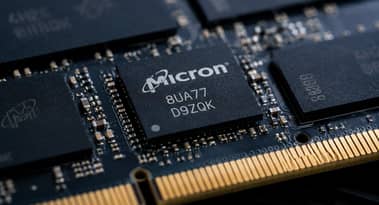
Micron Technology MU and SanDisk each fell about 4%, while SK Hynix dropped more than 5%.
Seagate Technology declined 2.3%, and Western Digital was down about 3.7%.
The selling came as the broader market also weakened.
The S&P 500 and Dow Jones Industrial Average were both down about 0.6%, while the Nasdaq Composite fell 0.7%.
The Philadelphia Semiconductor Index declined 2.7%, with more volatile memory stocks taking a larger hit.
Oil surge rattles markets
Investor sentiment deteriorated as US oil prices moved above $100 a barrel amid growing concerns that the conflict between the United States and Iran could keep energy prices elevated.
West Texas Intermediate futures for October rose above $100 a barrel, while Brent crude futures for November climbed above $105.
The oil surge also pushed the 10-year US Treasury yield above 4.9%, its highest level since November 2023.
Higher energy prices and bond yields can weigh particularly heavily on growth-oriented technology stocks by raising concerns about inflation and borrowing costs.
"The recent run-up in prices lays bare the market’s approach: this conflict will last longer than anticipated even a month ago, let alone at the beginning of the summer. If oil supply and exports are diminished, the oil balance remains tight , and prices remain elevated," PVM analyst John Evans said in a Reuters report.
PPI report increases likelihood of Fed rate hike
A tame wholesale inflation report did little to ease concerns over the prospect of higher interest rates and surging oil prices.
The producer price index, a measure of wholesale inflation, rose a seasonally adjusted 0.4% in August, matching the Dow Jones consensus estimate.
On an annual basis, PPI increased 5.4%, remaining well above the Federal Reserve’s 2% inflation target.
The data came ahead of Friday’s closely watched consumer price index report.
Both the PPI and CPI feed into the Fed’s preferred inflation gauge, the personal consumption expenditures price index, which will not be released until after the central bank’s Sept. 16 interest-rate decision.
“The PPI release itself was inconclusive, in that doesn’t really help to settle the question of ‘hike or no hike’ from the Fed next week, but WTI oil prices surging back above $100 and Treasury yields hitting new highs is certainly raising the stakes for investors ahead of tomorrow’s crucial CPI report,” wrote Stephen Coltman, head of macro at 21Shares.
Fed funds futures were last pricing in a 74% probability of a quarter-point rate hike at the conclusion of next week’s meeting, according to the CME FedWatch Tool.
Goldman sees memory trade returning
Goldman Sachs has identified early signs that investor interest in memory stocks is returning after a relatively quiet summer.
The firm said Micron and SanDisk are beginning to break out of downtrends that had constrained their shares during the summer.
Despite Thursday's decline, Micron remains up about 3% over the past five trading sessions, while SanDisk has gained more than 9% over the same period.
The potential shift comes as positioning across the broader artificial intelligence trade remains relatively subdued.
Goldman’s prime brokerage data showed gross leverage among US fundamental long/short hedge funds at the 27th percentile of the past year, while net leverage was only at the fourth percentile.
Options activity has also cooled.
The CBOE Semiconductor ETF Volatility Index has fallen to around 36 from roughly 65 in July, indicating a significant decline in expected swings across semiconductor stocks.
That combination could give investors who reduced their exposure during the summer room to rebuild positions if strong AI-related demand for memory continues.
Memory prices point to strong earnings
The fundamental outlook is also providing support for the sector.
Susquehanna analyst Mehdi Hosseini expects average prices for dynamic random-access memory, or DRAM, to increase 50% sequentially during the current quarter, followed by another 20% increase in the fourth quarter of 2026.
That would provide a significant tailwind for Micron.
NAND flash prices are expected to rise even more sharply.
Hosseini forecasts a 60% sequential increase in NAND prices this quarter, followed by another 25% rise in the following quarter, potentially benefiting SanDisk.
The next major catalyst for Micron will be its fiscal fourth-quarter earnings, due on September 30.
Analysts expect revenue to reach about $50.8 billion (approx. €44.3 billion), compared with management's guidance of roughly $50 billion (approx. €43.6 billion).
Non-GAAP earnings are forecast at $31.28 per share, representing a 932% increase from the fourth quarter of 2025 and broadly matching the company’s guidance.
Micron is a major supplier to the AI industry, with about 24% of the DRAM market and 15% of the NAND market.
Strong results would therefore provide an important read-through for other memory companies, including SanDisk.
AI demand eases capacity concerns
The extraordinary gains in memory stocks have nevertheless raised questions about whether valuations have run too far.
Micron has gained more than 600% over the past year, while SanDisk has surged more than 2,200%.
Yet their valuations remain below the broader technology sector on a trailing earnings basis, with Micron trading at about 21 times earnings and SanDisk at around 20 times, compared with a technology-sector average of roughly 32 times.
A bigger concern is whether memory manufacturers will add too much capacity and eventually trigger a supply glut if demand weakens.
For now, however, AI demand appears to be providing a substantial buffer, particularly in high-bandwidth memory, or HBM, used in advanced AI systems.
Demand for HBM is "already more than double the current supply and still growing very fast," D.A. Davidson managing director Gil Luria said in the MarketWatch report.
Therefore, even if Micron significantly expands its HBM capacity, it "will likely not be enough to meet demand in that timeframe," Luria said in emailed comments to the publication.
That tight supply-demand balance remains central to the bullish case for memory stocks, even as Thursday’s market-wide selloff highlights the risks posed by oil prices, inflation and higher interest rates.

Why Wall Street is split on Meta’s Muse AI agent and stock outlook

Why a 'beat and raise' isn't driving Macy's stock higher?

Pinterest stock crashes below key price: Is it a bargain or a value trap?

Why Nvidia stock is down over 2% on Thursday

Stanley Druckenmiller sold Intel and Micron to buy these two stocks
No results found
Loading articles...
Failed to load articles. Please try again.