
RBI announces $5 billion dollar-rupee swap to ease liquidity pressure
AI Sentiment: 72/100 Bullish
This score is generated through AI-driven analysis of the article's content.

powered by

Buy Indian government bonds: long the 6.48% 2035 (INR 2035 G-Sec). The RBI’s $5B 3-year USD/INR buy-sell swap injects rupee liquidity and should keep money-market conditions from tightening, which supports bond prices and caps yields. The article already shows the 2035 yield down ~3.4 bps on the news—momentum likely continues while liquidity surplus stays “comfortable.”
Key Risk: RBI stops supporting liquidity or the rupee sells off harder than the swap offsets, forcing higher domestic rates and pushing the 2035 yield back up.
Sell INR forward premium: short USD/INR forward points (or buy INR via a forward hedge unwind). The swap is expected to “cool forward” and reduce hedging costs; that means forward points should compress versus spot. This is a direct second-order benefit: lower forward stress reduces demand for hedges, easing the forward curve even if spot stays weak.
Key Risk: Forward volatility stays elevated because oil/geopolitics keep driving spot weakness, so forward points don’t compress and the hedge unwind trade loses.
- RBI plans $5 billion swap auction to support banking liquidity.
- Rupee hits fresh record low amid rising crude oil prices.
- Bond yields fall after RBI move to maintain surplus liquidity.
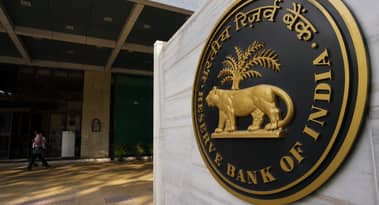
The Reserve Bank of India (RBI) on Wednesday announced a dollar/rupee buy-sell swap auction worth $5 billion with a tenor of three years, scheduled for May 26, as the central bank seeks to manage liquidity conditions amid continued pressure on the Indian currency.
The RBI said the decision followed a review of current and evolving liquidity conditions.
The move comes as the central bank continues intervening in the foreign exchange market by selling dollars from its reserves to defend the rapidly weakening rupee.
RBI move aimed at easing liquidity pressure
The central bank’s intervention in the currency market has led to a withdrawal of rupee liquidity from the banking system.
Dollar sales by the RBI absorb rupees from the market, which can tighten liquidity conditions and potentially push up interest rates.
India’s banking system liquidity remains in surplus, but the surplus has narrowed significantly.
According to the report, liquidity currently stands at 1.51 trillion rupees ($15.6 billion), equivalent to around 0.6% of total deposits in the banking system.
The RBI’s swap auction is expected to inject liquidity back into the system while simultaneously addressing volatility in forward currency markets.
Rupee weakens to fresh record low
The Indian rupee has remained under pressure in recent weeks as geopolitical tensions and rising crude oil prices weighed on the currency.
The report noted that the rupee has weakened more than 6% since the Iran war began, with higher oil prices increasing pressure on India’s import bill and external balances.
On Wednesday, the currency fell to another all-time low of 96.96 against the US dollar, marking its latest consecutive record low.
The RBI has been selling dollars at an estimated pace of $1 billion per day in recent trading sessions to curb excessive depreciation in the currency.
Bond market reacts positively
Market participants said the swap announcement is likely to support bond markets by ensuring liquidity conditions remain comfortable.
“The swap will be good for bonds as it will help maintain surplus liquidity,” said Alok Singh, head of treasury at CSB Bank, as cited in a Reuters report.
Singh added that the move could also ease pressure in currency forward markets.
"It should cool forward, which has been rising over the past two weeks, and bring down hedging costs.
The impact on the INR spot rate is likely to be neutral," Singh said.
India’s benchmark 6.48% 2035 bond yield declined following the RBI announcement.
The yield fell 3.4 basis points to close at 7.0761% on Wednesday, reflecting improved sentiment in the debt market after the liquidity-supportive measure.

USD/JPY signal: forecast as a death cross forms ahead of key US, Japan macro data

SDV's Alexander Lis on why the Debasement trade is more complicated than it looks
USD/JPY signal: forecast as Japanese yen surges amid BoJ rate hike bets

AUD/USD signal: forecast as RBA and Fed rate hike odds rise

NZD/USD signal: forecast as RBNZ hikes rates as New Zealand bond yields jump
No results found
Loading articles...
Failed to load articles. Please try again.