
Bank of England holds rates at 3.75% as inflation risks persist
AI Sentiment: 35/100 Bearish
This score is generated through AI-driven analysis of the article's content.

powered by

If Hormuz reopening eases oil/gas, the UK’s inflation pressure should cool faster than peers that are more exposed to different energy dynamics. That supports GBP relative strength versus EUR/JPY. Buy GBP vs EUR (e.g., GBP/EUR) and/or GBP vs JPY (GBP/JPY) on the easing-energy impulse.
Key Risk: Geopolitics re-tighten (Hormuz risk returns) and energy prices spike again, crushing the inflation relief trade.
BoE “active hold” at 3.75% with inflation still above target and forecast rising to >3.25% late-year keeps rate-cut odds capped. Sell UK rate-sensitive assets: short UK 2-year and 5-year Gilts (e.g., via futures: LIY/DUY). Expect yields to stay higher than markets want because energy-driven inflation is “in the pipeline.”
Key Risk: A clear, sustained drop in energy prices that forces the BoE to pivot to earlier cuts.
- BoE keeps rates at 3.75% amid ongoing inflation concerns.
- MPC votes 7-2 for hold despite calls for hike.
- Inflation expected to rise before easing towards target.
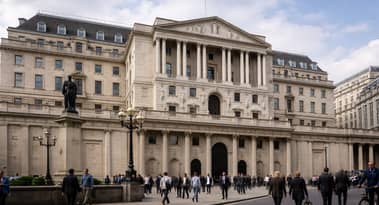
The Bank of England left its benchmark interest rate unchanged at 3.75% in June, maintaining its cautious stance amid ongoing uncertainty surrounding inflationary pressures linked to recent geopolitical developments.
The central bank’s Monetary Policy Committee voted 7-2 in favour of keeping rates on hold.
External MPC member Megan Greene and Chief Economist Huw Pill dissented, calling for a quarter-percentage-point increase in rates.
The majority maintains an ‘active hold’ stance
Despite the split vote, most MPC members appeared reluctant to move towards a tighter monetary policy.
Their position remained broadly aligned with Governor Andrew Bailey’s “active hold” approach, which he has previously described as an effective form of tightening when compared with market expectations for rate cuts before the outbreak of the US-Iran conflict.
The BoE’s decision stands in contrast to recent moves by other major central banks.
The European Central Bank and the Bank of Japan have both raised interest rates over the past week.
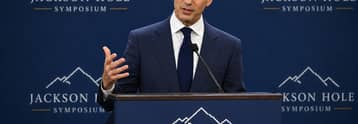
Meanwhile, projections released following the first policy meeting under new US Federal Reserve Chair Kevin Warsh indicated that policymakers expect rates to increase later this year.
Energy market developments offer some relief
Ahead of the June policy meeting, a tentative truce between the United States and Iran raised hopes that the Strait of Hormuz could reopen fully, potentially easing pressure on global energy markets and lowering oil prices.
Such a development would be particularly beneficial for Britain, which relies heavily on imported natural gas.
However, the BoE signalled that it remains cautious about declaring victory over inflation.
“Whatever happens in the future, the higher energy prices of the past four months mean there's already some inflationary pressure in the pipeline,” Andrew John Bailey, governor of BoE said in a statement accompanying Thursday’s policy decision.
Inflation forecast remains above target
The central bank expects inflation to rise above 3.25% during the final quarter of the year, compared with 2.8% recorded in May.
However, the projected increase is less severe than the 3.6%-3.7% range outlined in two of the BoE’s three primary scenarios published in April.
Inflation has remained above the BoE’s 2% target for much of the past five years, driven by a series of economic shocks since the COVID-19 pandemic.
Among the most significant was Russia’s invasion of Ukraine in 2022, which pushed British inflation above 11%.
Growth outlook improves marginally
Alongside its inflation assessment, the BoE struck a slightly more optimistic tone on economic growth.
The central bank estimated that the economy is expanding at an underlying pace of 0.2% per quarter, an improvement from the 0.1% rate projected in its previous forecasts.
This assessment came despite a modest decline in output during April.
The latest decision underscores the BoE’s balancing act as policymakers weigh lingering inflation risks against a still-fragile economic recovery, while keeping a close watch on developments in global energy markets.
Fed Chair Kevin Warsh warns inflation may require more rate hikes
Fed minutes show several officials favored July rate hike as inflation persists

RBI keeps repo rate unchanged at 5.25% as volatile oil prices cloud inflation outlook

Fed holds rates in 9-3 vote; Warsh says decision not a pause, but a review

ECB leaves rates unchanged as energy prices add to inflation uncertainty
No results found
Loading articles...
Failed to load articles. Please try again.