
MLCCs become AI's next bottleneck after memory chips: these stocks are surging
AI Sentiment: 82/100 Bullish
This score is generated through AI-driven analysis of the article's content.

powered by

Buy Murata Manufacturing (6752.T). AI servers need ~28,000 MLCCs each, and book-to-bill for top suppliers is at the highest since Covid, signaling real order strength. Morgan Stanley expects high-capacity MLCC demand to roughly double annually for the next three years, and Murata is expanding capacity ~10% per year to keep up. The stock has strong Street support (Morgan Stanley top pick; Goldman Buy with ~33% upside).
Key Risk: AI server capex slows or MLCC demand normalizes faster than Murata’s capacity ramp, crushing pricing power and order growth.
Buy Samsung Electro-Mechanics (Samsung Electro-Mechanics Co., 009150.KS). It’s showing the strongest supply tightness (book-to-bill ~1.31) and is benefiting from rising MLCC prices (analysts see additional 2027 price hikes). With AI servers consuming far more MLCCs than standard servers, the company is positioned as a direct bottleneck supplier, not a distant beneficiary.
Key Risk: Pricing gains fade because customers renegotiate aggressively or supply catches up, turning tightness into inventory overhang.
- Goldman Sachs believes MLCCs could become the next major AI bottleneck after memory chips.
- Manufacturers are seeing strong order growth and massive share-price gains.
- Some analysts say price hikes might not significantly improve margins.
They may not be the obvious, high-ticket components driving the AI boom like GPUs and memory chips, but data centres’ soaring computing requirements have triggered a sharp rise in demand, with the shares of their manufacturers increasingly reflecting that growth.
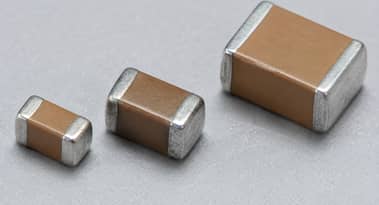
The component in question is the multilayer ceramic capacitor, or MLCC.
Often described as "the rice of the electronics industry," they are witnessing a surge in demand as AI data centres require dramatically larger numbers of these tiny electronic components to manage increasingly power-hungry computing systems.
The growing importance of MLCCs has already translated into strong gains for manufacturers, with several stocks rallying sharply this year as investors look beyond traditional AI beneficiaries such as Nvidia and memory-chip makers.
According to Strategic Market Research, MLCCs have become commercially critical because of both their ubiquity and the production risks associated with shortages.
"A device may contain hundreds, thousands, or even tens of thousands of MLCCs depending on its complexity. If the correct capacitor grade is unavailable, production schedules can be delayed even when the major chips are ready," the research firm said.
Goldman Sachs believes capacitors could become the next major AI bottleneck after memory chips.
In a report published in late May, the investment bank ranked MLCCs behind only GPUs and memory as the largest cost items in AI server construction and estimated that the AI-server MLCC market could expand more than fourfold between fiscal 2025 and fiscal 2030.
Murata, Taiyo Yuden, and Samsung Electro-Mechanics see new orders rise
The AI boom is reshaping demand because modern training and inference servers consume far more power than conventional computing systems.
According to China Securities, an AI server requires as many as 28,000 MLCCs per unit, roughly 13 times the number used in a standard server configuration.
That sharp jump in component requirements has tightened industry supply, lifting order books across leading manufacturers.
TrendForce said that by late June 2026, the book-to-bill ratios of the industry's three largest Japanese and South Korean suppliers had climbed to their highest levels since the Covid-19 pandemic.
Murata's ratio reached 1.30, Samsung Electro-Mechanics stood at 1.31, and Taiyo Yuden recorded 1.25, while the industry's overall book-to-bill ratio rose to 1.04.
A book-to-bill ratio compares the value of new orders a company receives to the value of products shipped over a specific period.
Manufacturers are already feeling the strain.
"The volumes we are seeing today it’s scary," Taiyo Yuden CEO Katsuya Sase said in an interview with Bloomberg in May.
"The pressure is extremely intense because we could be easily overwhelmed if one (supplier) stumbles."
Investor enthusiasm has mirrored those comments.
Taiyo Yuden's shares have surged roughly 300% this year as expectations for sustained AI-driven demand continue to rise.
Murata Manufacturing stands out as Wall Street's favoured MLCC pick
Murata Manufacturing has also emerged as one of Wall Street's favourite AI infrastructure plays with its share price rising about 196% so far this year.
Morgan Stanley recently named Murata its top electronic-components pick, raising its price target from 5,100 yen to 12,500 yen.
The brokerage expects demand for high-capacity MLCCs used in AI servers and data centres to roughly double annually over the next three years.
Murata has been expanding MLCC production capacity by about 10% annually through fiscal 2026 and plans another 10% increase in fiscal 2027, a pace Morgan Stanley believes should be sufficient to meet projected demand.
SMBC Nikko Securities has also turned more bullish, lifting its price target to 13,400 yen from 4,000 yen.
Most recently, Goldman Sachs reiterated its Buy rating on Murata, retaining the stock on its Conviction List with a 12-month target price of JPY 12,600.
With Murata currently trading around JPY 9,475, Goldman sees upside of roughly 33%.
The company also benefited after Apple announced price increases for several products, reinforcing investor confidence that premium device makers retain pricing power to offset higher component costs.
Murata is one of Apple's suppliers.
Other manufacturers join the rally; price hikes begin
Murata is not alone.
Taiwanese manufacturers Walsin and Yageo have each seen their share prices climb around 273% this year, while Samsung Electro-Mechanics has surged roughly 486%.
According to Citrini Research, spot and distributor prices for consumer MLCCs have already risen between 20% and 40% because of stockpiling and double booking.
Junseo Park, an analyst at Mirae Asset Securities, recently raised forecasts for average selling prices of MLCCs at Samsung Electro-Mechanics by 10% for 2027.
Price increases have already begun in some distribution channels, and with industry pricing negotiated quarterly, Park believes additional hikes are likely.
Why analysts urge caution
Not everyone believes the current enthusiasm will automatically translate into sharply higher profitability.
Masashi Kubota, research analyst at Bank of America Securities Japan, cautioned in a South China Morning Post report that some projections for MLCC price increases have become "excessive."
Even if manufacturers succeed in raising prices, Kubota argued that much of the increase will likely offset higher fixed costs rather than significantly improve operating margins.
Still, most research houses believe the AI-driven demand cycle remains in its early stages.
Goldman Sachs noted that while Murata expects AI infrastructure investment to peak around 2028, constraints such as power shortages could extend the investment cycle until 2030.
Morningstar analyst Ito also expects spending on AI servers and related infrastructure to continue expanding "at least through 2028," providing strong visibility for suppliers of passive electronic components such as MLCCs.
As AI infrastructure broadens beyond chips into every layer of hardware, investors increasingly appear willing to look past the obvious winners.
Tiny capacitors that rarely attract attention may now be becoming one of the most important building blocks of the next phase of the AI investment cycle.

Google makes record $15B AI infrastructure bet in Finland

Invezz Explains: what is AI distillation, and why is US accusing Chinese firms of it?

Anthropic researcher resigns over AI ‘gambling with lives’; extinction risk tops 10%

Qualcomm stock jumps 4% as Amazon signs on for custom AI data center chips

Why Nvidia stock is down over 1% today even as AI peers are surging
No results found
Loading articles...
Failed to load articles. Please try again.