
US stocks and the economy seem to moving in opposite directions: here's why

AI Sentiment: 35/100 Bearish
This score is generated through AI-driven analysis of the article's content.

powered by

Buy consumer/financial names most levered to the top-20% wealth effect: e.g., Charles Schwab (SCHW) and Interactive Brokers (IBKR). If AI keeps stocks elevated, wealthy households trade/invest more, supporting brokerage flows and fee income even while Main Street is soft.
Key Risk: A prolonged AI-led market slump hits portfolio values and trading activity, crushing brokerage revenues.
Sell SPY (or VTI) to fade the “index up, economy flat” disconnect. The article says the S&P’s record level is being lifted by a narrow set of AI hardware names, so broad-market upside is increasingly speculative. Instead, buy NVDA and the HBM supply chain (e.g., TSM) to stay exposed to the real driver: AI capex and GPU/HBM demand.
Key Risk: AI hardware keeps rallying and drags the whole index higher, making broad-market shorts lose money fast.
- US stock market is booming, with major indices flirting with record highs.
- US economy, on the other hand, is growing at a more muted 2% pace.
- Here's what is behind this divergence and whether it will persist in H2.
The US financial landscape is featuring a striking paradox in 2026.
Wall Street is sprinting, with major indices flirting with record highs and extending a “multi-year” winning streak. Yet, step outside the trading floors, and Main Street tells a far more muted story.
The broader US economy is expanding at a tepid pace, weighed down by a cooling labour market and battered consumer sentiment.
This growing “disconnect” has been confusing for many investors as the modern economic wedge shatters the broader narrative that stock market and economic health move in lockstep.
What’s behind this divergence?
According to Mark Zandi, the chief economist at Moody’s, the primary reasons for this divergence is the explosive rallies in AI stocks.
While the benchmark S&P 500 index is currently hovering around record levels, much of its YTD rally has been driven by select AI names – particularly on the hardware side (GPUs, HBM makers).
Because technology and adjacent companies now command up to half of the stock market’s overall weight, their soaring valuations tend to artificially lift the index.
Investors are buying into tomorrow’s digital revolution – transforming the US stock market into a forward-looking speculative vehicle rather than a mirror of economic reality that’s more muted at present, to say the least.
What’s weighing on Main Street?
In stark contrast to the stock market’s glitz, the actual productive economy is growing at a soft 2% pace, a visible deceleration from previous years.
“We're growing. We're not in recession. But we’re not going anywhere quickly,” Zandi argued.
This stagnation is mostly rooted in the structure of the US Gross Domestic Product (GDP), where technology only accounts for a fraction of the footprint.
Instead, the economy relies on a labor market currently plagued by multi-year lows in hiring and weak labor force participation.
Coupled with stubborn inflation, consumer confidence has eroded, creating an underlying economic environment that feels decidedly fragile.
The fragile K-shaped consumer spender
Because the broader populace is tightening its belt, US economic growth has become dangerously dependent on a wealthy minority.
A distinct “K-shaped” dynamic has emerged: the top 20% of earners now drive nearly 60% of all personal spending, supercharged by the “wealth effect” of their booming stock portfolios.
This creates a precarious structural vulnerability. If the artificial intelligence hype cycle cools down and the stock market suffers a prolonged slump, the wealthy will likely stop spending – leaving an already soft economy exposed to a severe downturn.
On the other hand, if AI-driven productivity eventually translates to stronger hiring, wage growth, and business investment, the gap may narrow.
All in all, how the artificial intelligence narrative unfolds in the back half of 2026 is really the key to determining whether this divergence persists.

Why retail investors are ditching broader index bets for selective trades

Dow rises as S&P 500 nears record, SK Hynix debut boosts AI chip stocks
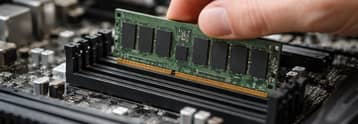
Is SK Hynix stock a better pick to play AI memory market than Micron?

Seagate stock jumps as Wells Fargo upgrade boosts AI storage outlook

Why SpaceX stock is down over 2% on Friday
No results found
Loading articles...
Failed to load articles. Please try again.
