
Why is Microsoft stock climbing today?

AI Sentiment: 78/100 Bullish
This score is generated through AI-driven analysis of the article's content.

powered by

Buy Microsoft (MSFT). The report signals Maia 300 is moving from roadmap to execution (possible next month) and TSMC capacity talks are already underway (300k units for 2027, aiming for 1M+). That directly supports Azure margin and supply control versus Nvidia-dependent builds, and Bernstein’s $660 target reinforces the “disciplined spend” narrative.
Key Risk: Maia 300 slips (or underperforms) so Microsoft can’t replace Nvidia at scale, forcing higher data-center costs and delaying margin improvement.
Sell Nvidia (NVDA). If Microsoft’s custom silicon ramps faster than expected, it’s a clear incremental headwind to Nvidia’s AI chip demand and pricing power, especially as hyperscalers push for more in-house compute. The stock is already down on the day, and this news adds a credible path to further share loss.
Key Risk: Custom chips don’t deliver enough performance-per-dollar, so hyperscalers keep buying Nvidia GPUs and Nvidia’s revenue mix holds up.
- Microsoft is reportedly preparing to launch its Maia 300 AI chip by next month.
- Bernstein also raised its MSFT PT, saying it's AI infra expansion is measured.
- Big Tech firms are developing custom AI chips to reduce dependence on Nvidia.
Microsoft MSFT shares rose 1.7% on Monday after a report said the software giant is preparing to unveil its next-generation Maia 300 artificial intelligence chip this fall, marking another step in its effort to reduce dependence on Nvidia's processors as competition in custom AI silicon intensifies.
According to The Information, citing people familiar with the matter, Microsoft could introduce the Maia 300 as early as next month.
Separately, Bernstein SocGen Group also raised its price target on Microsoft shares to $660 from $647 while maintaining an Outperform rating, expressing confidence in the company's long-term AI infrastructure strategy.
Nvidia shares were down about 1.8% during Monday's session.
The broader S&P 500 was down by almost 0.1%.
Microsoft accelerates custom AI chip ambitions
Microsoft has been investing heavily in proprietary AI chips as hyperscale cloud providers increasingly seek greater control over the hardware powering artificial intelligence applications.
The company first introduced the Azure Maia AI Accelerator in November 2023 alongside its Cobalt central processing unit.
Earlier this year, it unveiled the Maia 200, manufactured by Taiwan Semiconductor Manufacturing Co. using its advanced 3-nanometer process.
The Maia 200 featured a large amount of SRAM, a high-speed memory technology designed to improve AI inference by enabling faster processing of user requests.
The upcoming Maia 300 represents Microsoft's next step in expanding its custom silicon portfolio.
According to The Information, Microsoft is negotiating with TSMC to secure manufacturing capacity for more than 300,000 Maia 300 chips for delivery in 2027.
The report added that Microsoft ultimately hopes to secure production capacity exceeding one million Maia 300 units, although supply constraints and negotiations with TSMC could affect those plans.
The company is also reportedly attempting to convince major cloud customers, including Anthropic, to deploy the chips on Microsoft's Azure platform.
Big Tech intensifies challenge to Nvidia
Microsoft's efforts mirror a broader trend across the technology sector, where cloud providers are increasingly developing in-house processors to reduce reliance on Nvidia's high-priced graphics processing units.
Alphabet recently began recognizing revenue from direct sales of its Tensor Processing Units, while Amazon has continued expanding adoption of its Trainium processors.
Last month, The Information reported that Alphabet is designing another custom AI server processor, internally known as "Frozen v2," expected to launch in 2028.
According to the report, the chip could be six to ten times more power-efficient than Google's existing AI processors when measured by tokens generated per unit of electricity.
Greater efficiency has become a strategic priority for AI companies seeking to lower infrastructure costs while addressing persistent shortages in advanced computing capacity.
Bernstein sees disciplined AI infrastructure spending
Bernstein said concerns about Microsoft's data center spending appear overstated.
The brokerage noted that Microsoft has expanded data center capacity more slowly than cloud revenue growth while spreading future lease obligations across multiple years.
According to Bernstein, Microsoft's purchase commitments for power, cooling infrastructure and hardware are concentrated over the next twelve months, with relatively limited obligations beyond that period.
The research firm argued that even if AI demand weakened unexpectedly, additional capacity could still support Microsoft's traditional CPU-based cloud business.
Bernstein described Microsoft's expansion strategy as measured and aligned with current customer demand, while acknowledging that hardware costs have increased despite improving equipment availability.
Long-term goal remains vertically integrated AI infrastructure
Microsoft has repeatedly stated that designing proprietary chips is central to its long-term AI strategy.
Speaking last year, Microsoft's chief technology officer Kevin Scott said the company ultimately intends to rely primarily on internally designed processors across its data centers.
"Absolutely," Scott said when asked whether Microsoft's long-term objective was to use mostly proprietary chips.
He added that Microsoft is already deploying "lots of Microsoft" silicon across its infrastructure.
Scott emphasized that the strategy extends beyond processor design.
"It's about the entire system design. It's the networks and the cooling, and you want to be able to have the freedom to make the decisions that you need to make in order to really optimize your compute to the workload," he said.
As generative AI becomes increasingly central to cloud computing, ownership of the underlying hardware has emerged as a key competitive differentiator.

Nikkei 225 Index outlook: top catalysts for Japan stocks this week

Kospi Index at a crossroads as Samsung, SK Hynix leverage bets reverse

How Meta’s $18B teen safety settlement could reshape social media regulation
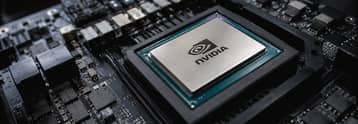
Nvidia is using its balance sheet to fuel the AI boom. Is it a double-edged sword?

Dow holds weekly gain as Warsh inflation warning lifts rate hike bets
No results found
Loading articles...
Failed to load articles. Please try again.