
NZD/USD signal: forecast as RBNZ hikes rates as New Zealand bond yields jump

AI Sentiment: 18/100 Bearish
This score is generated through AI-driven analysis of the article's content.

powered by

Sell NZD/USD. RBNZ hiked to 2.75% but the market is still repricing higher NZ and US yields (NZ 10Y to 4.86%). NZD is already in a confirmed bearish breakout: below 0.5860 pivot and the 50-day MA, with momentum pointing toward the next Murrey pivot/reverse level. Trade the rate-spread + yield-up trend, not the single hike headline.
Key Risk: Oil-driven inflation stays sticky and forces the RBNZ to keep hiking faster than the Fed, reversing the yield spread and lifting NZD.
Sell NZ government 10Y futures/bonds. The article flags rising NZ yields tied to crude/transport inflation risk and a higher-for-longer global rate path (Fed hike expectations). With NZD breaking down and yields at the highest since March, duration is vulnerable to further upside in yields.
Key Risk: RBNZ turns more dovish than markets expect (growth/job insecurity bites hard), causing NZ yields to fall and crushing the short.
- NZD/USD pair slumped to the lowest level since August 13.
- The RBNZ decided to hike interest rates by 25 basis points.
- The US and Iran resumed their fighting this week.
The NZD/USD exchange rate continued its strong downward trend, reaching its lowest level since August 13 this year after the Reserve Bank of New Zealand (RBNZ) delivered its interest rate decision. It slumped to 0.5835, down by over 2.6% from its highest point in August.
RBNZ interest rate hike
New Zealand’s RBNZ decided to hike interest rates for the second consecutive meeting as it fights to lower inflation, which has remained above the 2% level in the past few years.
It brought the benchmark interest rate to 2.75%, narrowing the gap with the benchmark US interest rate, which stands between 3.50% and 3.75%.
In a statement, the RBNZ maintained that inflation is a major issue in the country, with the headline Consumer Price Index (CPI) rising to 4.1% in the June qyuarter, driven by elevated crude oil prices.
While core inflation remains high, officials expect that it will come down to the target range sometime in 2027. The statement added:
“Resilient demand from New Zealand’s trading partners and strong export prices are supporting income growth and investment in export-exposed sectors and regional New Zealand.”
Still, the bank warned that the economy is seeing weak income growth, job insecurity, and flat house prices, which are having an impact on household spending and residential investment in Auckland and Wellington.
A key challenge is that inflation may remain at an elevated level in the coming weeks now that the US and Iran have resumed their kinetic activity. Brent and the West Texas Intermediate (WTI) have continued rising and now sits at $95 and $90, respectively.
The crisis will likely escalate in the coming days, which will push crude oil and transportation prices substantially in the coming weeks.
This is one key reasons why New Zealand’s and US bond yields have continued rising. The ten-year yield jumped to 4.86%, its highest level since March 23rd this year. It has risen substantially from the June low of 4.358%.
The same is happening in the United States, where the ten-year and 30-year rose to 4.8% and 5.28%, respectively. These yields have jumped as investors expect that the Fed will hike interest rates as soon as this month.
NZD/USD technical analysis
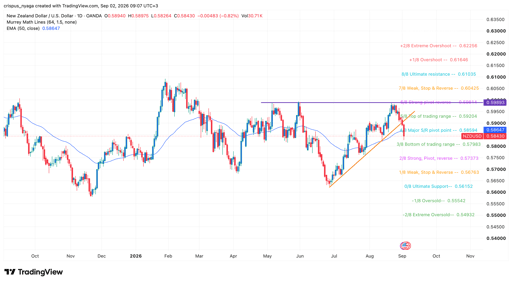
NZDUSD chart | Source: TradingView
The daily chart shows that the NZD/USD pair peaked at 0.5990 in August. This was an important level since it was its highest point in May and June this year.
The pair has now slumped and moved below the ascending trendline that connects the lowest swings since June, July, and August this year. Moving below that level confirmed the bearish breakout.
The pair has moved below the Major S/R pivot point of 0.5860, and the 50-day moving average. Therefore, the pair will likely remain under pressure in the coming days, potentially to the strong, pivot, reverse level of the Murrey Math Lines too.

Nikkei 225 Index analysis as Japan bond yields surge, Softbank stock plunges

Duolingo stock jumps as charts flash warning amid transition from growth to value

CoreWeave stock flashes a warning sign despite strong revenue growth

SCHD nears title of biggest dividend ETF, but technical risks loom

Nio stock: Why Tesla rival dropped despite strong revenue growth
No results found
Loading articles...
Failed to load articles. Please try again.