Invezz

Oil soars 3% as diplomatic deadlock, Trump's threat fuel supply risks
Oil soars 3% as diplomatic deadlock, Trump's threat fuel supply risks
Sayantan Sarkar
19 Feb 2026, 01:01 AM

Oil prices saw a significant surge of over 3% on Wednesday, reacting sharply to escalating geopolitical tensions stemming from the nuclear negotiations with Iran.

The spike was directly triggered by a statement from US Vice President JD Vance, who indicated that the recent round of talks failed to address critical "red lines" established by the United States.

The price of West Texas Intermediate crude oil was last at $64.13 per barrel, up 3.1%, while Brent was at $69.43 a barrel, up 3%.

Vance's comments suggested a deep dissatisfaction within the administration regarding Iran's stance and commitment to the US demands, implying that the diplomatic path may be reaching an impasse.

Explicit threat of military force and risk premium

Further contributing to the market anxiety was a definitive declaration from President Donald Trump, who publicly affirmed that the administration "reserves the right to use military force" should diplomacy fail to achieve the desired outcomes.

This combination of a perceived diplomatic deadlock and the explicit threat of military action injected a considerable risk premium into the oil market.

Traders interpreted the developments as dramatically increasing the probability of a supply disruption in the Middle East, a region central to global oil production.

The region sits on more than half of the world’s oil reserves.

The market's immediate response was to bid up prices, reflecting the fear that Iranian oil exports could be further restricted or that a wider regional conflict could jeopardize shipping routes like the Strait of Hormuz.

The 3% rise underscored the gravity with which the global commodity markets viewed the hardening positions of both Washington and Tehran.

Market reassess peace talks

“Investors are starting to reassess the chances of a US-Iran deal after the second round of conversations ended without any tangible advance,” Guillermo Alcala, analyst at FXStreet, said in a report.

“The lack of specific details about the progress, however, is making markets doubt,” he added.

Discussions between US envoys Steve Witkoff and Jared Kushner and Iran, represented by Foreign Minister Abbas Araghchi, took place in Geneva on Tuesday regarding nuclear issues.

Iranian media reported that Foreign Minister Araghchi characterised the talks as "constructive," stating that a general agreement on guiding principles was reached.

Despite the foreign minister's comments suggesting a possible settlement between the US and Iran, which contributed to lower oil prices on Tuesday, Vance noted that Tehran has not met core American demands.

“In some ways, it went well; they agreed to meet afterwards,” the vice president told Fox News Tuesday evening.

“But in other ways it is very clear that the president has set some red lines that the Iranians are not yet willing to actually acknowledge and work through.”

Military action and Strait of Hormuz risk

Vance, speaking to Fox News, stated that President Trump is prepared to use military force should diplomatic efforts fail to halt Iran's nuclear program.

The Vice President emphasised the military's strength, noting, "We do have a very powerful military — the president has shown a willingness to use it."

Any US military action against Iran would likely be a significant, weeks-long commitment—resembling a full-scale war rather than a limited operation like the raid that resulted in the capture of Venezuelan President Nicolás Maduro in January, according to a report by Axios.

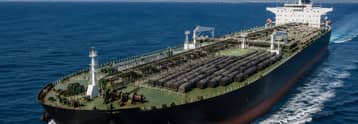
This week, the Strait of Hormuz—a crucial global oil trade chokepoint—was the site of war games conducted by Iran's Revolutionary Guard.

According to data from energy consulting firm Kpler, roughly one-third of all crude exports transported by sea move through this narrow waterway.

The stakes are high, with a significant US maritime force deployed in the area, and the risk of the closure of the Strait of Hormuz is looming, Alcala said.  

Hormuz is a bottleneck for 20 to 25% of global Oil supply transport, and its closure would trigger a sharp escalation in prices.

In the Middle East, the USS Abraham Lincoln aircraft carrier has been stationed, while the USS Gerald Ford is currently heading toward the region, both deployed by Trump.