
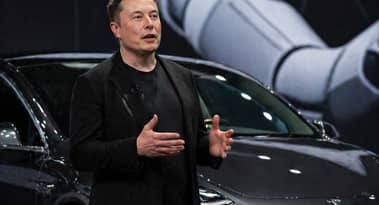
Tesla Q1 earnings: 10 bold predictions Elon Musk made on what comes next
AI Sentiment: 78/100 Bullish
This score is generated through AI-driven analysis of the article's content.

powered by

Buy Tesla (TSLA). The article’s core message is that Tesla is spending now to unlock autonomy (FSD v15 on AI5), robotaxis (Dallas/Houston scaling with safety as the gate), and Optimus (meaningful production next year). The key setup is the combination of strong free cash flow ($1.44B) plus rising capex (> $25B plan) that funds the “industrial stack” shift (software + chips + robotics).
Key Risk: FSD/robotaxi safety progress stalls or regulators force a slow, indefinite rollout, turning the capex-heavy bet into a cash burn story.
Sell Tesla (TSLA) if you believe the market is underpricing the risk that the autonomy/robotics ramp takes longer than Musk’s timeline. The thesis killer is that the company is already increasing spending (capex $2.49B in the quarter; plan > $25B) while the biggest revenue inflection points (unsupervised FSD, meaningful Optimus, robotaxi scale) are still “next year / later” and depend on validation and manufacturing learning curves.
Key Risk: Capex keeps rising while revenue growth doesn’t accelerate—free cash flow deteriorates and investors re-rate TSLA on “spend without payoff.”
- Tesla reports $22.39 billion revenue and $1.44 billion free cash flow in Q1.
- Elon Musk doubles down on AI, FSD, and Optimus robot vision.
- Energy storage and robotaxi plans drive long-term growth narrative.
Tesla’s first-quarter 2026 results gave investors a familiar mix of hard numbers and harder-to-price ambition.
Revenue came in at $22.39 billion, net income attributable to common shareholders was $477 million, adjusted EPS was 41 cents, and free cash flow reached $1.44 billion.
Deliveries totaled 358,023 vehicles, while capital spending already rose to $2.49 billion in the quarter.
But the bigger message was strategic as Tesla is pushing deeper into autonomy, robotics, and chip design.
Elon Musk made clear the company is prepared to spend heavily to get there.
Elon Musk’s 10 bold predictions for future
Autonomy is still the core bet
1. Optimus could become Tesla’s biggest product ever
Elon Musk again put the humanoid robot at the center of Tesla’s long-term story, saying Optimus could be not just Tesla’s biggest product, but “probably the biggest product ever.”
That is classic Musk: a claim that sounds audacious, but is meant to reset how investors think about the company’s addressable market.
In Tesla’s framing, Optimus is no side project; it is the next industrial platform.
2. Unsupervised full self-driving is within reach
Musk said Tesla’s latest FSD work has a path toward unsupervised driving “anywhere in the world that it is legal to do so,” and tied the next major step to Version 15.
The latest version could arrive by late 2026 or early 2027 and run on AI5 hardware.
That is an important distinction as Tesla is no longer just selling driver assistance; it is positioning software as the bridge to true autonomy.
3. FSD will be safer than human drivers
Musk said even Version 14 is already “significantly safer than human,” with Version 15 intended to push that advantage further.
The investment case here is straightforward.
If Tesla can credibly show a step-change in safety, it would strengthen both the consumer FSD pitch and the robotaxi thesis.
4. Robotaxis will scale, but safety remains the gatekeeper
Tesla has expanded robotaxi operations to Dallas and Houston, and Musk said the limiting factor is rigorous validation, not demand.
He also said Tesla had not had a single accidental injury to date as the service expands.
In practice, that means the rollout is likely to remain cautious, geography by geography, until regulators and Tesla’s own data both clear the system.
Robots and chips are becoming the new industrial stack
5. Vehicle production should rise materially from here
Musk said Tesla is laying the groundwork for a “significant increase” in vehicle production through better batteries, powertrain work, AI software, chip design and manufacturing.
The company’s first-quarter update showed it is already pushing output higher, with total production of 408,386 vehicles.
The point is not just volume; it is capacity for a much larger operating model.
6. Cybercab and Semi will follow an S-curve, not a straight line
Musk warned that both products will start slowly because they require new supply chains and new manufacturing systems, then ramp more quickly later.
Tesla expects volume Cybercab production this year, while Musk said the first phase should remain modest before momentum builds toward year-end and into 2027.
That is consistent with Tesla’s usual pattern: early bottlenecks, then a steeper ramp once the line stabilizes.
7. Energy storage demand is set to keep climbing
Musk said the US and the world will need a lot more energy storage, and described Megapack demand as very strong ahead of production of Megapack 3 later this year near Houston.
Tesla’s official Q1 update also showed energy generation and storage revenue of $2.41 billion, underscoring that this is already a meaningful business.
For Tesla, energy is increasingly the cleaner near-term growth story while vehicle software scales more slowly.
8. Tesla’s AI chips are meant to lead in performance and value
Musk said AI5 has been taped out and called it the best AI inference chip for edge compute, and the best value for money.
He also said Tesla is already discussing AI6 and Dojo 3, while planning a research chip fab at Giga Texas.
The message is clear: Tesla wants more control over the silicon stack that powers autonomy and robotics, even if that means more upfront spending.
9. Optimus production is expected to become meaningful next year
Tesla is preparing Fremont for initial Optimus production this year, with a second factory planned at Giga Texas and volume expected to step up next year.
Musk said the robot will first be used internally, then become useful outside Tesla sometime next year.
That makes Optimus a staged product rollout, not a single launch event.
Capex bill is the price of the bet
10. Heavy investment today is supposed to unlock much bigger revenue later
Musk said Tesla will increase capital expenditure substantially, and the company raised its 2026 spending plan to more than $25 billion, up from the roughly $20 billion it had flagged in January.
Tesla backed that up with a strong first-quarter free cash flow print, but management also warned the next phase will be capital-intensive.
In simple words, Tesla is asking investors to accept lower near-term flexibility in exchange for a much larger autonomy-and-robotics payoff.
Salesforce stock surges 12%: did earnings just kill ‘SaaSpocalypse’ fears?
Dick’s Sporting Goods stock falls 19% as company cuts annual forecasts
Why is Walmart stock falling 7% despite earnings beat and raised outlook?
Alibaba earnings today: can AI cloud growth finally break its losing streak?

AVAV stock double bottoms as AeroVironment earnings loom
No results found
Loading articles...
Failed to load articles. Please try again.