
USD/JPY forecast as Japanese yen retreat resumes ahead of US NFP data

AI Sentiment: 72/100 Bullish
This score is generated through AI-driven analysis of the article's content.

powered by

Buy USD/JPY (spot or liquid CFD). The yen’s recent slide looks like a “dip-buy” cycle after heavy US/BoJ intervention, and the article flags a doji after a sharp selloff—often a near-term reversal setup. With NFP and CPI as catalysts, a stronger US data print should push USD/JPY back toward the 160 resistance area.
Key Risk: US data disappoints and the Fed is priced to turn dovish, triggering a fresh yen bid that breaks below 155.20.
Buy US 5-year Treasuries (e.g., UST 5Y futures) and fund in JPY. The piece notes US yields staying above 5% while the yen has been pressured by intervention. If US rates stay elevated into NFP/CPI, the carry/price support should outweigh the intervention-driven yen volatility.
Key Risk: A risk-off move or a clear dovish shift in Fed expectations drives 5Y yields down fast, wiping out the carry and price gains.
- The Japanese yen resumed the downward trend this week.
- The USD/JPY pair jumped to 158.40 from this month’s low of 155.
- The US will publish the latest nonfarm payroll (NFP) report.
The Japanese yen resumed its downward trend as investors reflected on the recent interventions by the United States and the Bank of Japan. After plunging to 155.20 earlier this week, the USD/JPY pair rebounded to 158.41 as traders bought the dip ahead of the US nonfarm payrolls (NFP) data.
Japanese yen resumes its downtrend
The Japanese yen has been highly volatile recently, helped by the interventions by the US and the Bank of Japan. It is estimated that the US spent billions of dollars rescuing the currency, which drove the USD/JPY exchange rate from last year’s high of 163.96 to 155.20.
According to the FT, the Bank of Japan also spent over $50 billion in these interventions last week. This means that it has spent over $120 billion in these actions this year.
The US has an incentive to intervene since Japan is the biggest foreign holder of US debt. Data shows that the country holds over $1.14 trilion in US debt, much more than the $948 billion that the UK holds. China has continued reducing its holdings to the current $659 billion.
Trump’s fear is that the country will continue selling these holdings at a time when the US public debt has jumped to nearly $40 trillion. US public spending is soaring, while the five-year yield has remained above 5% this month.
Forex interventions tends to have short-term impacts
History shows that forex interventions normally have a minor impact. A good example of this is when the US intervened in Argentina by purchasing up to $20 billion worth of pesos in December. The intervention boosted the peso, with the USD/ARS pair falling to 1.32 million. Today, the pair stands at 1.5 million.
In April, the USD/JPY pair plunged from 160.70 to a low of 155 within a few days. It then rebounded and reached a high of 163.96 in July this year.
Therefore, there is a likelihood that the pair will likely resume the uptrend, potentially to the important resistance level of 160.
The next important catalyst for the pair will be the upcoming US nonfarm payrolls (NFP) data that comes out on Friday and the Consumer Price Index (CPI) report expected on Wednesday.
Economists expect the data to reveal that the economy added over 88k jobs last month after creating 57k a month a month earlier. They expect the report to show that the unemployment rate to remain at 4.2%.
These numbers will provide more information about the state of the economy. It will help traders predict what to expect from the Federal Reserve.
USD/JPY technical analysis
USDJPY chart | Source: TradingView
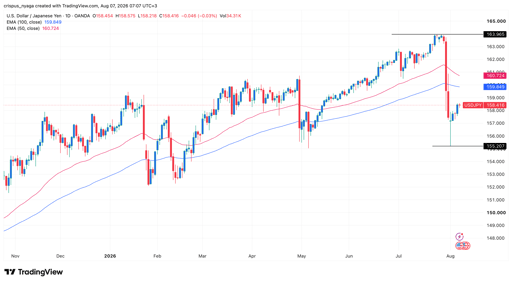
The daily chart shows that the USD/JPY exchange rate has fallen sharply from its year-to-date high of 163.96 to a low of 155.20. On Monday, the pair formed a doji candlestick pattern, characterized by a small real body and long upper and lower shadows.
A doji reflects market indecision after a strong downtrend and is often viewed as an early bullish reversal signal, particularly when confirmed by a higher close in subsequent trading sessions.
Therefore, there are signs that the pair will continue rising in the near term, potentially to the key resistance at 160. A drop below this month’s low of 155.20 will invalidate the bullish outlook.

Kospi Index on edge as SK Hynix stock jumps after strong Nvidia guidance

USD/JPY forecast ahead of Warsh Jackson Hole Speech as BoJ official hints at hikes

Scotiabank stock has soared to a record high after earnings: more upside?

Oklo stock analysis: Is it a buy or sell as insiders continue selling?

Here’s why the Zoom Video stock is crashing after its earnings report
No results found
Loading articles...
Failed to load articles. Please try again.