
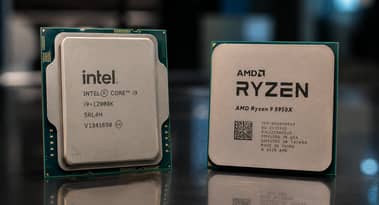
Intel, AMD stocks declines as chip sell-off hits Wall Street
AI Sentiment: 35/100 Bearish
This score is generated through AI-driven analysis of the article's content.

powered by

Semiconductor sell-off is being driven by positioning ahead of Nvidia, not by AMD fundamentals. AMD has clear catalysts: Helios rack-scale AI platform shipments starting in September and customer commitments (OpenAI, Meta, Anthropic). If Nvidia’s results confirm AI infrastructure demand, AMD should re-rate as the credible “alternative to Nvidia” across GPUs/CPUs/networking/racks.
Key Risk: Helios slips or fails to convert commitments into meaningful revenue, so AMD can’t capitalize on any Nvidia-driven AI demand rebound.
Intel’s stock is being hit by two thesis-damaging issues: dilution from the $20B upsized secondary equity raise (210.5M new shares) and near-term free-cash-flow pressure from >$20B foundry expansion. Even if the foundry plan is right long term, the market is punishing the next 6–18 months, and the stock is trading below the offering price.
Key Risk: Foundry spending fails to produce credible progress (cost, yields, or customer traction), forcing even more dilution or delaying returns.
- Intel and AMD fall as semiconductor stocks face heavy selling.
- AMD gets $550 price target as BMO sees AI infrastructure growth.
- Nvidia earnings loom as investors cut semiconductor exposure.
Intel and AMD shares fell on Monday as semiconductor stocks came under heavy selling ahead of Nvidia's closely watched quarterly results.
The decline was concentrated in chip stocks, with the iShares Semiconductor ETF falling more sharply than broader technology funds.
Semiconductor stocks lead Monday's sell-off
The iShares Semiconductor ETF (SOXX) fell more than 3% in trading, while the iShares US Technology ETF declined about 1%.
The sharper move in semiconductors suggested that investors were reducing exposure to the sector rather than broadly selling technology stocks.
The selling came two sessions before Nvidia reports what is expected to be one of its most important quarters of the year. Investors are likely reassessing positions across the semiconductor sector ahead of the results.
Intel INTC shares were among the biggest decliners, falling as much as 5.47% to $85.14.
The stock remained below the $95 offering price of the company's recently completed $20 billion secondary equity raise.
The upsized offering involved approximately 210.5 million new shares, increasing the potential dilution for existing shareholders.
The stock's decline below the offering price has added to selling pressure as investors assess the impact of the larger share count.
Intel is also facing questions over its near-term free cash flow as it plans to spend more than $20 billion on foundry expansion.
Analysts, including UBS, have reduced their price targets to account for the expanded share count and near-term earnings outlook.
AMD receives bullish outlook despite sector pressure
AMD shares also declined on Monday.
BMO initiated coverage of AMD with an Outperform rating and a $550 price target in the previous week. Analyst Harsh Kumar said AMD is moving beyond individual processors toward a broader AI infrastructure offering.
A key part of that strategy is Helios, AMD's rack-scale AI platform, which is expected to begin shipments in September. The platform is intended to compete with Nvidia's comparable rack-scale systems.
AMD has already secured customer commitments involving OpenAI, Meta and Anthropic.
BMO sees those relationships as a potential source of additional AI infrastructure revenue as deployments expand.
The company's broader portfolio includes GPUs, CPUs, networking and rack-level systems.
BMO expects AMD could gain additional market share in AI infrastructure as customers seek alternatives to Nvidia.
Nvidia earnings loom over chip stocks
Nvidia's upcoming results remain a central focus for the semiconductor sector. The company is scheduled to report earnings on Wednesday, making Monday's selling particularly notable as investors adjust their positioning ahead of the report.
For Intel, the focus remains on the impact of its recent equity raise, dilution and heavy foundry spending.
For AMD, investors are assessing whether its expansion into rack-scale AI infrastructure can translate into additional revenue and market share.
Meanwhile, Nvidia's results could provide a fresh indication of the strength of AI-related demand and influence sentiment across the wider chip sector.
Why are Micron, SK Hynix, SanDisk stocks falling today?

Salesforce stock hits a crucial resistance ahead of earnings: what next?

Nucor, Steel Dynamics, Cleveland-Cliffs stocks rise as US-Canada trade talks fail
Marvell Technology stock analysis and earnings preview: will it rise or crash?

JPMorgan warns of a downturn ahead and AI stocks may be to blame
No results found
Loading articles...
Failed to load articles. Please try again.