
Interview: Bitcoin Japan’s big bet on AI economy, from SpaceX to rare earths
AI Sentiment: 78/100 Bullish
This score is generated through AI-driven analysis of the article's content.

powered by

Buy BTCJ. The company has already built the operational “plumbing” (custody, multi-sig governance, J-SOX controls, auditors) before any Bitcoin purchase, and it has a defined allocation to re-raise Bitcoin capital. That means the next catalyst isn’t just price—it’s disciplined execution of a treasury strategy when criteria line up, which should re-rate the stock from “story” to “capital deployment platform.”
Key Risk: They miss their own timing/criteria and never execute meaningful Bitcoin purchases, so the stock stays a low-visibility holding-company with dilution risk.
Buy BTCJ for the SpaceX leg. CEO commentary frames SpaceX as AI infrastructure’s physical layer (launch capacity + satellite connectivity + sovereign communications). With BTCJ entering around $122 and the reference valuation near $153 by end-June, the market is already rewarding the thesis; continued quarterly marking and long-horizon infrastructure demand should keep multiple support.
Key Risk: SpaceX valuation compresses fast due to launch/satellite execution setbacks or funding/valuation resets that hit private-market marks.
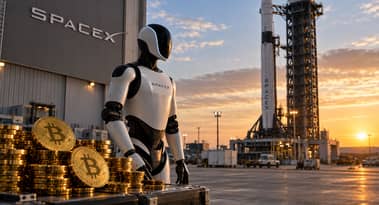
- Bitcoin Japan eyes Bitcoin, AI, robotics and critical minerals.
- Bitcoin Japan CEO explains Bitcoin Japan's treasury and AI investment plans.
- Bitcoin Japan targets rare earths to strengthen its AI investment thesis.
Volatility is one of the few constants in financial markets, as Bitcoin and SpaceX have demonstrated with their sharp moves in recent months.
Bitcoin, until last month, was trading under $62,000, and suddenly it’s trading near $80,000.
SpaceX, which was the largest IPO in history, opened above its listing price of $135 and reached $225 at its peak. The stock saw huge volatility and reached a bottom of $104.83. The stock is currently trading near $150.
Is there a company or entity that has an interest in these different sectors of finance? Turns out Bitcoin Japan Corporation is exactly a company like this.
Bitcoin Japan Corporation had a wild journey.
The company was an apparel business, Marusho Hotta, which was founded in 1861, and in 2025, the company changed its name to Bitcoin Japan Corporation and shifted its operations to focus on Bitcoin, artificial intelligence, robotics, and critical minerals.
The company announced in July a ¥9.7 billion (nearly $60 million) funding.
The company has invested in positions in SpaceX and humanoid robotics developer Figure AI, while also preparing for a Bitcoin treasury strategy and exploring upstream rare earth exposure.
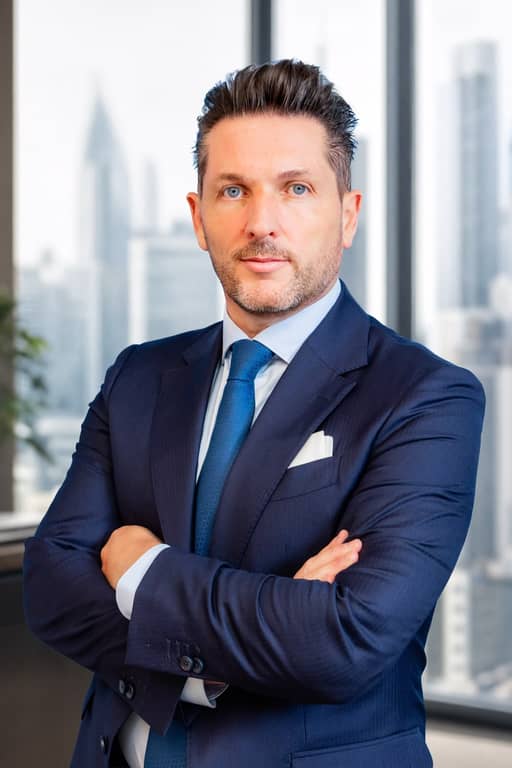
In an interview with Invezz, Phillip Lord, Representative Director, President and CEO of Bitcoin Japan, discusses the company's transformation, its plans for Bitcoin purchases, the outlook for its SpaceX and Figure AI investments, and why it sees rare earths as a strategic part of the AI economy.
From apparel company to AI and Bitcoin investment platform
Invezz: What changed in your company's philosophy and due diligence process as you transitioned from an apparel company into a bitcoin-and-AI investment vehicle?
FY2025 was really about building the platform before we tried to run on it: governance, controls, structure, the ability to deploy capital internationally.
We enhanced our internal controls under the J-SOX framework, established structures in Delaware, Cayman and Dubai, and onboarded a new external auditor with capabilities relevant to digital assets, AI and overseas operations.
The legacy apparel business, formerly Marusho Hotta, is now managed separately with a focus on operational improvement.
On diligence specifically: every new-economy investment now goes through an Investment Committee process with defined return thresholds, and, for private and long-dated positions, a long horizon and diversification over time, rather than the working-capital-driven decisions of a traditional apparel business.
Bitcoin treasury strategy: Waiting for the right opportunity
Invezz: Reports suggested that you were going to use some part of the recent fundraising to purchase Bitcoin for a Bitcoin treasury. Can you comment on that? Would you consider becoming a Bitcoin corporate treasury under the current climate due to lower prices, or is it better to wait for better pricing opportunities?
I can tell you what's on the public record: of the recent net proceeds, a defined allocation was set aside as a re-raise of Bitcoin capital that went unfunded last time.
Bitcoin remains part of our strategy as strategic treasury capital, not as a total to be maximised. On timing, we don't give price targets, because that would compromise our ability to act with discipline.
What I can say is that the infrastructure is operational: custody, multi-signature governance, J-SOX controls and legal and accounting opinions on classification and treatment were all built before any purchase, not after.
We declined to buy at past price levels when our criteria weren't simultaneously met, and we see that patience as protecting long-term value per share, not as hesitation.
The question has never been if; it's when, and that will be governed by risk-adjusted opportunity, not by short-term sentiment about price.
SpaceX investment offers exposure to AI infrastructure
The company had announced an investment in SpaceX through its US subsidiary in May 2026. The investment is part of the company’s investment thesis to invest in multiple aspects of AI infrastructure.
Invezz: You invested in SpaceX. How would you evaluate the company’s post IPO performance so far? What are your expectations from the investment?
We entered at $122 per share, and the reference valuation at the end of June 2026 was around $153, so on a disclosed basis, that's tracking well ahead of our entry point.
But I'd caution against reading too much into one data point over a short window; we mark this position quarterly and will let that record speak over time rather than calling it early.
What gives us confidence in the underlying business is the infrastructure role it plays: global launch capacity, satellite connectivity, sovereign-scale communications infrastructure.
That's the physical layer underneath the AI and compute buildout. Our expectation isn't a short-term trading return; it's that this is one of the more important infrastructure platforms globally, and we wanted exposure to it at a price we considered attractive.
Invezz: You have also invested in Figure AI, the robotics developer. Is that your way of diversifying into multiple aspects of AI development?
Yes, though I'd frame it less as diversification for its own sake and more as completing the picture.
AI doesn't live only in software; it needs to move into the physical world, and Figure AI's humanoid robots for manufacturing, logistics and warehousing are part of that shift.
It also aligns directly with our own Robotics-as-a-Service strategy here in Tokyo, so it isn't a standalone bet, it's connected to an operating business we're building.
That said, the position is currently held at cost; we haven't published a reference valuation for it yet, and we'll extend our standard quarterly marking policy to it once one is available, rather than asserting a return prematurely.
Why Bitcoin Japan prefers upstream rare earth exposure
With $20 million of its nearly $60 million funding earmarked for rare earth mining, Bitcoin Japan is targeting the supply-constrained end of the AI and defence value chain.
The company sees upstream exposure as a way to capitalise on the strategic importance of critical minerals, particularly given China’s dominance of rare earth refining and Japan’s reliance on imports.
Invezz: What are the advantages of investing in upstream rare earth exposure rather than downstream investment?
Rare earths sit at the very bottom of the AI and defence value chain; they're one of the scarce physical inputs everything above depends on.
China refines roughly 92% of NdPr and 98-99% of heavy rare earths globally, and Japan imports nearly all of what it uses, so there's a real single-supplier dependence here.
Downstream, you're competing on manufacturing scale and margin in a chain that's already dominated by others.
Upstream, you're closer to the scarcity itself, and that's where we believe the strategic and pricing power sits, particularly as governments, including the G7 and Japan’s own Prime Minister, have named securing these materials a national priority this year.
To be clear, we're not trying to become a mining company in the traditional sense; we're pursuing upstream exposure where scarcity, policy support, and Japan's national interest line up, phased and subject to diligence.
Building an AI value chain across multiple investments
Invezz: Do you see a direct supply-chain link between the mine investment and the SpaceX and Figure AI positions, or are these separate legs of the portfolio?
I'd describe it as a connected thesis rather than a direct, contracted supply chain today.
Think of it as the AI value chain end to end: rare earths and minerals at the base, then chips and compute, then physical AI like robotics, then the platforms, like satellite and launch infrastructure, that let all of it operate at scale.
We're not trying to own every layer, but we're deliberately taking positions at different points in that chain where capital efficiency, growth and Japan's strategic edge align.
Over time, we'd expect some of these positions to reinforce each other; for instance, rare earths feed directly into robotics manufacturing, but I wouldn't want to overstate a formal supply agreement that doesn't yet exist.
Can the S&P 500 rise further despite high valuations? HSBC says yes: here's why

Bombardier stock in focus as Trump threatens US sales ban that may not hold up

GameStop earnings preview: eBay gains set to mask a shrinking core business
S&P 500 Index, VOO, SPY ETFs: Why US stocks are poised to surge further

Why is $100 oil becoming a bigger threat to the FTSE 100 than investors think?
No results found
Loading articles...
Failed to load articles. Please try again.