
India increases checks on overseas flows as rupee faces pressure
AI Sentiment: 35/100 Bearish
This score is generated through AI-driven analysis of the article's content.

powered by

Buy: Indian private banks with strong FX/fee franchises (e.g., IDFC First Bank, HDFC Bank). Tighter scrutiny of overseas flows slows capital outflows and can stabilize the rupee versus a “free-flow” scenario; that typically supports credit quality and reduces FX-related stress. Also, more compliance work boosts transaction/fee income (remittance, trade/FX, corporate banking).
Key Risk: Rupee weakness accelerates anyway (oil-driven), forcing higher credit costs and hurting bank earnings despite compliance-driven outflow slowdown.
Sell: Indian gold import exposure via listed gold-focused names (e.g., Titan’s jewelry supply chain sensitivity) and gold-linked importers. Higher taxes on precious metal imports and reserve-conservation messaging should reduce physical gold demand and margins for import-heavy players.
Key Risk: Demand shifts to domestic/grey-market supply and prices stay elevated, keeping volumes and margins from falling as much as expected.
- RBI and SEBI have increased scrutiny of overseas investments.
- Regulators are examining family office and corporate remittance structures.
- Focus remains on oversight, not restricting legitimate global expansion.
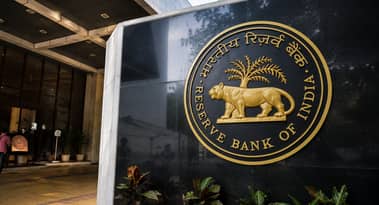
India's central bank and market regulator have increased scrutiny of overseas investments by companies and family offices, issuing at least 10 queries over the past three weeks to assess whether investment routes may have been misused.
The heightened oversight comes at a time when India's currency has faced pressure from rising oil prices and foreign capital outflows, sources familiar with the matter told Reuters.
Authorities have responded with measures aimed at preserving foreign exchange, including higher taxes on precious metal imports and calls to conserve reserves.
Regulators seek clarity on overseas fund flows
The Reserve Bank of India has sent at least 10 queries in recent weeks to determine whether funds were transferred overseas without a clear business purpose or without backing from tangible assets.
According to one of the sources cited in a Reuters report, the regulator is examining whether overseas remittances were linked to genuine business activity and whether the underlying investments had sufficient economic justification.
Another source said the current review is focused on the pace of capital outflows and their potential impact on the country's financial position.
Focus on ODI sructures and valuations
India maintains a partially open capital account.
Under existing regulations, companies can invest abroad through the Overseas Direct Investment route, subject to limits linked to their net worth and for specific purposes.
Individuals, meanwhile, are permitted to remit up to $250,000 annually under the Liberalised Remittance Scheme for purposes including education, healthcare, and investments.
Regulators are paying particular attention to large overseas investments conducted through complex or opaque structures.
Areas under review include potentially inflated valuations of offshore assets and possible use of ODI mechanisms for private wealth management.
RBI data shows overseas direct investment increased 11% year-on-year to $48.39 billion during the 2024-25 financial year.
Individual remittances abroad totalled $28.9 billion during the same period.
Current regulations require entities undertaking ODI remittances to obtain sector-specific no-objection approvals and submit valuation reports to the RBI.
Larger or more complex transactions may also require prior approval from the central bank.
A third source said SEBI has recently slowed the issuance of no-objection letters for regulated entities seeking to establish overseas structures.
Family offices under closer examination
Family offices have emerged as a key area of focus for regulators.
Two sources familiar with the matter told Reuters that authorities are closely examining offshore remittances by family offices that are structured as corporate entities.
Such structures can provide access to higher remittance limits under ODI rules compared with limits available to individuals.
The RBI is reviewing at least two instances in which family offices may have used the ODI route primarily for personal wealth management purposes.
The central bank may also examine cases where companies have established overseas investment vehicles that are used for capital market exposure rather than for genuine strategic expansion, sources said.
SEBI reviews valuation practices
Separately, SEBI is examining proposals from regulated entities, including investment funds and wealth management firms, that seek approval to establish overseas structures.
Valuation exercises are typically carried out by SEBI-registered merchant bankers.
Regulators are also reviewing whether valuation professionals are assigning excessively high valuations in certain transactions.
Despite the increased oversight, legal experts do not view the regulatory approach as an attempt to restrict legitimate overseas expansion.

Scotiabank stock has soared to a record high after earnings: more upside?

Webull stock: Here’s why China’s “Robinhood” is soaring today

Lloyds share price flashes diamond reversal, bearish divergence: what next?

HSBC stock jumps on revenue growth and buyback: Is there more Upside?

Lloyds share price forecast as earnings jump, odds of BoE rate hikes jump
No results found
Loading articles...
Failed to load articles. Please try again.