
Mideast conflict, Russian threat fuel global oil and gas price spike
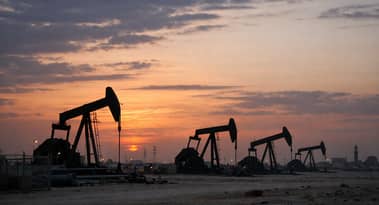

- Intensifying US/Israel/Iran conflict drives oil prices up over 4%.
- Iraq cuts oil output; Qatar announces force majeure on gas exports.
- Putin threatens to redirect gas; low EU storage intensifies supply risk.
Oil prices climbed over 4% on Thursday, continuing an upward trend driven by the intensifying conflict between the US, Israel, and Iran.
The escalation has heightened concerns about long-term interruptions to essential oil and gas supplies originating from the Middle East.
The conflict between Iran and Israel escalated on Thursday with a massive Iranian missile attack on Israel, forcing millions to seek refuge in bomb shelters.
This occurred on the sixth day of the conflict, and shortly after attempts in Washington to halt the US air assault failed.
Oil price surge and Middle East conflict widens
In earlier developments on Wednesday, a US submarine destroyed an Iranian warship off the coast of Sri Lanka, resulting in at least 80 fatalities.
Concurrently, NATO air defenses intercepted and destroyed an Iranian ballistic missile aimed at Turkey.
Iran has also been targeting oil tankers, with explosions reported near a tanker off Kuwait in the Strait of Hormuz area, according to the United Kingdom Maritime Trade Operations.
This intensification of hostilities, coming five days after the US and Israel launched a military campaign that has killed hundreds and roiled global markets, suggests Tehran is unlikely to yield to pressure.
This is further implied by the emergence of Mojtaba Khamenei, the second son of the assassinated Ali Khamenei, as a likely successor.
According to reports, Iraq, the second-largest crude producer among OPEC nations, has reduced its oil output by almost 1.5 million barrels per day.
This reduction is attributed to insufficient storage capacity and the lack of a suitable export route.
Meanwhile, Qatar, the Gulf's leading liquefied natural gas (LNG) producer, announced a force majeure on gas exports on Wednesday.
A return to typical production levels could take a minimum of a month.
The price of West Texas Intermediate last traded at $77.83 per barrel, up 4.3%, while Brent was at $84.60 a barrel, up 2.6%.
Russia’s gas threat
Russia's President Putin announced that the nation might redirect its gas supplies, potentially shifting them away from the European Union market.
The EU's ban on Russian gas imports is set to cause a further, gradual decline in Russian gas flows to the EU, beginning in April 2026 and continuing until the end of 2027.
This follows a substantial reduction in flows that has already occurred in recent years.
The current supply issues from the Persian Gulf create risks for the European balance.
Compounding this, EU gas storage is low, currently under 30% full, which is similar to levels observed at the same point in 2022.
The risk to gas supply from Putin's threat is considerable, given that in 2025, the EU sourced nearly 38 billion cubic meters (bcm) of natural gas and LNG from Russia.
This volume accounted for 12% of the EU's total gas/LNG imports, comprising 20 bcm of LNG and 18 bcm delivered via the TurkStream pipeline, according to ING Group.
European LNG market risk
“We believe LNG flows are the key risk. In more normal times it would be more manageable with the global LNG market to see an adjustment in trade flows over time,” Warren Patterson, head of commodities strategy at ING Group, said in a note.
Europe faces a significant challenge due to the current impact of 110 bcm per year of Persian Gulf supply.
This tightness in the global LNG market, exacerbated by Middle East developments, is pushing Asian buyers to seek alternative sources.
Consequently, the spot Asian LNG price recently commanded a premium as high as $6/MMBtu over the Title Transfer Facility (TTF) price, although this spread has since narrowed to approximately $3.40/MMBtu.
“Meanwhile, there is probably less risk to the majority of pipeline flows, with Putin likely to continue to supply Hungary and Slovakia,” Patterson said.
Diversion of pipeline flows is challenging; an exception is if Turkey redirects some of this pipeline gas to mitigate LNG shortages.
“We will need to wait to see how serious Putin’s threat turns out to be, and logistically, how easy it would be to divert LNG flows,” Patterson added.
“It would be more doable through spring and summer, as vessels can take the northern route to Asia.”
Persian Gulf LNG supply disruptions are expected to continue, intensifying supply jitters in the European gas market.
Consequently, this news is likely to lead to short-term upside for the Title Transfer Facility (TTF), he added.
Oil jumps above $91, but the market’s biggest Hormuz fear has changed

Gold price sinks near two-week low: could US jobs data trigger the next crash?

Platinum price analysis: Cautious trading and FOMO at play ahead of US CPI data

Copper price analysis ahead of the US inflation data, Fed Chair’s speech
Crude oil prices retreat: Brent, WTI slip even as rebound risks persist
No results found
Loading articles...
Failed to load articles. Please try again.