
Intel stock dips again: Why analysts are still bullish
AI Sentiment: 78/100 Bullish
This score is generated through AI-driven analysis of the article's content.

powered by

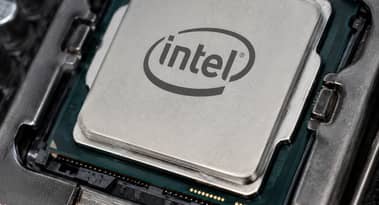
Buy Intel (INTC). Analysts just raised targets (Citi to $130, Benchmark to $140) on accelerating AI CPU demand, with Intel’s data-center CPU supply still tight. The stock’s pullback after a huge 2026 run looks like a chance to buy the same earnings story at a lower price.
Key Risk: AI CPU demand slows or Intel fails to convert “exceeding supply” into sustained revenue and margins (product delays, weak yields, or customers switching away).
Buy Taiwan Semiconductor (TSM). Trump’s comments and the AI “CPU bottleneck” narrative point to more AI compute buildout overall; that increases demand for leading-edge chip manufacturing. If Intel’s AI push expands, it also lifts the whole AI supply chain, and TSM is the core beneficiary of incremental data-center silicon needs.
Key Risk: Geopolitical/tariff escalation or a major customer capex slowdown hits TSM volumes and pricing before the AI buildout flows through.
- Intel falls for fifth straight day despite analyst upgrades.
- Analysts lift Intel targets on rising AI CPU demand outlook.
- Trump comments add focus to Intel’s strategic AI role.
Shares of Intel INTC fell 2% on Monday, extending the stock’s losing streak to a fifth consecutive session after a sharp pullback late last week.
However, the stock recovered some gains and was trading down 0.18% at the time of writing.
The decline followed a powerful rally that pushed Intel stock up roughly 170% in 2026 as investors aggressively positioned around companies tied to AI infrastructure spending.
Despite this, multiple Wall Street analysts raised their price targets on the company, arguing that investors may still be underestimating Intel’s long-term earnings potential in the expanding AI-driven semiconductor market.
Analysts raise Intel targets on AI-driven CPU demand
Analysts continued highlighting growing demand for central processing units, or CPUs, as one of the key drivers behind Intel’s strong performance this year.
Citi analyst Atif Malik raised his price target on Intel to $130 from $95 while maintaining a Buy rating on the stock.
In a research note, Malik introduced a model estimating that the total addressable market for CPUs could expand 35% annually to reach approximately $132 billion by 2030, driven largely by increasing demand for processors powering AI agents and large-scale data centers.
Benchmark Equity Research analyst Cody Acree also turned more bullish on Intel, lifting his price target to $140 from $105.
Acree argued that investors continue underestimating Intel’s “earnings power” for fiscal 2027 and 2028 as AI-related computing demand accelerates.
The broader semiconductor sector has rallied sharply in recent months as AI hyperscalers continue investing heavily in data-center infrastructure.
Earlier this year, Nvidia stated that “CPUs are becoming the bottleneck” for artificial intelligence systems, reinforcing optimism surrounding Intel’s core processor business.
Intel CEO Lip-Bu Tan also emphasized the company’s growing AI positioning during the company’s April earnings call.
“The CPU is reinserting itself as the indispensable foundation of the AI era,” Tan said, adding that demand for Intel’s data-center CPUs currently exceeds supply.
Trump comments spotlight Intel’s strategic role
Investor attention also turned toward comments from President Donald Trump regarding Intel’s strategic importance in the global semiconductor industry.
In an interview published Monday, Trump said he regretted not securing a larger government ownership stake in Intel during the landmark 2025 agreement that gave the US government a 9.9% holding in the company.
Describing his exchange with Tan, Trump said he asked for “10% ownership for free” of Intel, adding that Tan responded, “you have a deal,” before Trump joked: “S---, I should have asked for more.”
Trump also argued that Intel “would be the biggest company in the world right now” if tariffs had prevented chip production from shifting overseas.
“Intel would have all that business now, and there would be no Taiwan,” Trump said, referring to Taiwan Semiconductor Manufacturing Company.
Intel’s stock has surged more than 300% since the US government converted billions of dollars in CHIPS Act-related grants and awards into equity last year.
The company has also recently benefited from reports that Apple and Intel reached a preliminary agreement involving chip manufacturing, while Elon Musk previously indicated plans to use Intel chips in Tesla’s Terafab project.

How Meta’s $18B teen safety settlement could reshape social media regulation
Nvidia is using its balance sheet to fuel the AI boom. Is it a double-edged sword?

Dow holds weekly gain as Warsh inflation warning lifts rate hike bets

Workday stock jumps 5% after earnings beat, but analysts split on AI growth outlook

Evening digest: Warsh signals inflation fight, gold and oil slide
No results found
Loading articles...
Failed to load articles. Please try again.