
TCS, Infosys lead Indian IT rout as Accenture sparks demand fears
AI Sentiment: 18/100 Bearish
This score is generated through AI-driven analysis of the article's content.

powered by

Sell TCS and Infosys (also HCLTech as a satellite). Accenture’s softer outlook and weaker bookings are a direct demand read-through for global outsourcing/transformations—exactly what these firms sell. The market is repricing growth visibility, so multiples compress even if results later hold up. Focus on the names that trade as “bellwether proxies” for discretionary enterprise spend.
Key Risk: Global clients quickly re-accelerate transformation/outsourcing budgets, restoring bookings and guidance across the sector.
Short Wipro and Tech Mahindra. They’re more sensitive to sentiment swings and often trade with higher operating leverage to deal timing. If the market keeps treating Accenture’s caution as a sector-wide signal, these stocks typically underperform first and hardest.
Key Risk: A sharp rebound in large deal wins or guidance upgrades forces investors to stop extrapolating Accenture’s caution.
- Nifty IT slid after Accenture trimmed its full-year revenue outlook.
- TCS, Infosys, HCLTech and Wipro led losses among IT exporters.
- Accenture’s bookings decline raised fresh demand-visibility concerns.
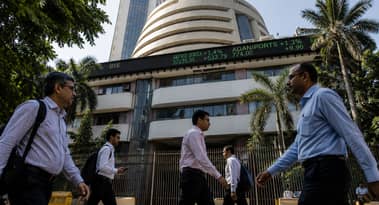
Indian IT shares fell sharply on Friday after Accenture’s weaker outlook revived concerns that global technology spending remains fragile despite strong investor enthusiasm around artificial intelligence.
The Nifty IT index dropped as much as 5.8%, making it one of the worst-performing sector gauges in Mumbai, after Accenture lowered the upper end of its annual revenue growth forecast and issued a softer-than-expected sales outlook.
The warning hit large exporters including Tata Consultancy Services, Infosys and HCLTech, as investors treated the update as an early signal for demand across the broader outsourcing and consulting industry.
Accenture warning hits sector sentiment
The selloff was triggered by Accenture’s fiscal third-quarter update, which showed the limits of the recovery in enterprise technology spending.
The company now expects full-year revenue growth of 3%-4% in local currency, compared with its earlier guidance of 3%-5%.
It also forecast fourth-quarter revenue of $17.75 billion to $18.4 billion, below Wall Street expectations.
Accenture’s third-quarter revenue rose 6% to $18.72 billion, but still missed market estimates.
New bookings fell about 2% to $19.3 billion, pointing to slower decision-making by clients on large transformation contracts.
The read-through was especially painful for Indian IT firms because Accenture competes directly for digital transformation, cloud migration, consulting and managed-services contracts.
When the global bellwether sounds cautious, investors tend to reassess growth assumptions for Indian exporters.
Indian IT majors face renewed pressure
Shares of TCS, Infosys and HCLTech fell between 5% and 7%, while other technology names also came under pressure.
Infosys stock dropped as much as 8%, TCS fell 5.4%, Wipro lost more than 4%, and HCLTech and Tech Mahindra declined over 5% each.
The decline also weighed on the broader market, with the Nifty 50 and Sensex opening lower after a recent rally. That made the move more than a sector-specific correction.
It showed that investors remain sensitive to any sign that global discretionary spending is not recovering fast enough.
Goldman Sachs analysts noted that Accenture’s results signalled a weak read-through for Indian IT companies, as demand visibility remains limited across key client markets.
AI spending is not enough yet
The bigger question is whether AI can offset weakness in traditional IT services.
Accenture said demand remains concentrated in areas such as AI, cloud, data and cybersecurity, and announced deals worth $4.18 billion to expand its industrial cybersecurity business.
Analysts said that Accenture’s results point to demand becoming more concentrated in targeted AI investments, while broader consulting and transformation spending remains under pressure.
That distinction matters for Indian IT firms. AI-led deals may support long-term demand, but they are not yet broad enough to fully replace delayed discretionary projects.
For now, investors are likely to demand clearer signs of deal conversion, revenue visibility and margin stability before paying higher multiples for the sector again.

Can the S&P 500 rise further despite high valuations? HSBC says yes: here's why

Bombardier stock in focus as Trump threatens US sales ban that may not hold up

Interview: Bitcoin Japan’s big bet on AI economy, from SpaceX to rare earths

GameStop earnings preview: eBay gains set to mask a shrinking core business

S&P 500 Index, VOO, SPY ETFs: Why US stocks are poised to surge further
No results found
Loading articles...
Failed to load articles. Please try again.