
A Tesla and SpaceX merger would create a conglomerate: is it a good deal?
AI Sentiment: 35/100 Bearish
This score is generated through AI-driven analysis of the article's content.

powered by

Buy Tesla. If Musk can structure a Tesla–SpaceX deal by ring-fencing or selling/spinning Tesla’s China business, the market will re-rate TSLA as the “AI/robotics platform” that captures SpaceX upside (data centers, AI compute, robotics) while keeping Tesla’s profitable cash engine. The GE-style precedent supports value creation via separation/clarity, not a permanent conglomerate discount.
Key Risk: Regulators block the structure (especially any China-related separation), forcing the deal to fail or become non-economic for TSLA holders.
Buy Starlink/SpaceX exposure via public proxy: buy AST SpaceMobile (ASTS). If a Tesla–SpaceX combination accelerates satellite/space infrastructure and AI-driven connectivity, ASTS benefits from higher funding, faster deployment, and more demand for mobile broadband capacity—an upside that comes from the “space + AI + data” flywheel.
Key Risk: SpaceX’s capital priorities shift away from commercial network expansion, or Starlink/space initiatives don’t translate into measurable demand for ASTS’s network.
- Tesla stock jumped after more reports of a SpaceX merger emerged.
- WSJ reports that Tesla wants to separate its Chinese operations.
- The merger would create a conglomerate in an era when spin-offs are thriving.
Tesla stock rose by over 3.5% on Thursday and continued those gains in the extended hours after details of the potential merger with SpaceX emerged. TSLA hit a high of $315, up modestly from this week’s low of $296. Still, the question is whether a Tesla and SpaceX merger would be a good deal in the first place.
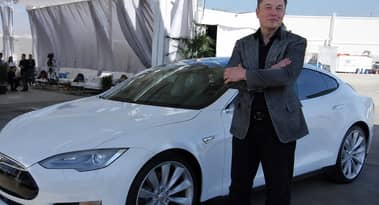
Elon Musk is working on a Tesla and SpaceX merger
A report by the WSJ notes that Elon Musk has requested advisors for advice on the way forward as he plans to combine Tesla and SpaceX.
One of the strategies to make the deal possible is for Tesla to give up its Chinese business. The company may decide to sell it, spin it off into a separate firm, or at the extreme, close it.
Separating the Chinese business would be important because SpaceX counts the US government as the biggest market. As such, the two governments would likely reject such a merger.
A Tesla-SpaceX merger would be the biggest one ever because of their sizes. Tesla is now valued at over $1.2 trillion, while SpaceX has a market capitalization of over $1.4 trillion.
Yahoo Finance data estimates that Tesla’s revenue will be $105 billion this year, followed by $120 billion next year. SpaceX, on the other, is expected to make over $39 billion this year and $73 billion next year.
Elon Musk has been working to consolidate his operations in the past few years. He merged X with xAI last year, creating a company in the social media and artificial intelligence industry.
After that, he merged xAI with SpaceX, creating a company with a presence in the space, social media, and artificial intelligence industries.
Tesla and SpaceX merger would create a conglomerate
Elon Musk’s thinking in a merger is that the combined company would be a big name in the AI industry. Indeed, the two companies are already collaborating in Terafab, the semiconductor project in Texas.
The challenge of this merger, however, is that it would create a conglomerate in various industries: robotics, AI, vehicle manufacturing, space exploration, data centers, and social media. In most cases, it becomes highly difficult to value conglomerates.
Investors are embracing companies that emerge from conglomerates more. A good example of this General Electric. Before Larry Culp became GE CEO in 2018, the company was a conglomerate in various industries, with its energy business dragging the others.
To create value, he separated the business into three: GE Aerospace, GE Vernova, and GE Healthcare. Today, these firms are valued at $368 billion, $261 billion, and $31 billion, respectively. Before the spin-off, the whole company was valued below $150 billion.
Another good example is Western Digital, which decided to spin off SanDisk into a separate publicly traded company. Today, SanDisk has become a bigger company than Western Digital in market capitalization.
A combined Tesla and SpaceX would have some cash flow problems, at least initially. While Tesla is already a profitable company, SpaceX made a nearly $5 billion loss because of its AI investments.
Dow futures tumble over 300 points: 5 things to know before Wall Street opens
Memory prices could jump 60%: why Micron and SanDisk are breaking out again
Apple’s foldable iPhone moment is here: why buying the stock could backfire

IAG share price eyes crash to 400p as jet fuel costs escalates

Nvidia stock is 5% below its record: why September 10 suddenly matters
No results found
Loading articles...
Failed to load articles. Please try again.