
Intel stock jumps 8% on report of 10% chip price hike in October
AI Sentiment: 78/100 Bullish
This score is generated through AI-driven analysis of the article's content.

powered by

Buy Intel (INTC). A reported ~10% CPU price hike signals Intel is prioritizing gross-margin expansion to offset rising supply-chain costs while demand remains strong enough to support higher pricing. The stock already moved +8%, and the analyst framing (margin over share) fits a turnaround phase where pricing discipline can lift earnings even if the PC market softens.
Key Risk: Customers (PC and server OEMs) push back hard and Intel loses volume, forcing price cuts that erase the margin gain.
Buy ASML (ASML). Intel’s deepening High NA EUV collaboration and >1M wafers processed reinforces that High NA is moving from testing into scalable production. That accelerates adoption across the industry (Samsung DRAM later, TSMC advanced chips later), supporting multi-year demand for ASML’s most valuable lithography systems.
Key Risk: High NA adoption slips (technical yield, throughput, or customer delays), reducing orders and slowing the revenue ramp.
- Intel stock jumps 8% on reported 10% CPU price hike.
- Intel advances High NA EUV technology with ASML.
- Analysts cite progress in Intel’s turnaround and foundry business.
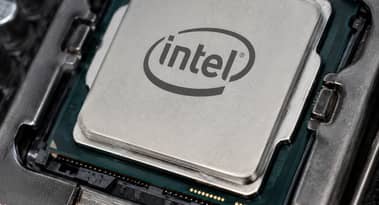
Intel stock surged 8% on Tuesday after a report said that the chipmaker is considering a 10% increase in prices for its central processing units (CPUs) starting in early October.
The potential price increase was reported by Taiwan-based technology publication DigiTimes, which cited unnamed sources.
The move would continue a series of price increases that Intel began at the end of 2025 and would come as the company faces higher supply-chain costs and strong demand for its products.
Intel weighs higher chip prices amid rising costs
The reported price increase comes despite expectations that the broader computer market could contract next year.
Citrini analyst Jukan Choe said the move suggests Intel may be placing greater emphasis on expanding gross margins rather than pursuing additional market share.
Intel has faced rising costs for memory chips and other components as demand from artificial intelligence companies has pushed memory prices sharply higher.
In April, the company said those higher costs would reduce the overall PC market by a low double-digit percentage.
The memory price surge has created challenges across the technology sector as manufacturers compete for components needed for AI infrastructure.
For Intel, higher CPU prices could provide a way to offset some of those cost pressures if the company proceeds with the reported increase.
Intel advances High NA EUV chip production
Separately, Intel and Dutch semiconductor equipment maker ASML said they have deepened their multiyear collaboration on High Numerical Aperture Extreme Ultraviolet (High NA EUV) lithography.
Intel said more than 1 million wafers have now been processed using High NA EUV equipment.
The figure includes testing and development work as well as production of certain layers used in its Core Ultra Series 3 processors, known as Panther Lake.
High NA EUV is a next-generation lithography technology designed to allow chipmakers to create smaller and more complex features on semiconductor wafers.
Intel is already using the technology in high-volume production, while Samsung plans to introduce it into DRAM manufacturing by 2028.
Taiwan Semiconductor Manufacturing Co. is expected to use the technology for advanced chips from 2030.
Intel said High NA EUV machines are performing as expected in areas including accuracy, production speed and availability.
It also said chips manufactured using the technology on its 18A process are matching or exceeding the performance of comparable layers produced using ASML’s existing EUV technology.
ASML CEO Christophe Fouquet described Intel as “one of the key leaders of the industry's adoption of High NA,” highlighting its role in bringing the technology into commercial production.
Analysts see progress in Intel turnaround
The developments come as analysts point to signs of improvement in Intel’s business.
Northland analyst Gus Richard upgraded Intel to Outperform from Market Perform, citing what he described as “material progress” in the company’s turnaround. He also said Intel could continue benefiting from an ongoing server CPU shortage.
Richard further said Intel’s partnership with Tesla on the Terafab semiconductor initiative could “materially benefit” the company’s foundry business.
Intel’s reported pricing strategy, progress in advanced manufacturing and potential foundry opportunities come as the company attempts to strengthen its financial performance while navigating higher component costs and shifting demand across the semiconductor industry.

Why Nvidia stock is down over 1% today even as AI peers are surging

SCHD ETF rally has stalled as a major risk emerges despite soaring inflows

Bloom Energy stock surges 8% as S&P 500 inclusion boosts investor interest

ALLW: Is this Ray Dalio’s All Weather fund a good ETF to buy today?
SpaceX stock could see massive buying on Nasdaq 100 rebalance: will SPCX rally?
No results found
Loading articles...
Failed to load articles. Please try again.