
Nikkei 225 retreats as Asian markets weigh BOJ, Fed and US-Iran deal

AI Sentiment: 35/100 Bearish
This score is generated through AI-driven analysis of the article's content.

powered by

Buy: Nikkei 225 exposure via iShares Nikkei 225 ETF (EWJ). Rationale: the market is set up for a “proof” moment—if BOJ guidance stays steady (no hawkish surprise) after oil’s war-premium fade, the Nikkei can hold near highs because the rate path is already largely priced. The key catalyst is Uchida’s explanation aligning with Ueda’s prior June 3 tone, keeping tightening gradual.
Key Risk: BOJ turns meaningfully more hawkish than expected, pushing Japanese yields up and forcing a Nikkei de-rating.
Sell: USO (United States Oil Fund). Rationale: the US-Iran framework lowered oil but confidence in Strait of Hormuz normalization “may take time,” yet the article shows oil already near three-month lows and war premium is being removed. If central banks dominate and growth data (China) stays weak, crude upside is capped while downside remains supported by easing risk premium.
Key Risk: A renewed Hormuz disruption or escalation re-prices war premium and sends crude sharply higher.
- Asian shares turn mixed as US-Iran relief rally loses steam.
- BOJ, RBA and Fed decisions move back into market focus.
- Weak China data weighs on Hong Kong as investors seek direction.
Asian stocks struggled for direction on Tuesday as investors moved past the first burst of optimism over a preliminary US-Iran peace deal and turned back to central banks.
The region had rallied on Monday after hopes of a reopening of the Strait of Hormuz pushed oil lower and lifted Wall Street.
That mood proved harder to sustain as traders waited for the Bank of Japan, the Reserve Bank of Australia and the Federal Reserve.
Weak Chinese activity data also weighed on Hong Kong shares, while oil steadied near three-month lows as shippers warned that confidence in Hormuz may take time to rebuild.
Policy risk overtakes peace relief
The early relief from the US-Iran framework faded as investors looked for proof that the agreement can hold.
Brent crude was little changed near $83 a barrel after settling at its lowest level since March, showing that traders have removed some war premium but are not yet pricing a full return to normal energy flows.
Westpac analysts wrote in a note cited by Reuters that the pact was “an important diplomatic breakthrough” that should remove a source of volatility.
They also warned that its durability would be tested because issues including Iran’s nuclear programme still need further negotiation.
MSCI’s broadest index of Asia-Pacific shares outside Japan was flat after giving up early gains.
Hong Kong stocks weighed on the benchmark after China’s retail sales and fixed-asset investment data missed expectations.
Japan’s rate path moves centre stage
Japan was the main policy focus. The Nikkei 225 slipped 0.3% from a record high as markets prepared for the Bank of Japan to raise rates to 1%, the highest level in 31 years.
The decision is unusually sensitive because Governor Kazuo Ueda will miss the post-meeting briefing while undergoing medical treatment.
Deputy Governor Shinichi Uchida will instead face questions on whether the bank still sees room to tighten after the peace deal lowered oil prices.
Mitsubishi UFJ analysts said that they did not expect major changes to the BOJ’s assessment.
They said Uchida’s explanation of the rate decision would probably follow Ueda’s June 3 speech.
Wall Street rally faces Asia caution
The cautious tone in Asia came after a strong US session.
The S&P 500 rose 1.7%, the Nasdaq Composite jumped 3.1%, and the Dow Jones Industrial Average closed at a record high as investors welcomed lower oil prices and easing inflation risks.
Europe’s Stoxx 600 also ended at a record.
Still, Asian traders had local risks to digest. The Reserve Bank of Australia is expected to hold rates at 4.35% after three increases this year.
The dollar index held near 99.69, while the 10-year Treasury yield was broadly steady around 4.47%.
Gold edged higher to about $4,311 an ounce, showing that investors have not fully abandoned defensive positions.
For now, Asia’s message is simple: the peace rally has bought time, but central banks will decide whether it lasts.

More details of the mega Anthropic IPO are coming out: here’s what we know

Software stocks are back from the dead as AI fuels growth: can the rally continue?

GoPro stock soars 200% after Markiplier stake, $285M Starman deal

SpaceX stock rally meets another lockup expiry test on September 9: what to expect
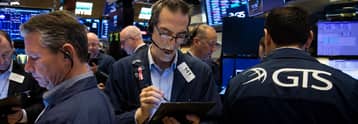
Dow closes 270 pts lower as strong jobs report lifts September Fed rate-hike bets
No results found
Loading articles...
Failed to load articles. Please try again.