
Fox stock: why investors seem to dislike the $22B Roku deal
AI Sentiment: 18/100 Bearish
This score is generated through AI-driven analysis of the article's content.

powered by

Buy ROKU. Fox is paying up (Roku shares jumped ~20% on the announcement), and the structure gives Roku holders a clear path to liquidity and scale under a major media owner. If Fox successfully keeps Roku’s platform neutrality, Roku’s distribution advantage and ad/subscription reach should improve, not shrink, because Fox brings premium live sports/news demand.
Key Risk: Fox’s ownership leads to real platform bias (less neutrality), causing streaming partners to reduce spend or churn, and the deal ultimately gets viewed as an overpay that hurts Roku’s growth.
Sell FOXA. The deal is a double hit: heavy dilution (Roku holders get ~27% of the combined company via stock) plus a big new debt load ($12B bridge) that will squeeze free cash flow just as cable declines persist. Add the strategic risk: Roku’s “neutral” platform could be pressured to favor Fox content, which can weaken Roku’s ad/subscription economics and Fox’s long-term revenue mix. The market is already pricing this fear—FOXA is down on the news.
Key Risk: Fox can’t generate enough incremental cash flow from Roku to cover the new debt and justify the dilution, forcing further equity issuance or value-destructive cost cuts.
- Fox Corporation is buying Roku Inc for a whopping $22 billion.
- Here's why FOXA shares crashed over 15% on the news today.
- Wall Street analysts rate at Fox stock at Moderate Buy currently.
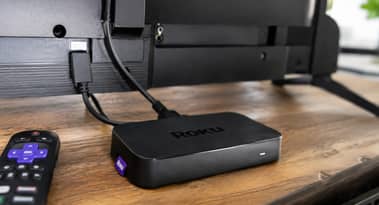
Fox Corporation FOXA is being punished this morning after its management disclosed plans to spend a whopping $22 billion (approx. €19.2 billion) on buying Roku Inc (ROKU).
While the company’s leadership pitched the deal as a “defining moment” to merge live sports and news with a massive digital footprint, Fox investors are pushing back heavily.
Here’s why FOXA shares are being sold off following the ROKU announcement on Jun. 15.
Fox stock sinks on dilution concerns
Under the terms of the deal, Roku shareholders will receive $160 a share, structured as $96 in cash and 0.9693 Fox shares (Class A) for each ROKU share.
This means Roku shareholders will end up owning roughly 27% of the combined company.
Institutional investors generally dislike mega-mergers that rely heavily on issuing new stock, as it severely dilutes the ownership percentage and per-share earnings for existing shareholders.
Massive new debt load
To fund the cash portion of the transaction, FOXA is taking on substantial leverage. The company secured a $12 billion (approx. €10.5 billion) fully committed bridge financing facility from Morgan Stanley.
Investors are being sensitive to this massive new debt load, especially given that the legacy media firm is already grappling with structural declines in its traditional cable TV business.
They’re concerned that servicing this debt will eat into free cash flow and restrict future buybacks or dividend increases.
Compromising Roku’s strategic ‘neutrality’
Roku’s historical success lies in its position as an agnostic, open platform that treats all streaming apps (Netflix, Disney+, Prime Video, etc.) equally.
Now that ROKU will be under Fox’s ownership, investors fear that this platform's neutrality will be compromised.
If rival streaming networks believe FOXA will favour its own content (like Fox Sports, Fox News, or its free ad-supported streaming service, Tubi), they may alter their relationships with Roku.
This could threaten the company’s core advertising and subscription revenue split model, which would hurt Fox stock in the long run.
Overpaying for crowded streaming growth
Fox pivoted away from expensive scripted streaming wars in 2019 by selling its entertainment assets to Disney to focus strictly on live news and sports.
Buying Roku for $22 billion (approx. €19.2 billion) – to some investors – feels like a massive, expensive U-turn back into a highly competitive, crowded digital ecosystem.
FOXA stock is also crashing because ROKU has gained some 20% on the buyout news, making the final price tag a steep pill for its shareholders to swallow.
In short, Fox investors feel the company is taking on too much debt and diluting too much equity to buy a platform whose core asset might be undermined by the acquisition itself.
How Wall Street recommends playing FOXA shares
Heading into Monday, Wall Street had a consensus “Moderate Buy” rating and a $70 mean price target on Fox shares.
However, if analysts share the aforementioned investor concerns, it’s reasonable to assume that they might downwardly revise estimates for FOXA in the days ahead.

Software stocks are back from the dead as AI fuels growth: can the rally continue?

GoPro stock soars 200% after Markiplier stake, $285M Starman deal

SpaceX stock rally meets another lockup expiry test on September 9: what to expect

Dow closes 270 pts lower as strong jobs report lifts September Fed rate-hike bets

Evening digest: Trump pressures Fed as US jobs rise, gold falls
No results found
Loading articles...
Failed to load articles. Please try again.