
UBS delays Fed rate-cut bets to 2027 as Warsh faces first big test
AI Sentiment: 28/100 Bearish
This score is generated through AI-driven analysis of the article's content.

powered by

Buy iShares 20+ Year Treasury Bond ETF (TLT). If the market is forced to price “higher for longer” but growth fears rise from delayed easing, long bonds can rally on recession risk and term premium compression. The Iran deal easing oil is supportive, but UBS says central banks won’t pivot quickly—so the market may swing from inflation fear to growth fear, benefiting long duration.
Key Risk: Inflation re-accelerates via energy/shipping disruption, pushing long yields up and crushing duration.
Sell iShares 1-3 Year Treasury Bond ETF (SHY). UBS pushing the first Fed cut to 2027 and expecting a more hawkish tone means yields stay higher for longer, hurting short-end price action first. The Fed’s credibility test (Warsh’s statement, dot plot, press conference) is the catalyst for “no cuts soon” repricing.
Key Risk: A clear dovish pivot from Warsh (or a fast, durable disinflation) that drives rate-cut expectations back into 2026.
- UBS delays Fed rate-cut call to 2027 as Warsh faces first policy test.
- Fed seen holding rates as UBS warns hawkish tone may persist at June meet.
- US-Iran deal cools oil fears, but central banks are staying cautious.
UBS Global Wealth Management pushed its first expected Federal Reserve rate cut into 2027, arguing that policymakers are unlikely to soften their message at this week’s meeting even after a US-Iran agreement eased pressure on oil markets.
The wealth manager now expects two 25-basis-point reductions in March and June next year, instead of cuts in December 2026 and March 2027.
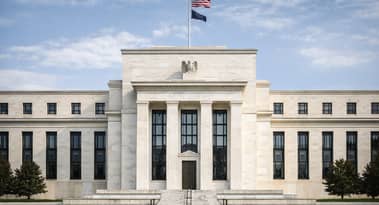
The shift comes before Kevin Warsh’s first policy decision as Fed chair, with investors looking for signs of how strongly the central bank still sees inflation as a threat.
Warsh faces an early credibility test
The Fed is widely expected to leave interest rates unchanged on Wednesday, keeping the target range at 3.50% to 3.75%.
The decision itself is unlikely to surprise markets. The statement, the dot plot and Warsh’s first press conference will matter far more.
UBS said in a note that it expects “a more hawkish tone” from both the Fed’s statement and its rate projections, despite Warsh’s previously dovish public remarks.
That matters because investors are trying to judge whether the new chair will lean towards growth support or focus on rebuilding the Fed’s inflation credibility.
Recent energy-price swings have made that choice more difficult.
Iran deal may not shift central banks yet
The US-Iran preliminary agreement has improved market sentiment and helped push oil prices lower.
But UBS said central banks are unlikely to make a quick pivot towards easier language while the durability of the deal remains uncertain.
The concern is that an energy shock may still feed into wider prices if shipping through the Strait of Hormuz does not normalise quickly.
Lower oil helps, but it does not immediately remove the risk of second-round inflation effects.
UBS said leading central banks were likely to remain cautious while incoming data show whether the recent energy shock is fading or spreading through the economy.
That view is shared more broadly across Wall Street.
Goldman Sachs Research said earlier this month that it no longer expects the Fed to cut rates this year, moving its own easing forecast deeper into 2027.
Markets still price some tightening risk
Traders have also moved away from the idea that rate cuts are close.
CME FedWatch pricing showed markets assigning about a 42% chance of a 25-basis-point Fed hike in December.
That pricing underlines how much the debate has changed. Earlier this year, investors were focused on when the Fed might ease.
The question now is whether inflation will force policymakers to keep the door open to further tightening.
For UBS, the answer is clear. The bar for a dovish turn remains high, and this week’s meeting may reinforce that message rather than challenge it.
UBS sees two Fed hikes in 2026: what should investors buy
Fed Chair Kevin Warsh warns inflation may require more rate hikes
Fed minutes show several officials favored July rate hike as inflation persists
RBI keeps repo rate unchanged at 5.25% as volatile oil prices cloud inflation outlook
Fed holds rates in 9-3 vote; Warsh says decision not a pause, but a review
No results found
Loading articles...
Failed to load articles. Please try again.