
RBI keeps repo rate unchanged at 5.25% as volatile oil prices cloud inflation outlook
AI Sentiment: 58/100 Bullish
This score is generated through AI-driven analysis of the article's content.

powered by

Buy Indian rupee exposure via 1-year USD/INR forward (sell USD/INR). RBI held rates at 5.25% but cut FY27 inflation and signaled flexibility within the 2–6% band; that reduces the odds of an aggressive hike cycle. At the same time, RBI flagged healthy external flows (FDI up, FPIs turning positive), supporting carry. Net: less hawkishness + capital inflows = INR steadier-to-stronger.
Key Risk: Oil spikes again and forces RBI to hike later, widening rate differentials and pushing USD/INR higher.
Buy GOI 10-year bonds (or receive duration via 10Y bond futures). The RBI lowered headline and core inflation forecasts for FY27 and kept policy neutral, while the market reaction was muted and the 10Y yield stayed ~6.78%. If inflation stays within the tolerance band, yields should drift lower as the “wait for clarity” stance delays tightening.
Key Risk: Inflation broadens (food/fuel pass-through) and RBI turns clearly hawkish, driving yields up.
- RBI kept the repo rate unchanged at 5.25%, retained neutral policy stance.
- The central bank raised its FY27 GDP growth forecast to 6.7%.
- Volatile oil prices and El Niño remain key risks to inflation and growth.
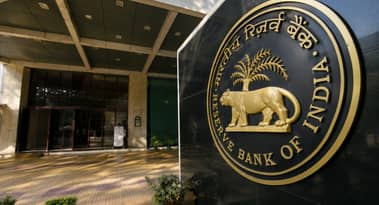
The Reserve Bank of India (RBI) on Wednesday kept its benchmark repo rate unchanged at 5.25% and retained its neutral monetary policy stance, choosing to wait for greater clarity on inflation risks stemming from volatile global crude oil prices while expressing confidence in the country's domestic growth outlook.
The central bank also marginally raised its GDP growth forecast for the current financial year to 6.7% from 6.6%, reflecting stronger-than-expected economic activity during the first quarter.
Announcing the outcome of the Monetary Policy Committee (MPC) meeting, RBI Governor Sanjay Malhotra said the six-member panel unanimously voted to keep the policy repo rate unchanged.
The central bank also retained the Standing Deposit Facility rate at 5%, while leaving the Marginal Standing Facility rate and the bank rate unchanged at 5.5%.
RBI opts for caution amid global uncertainties
The latest policy decision comes as policymakers continue to assess the economic impact of the ongoing conflict in the Middle East and its effect on energy prices, inflation and domestic growth.
While several regional central banks, including those in Indonesia and the Philippines, have tightened monetary policy in response to inflationary pressures linked to higher oil prices and currency volatility, the RBI has chosen to hold rates steady.
"The re-escalation of the conflict since the first week of July has amplified volatility in energy prices. Early results of corporates for Q1 indicate healthy performance in the manufacturing sector. Private consumption continued to be driven by buoyant discretionary spending. Overall, the Indian economy performed better than expected in Q1," Malhotra said.
Markets showed a muted reaction to the policy announcement.
India's benchmark 10-year government bond yield was largely unchanged at 6.78%, while the rupee weakened more than 0.1% to 95.09 against the US dollar.
Equity markets remained positive, with the Nifty 50 gaining around 0.1% before slipping into red, and the Sensex rising about 0.2%.
Inflation outlook improves, but risks remain
The RBI lowered its average inflation forecast for FY27 to 5% from 5.1% projected in June.
It also reduced its estimate for core inflation, which excludes food and fuel, to 4.3% from 4.7%.
Retail inflation crossed the central bank's medium-term target of 4% in June for the first time in 17 months.
However, inflation is still expected to remain within the RBI's tolerance band of 2% to 6%, giving policymakers flexibility to maintain current interest rates.
Despite the improved outlook, the central bank warned that inflation risks remain elevated.
The monetary policy statement noted that global oil prices continue to witness sharp swings driven by geopolitical developments, making the near-term inflation outlook uncertain.
"Although generalised inflation pressures continue to remain modest so far, the risks of higher food, fuel and other input prices translating into a broad-based increase in inflation persist," the RBI said.
Malhotra also identified El Niño as a major source of uncertainty for agriculture and rural demand.
"Looking ahead, the prospects for agriculture are clouded by deficient and uneven south-west monsoons amidst El Niño conditions," he said.
He added that government initiatives promoting climate-resilient crops, crop diversification and water conservation could help reduce the impact of weaker monsoon conditions, while sustained growth in services, GST reforms and stable employment should continue supporting urban demand.
Economists expect further tightening
Economists said the RBI's decision was largely in line with expectations but suggested further policy tightening could still be required later in the financial year if inflation pressures intensify.
"RBI's decision of status quo has been in line with expectations. The tone has been well balanced, highlighting the risks and hence the policy decisions ahead being data dependent," said Upasna Bhardwaj, Chief Economist at Kotak Mahindra Bank.
"We continue to see scope for 50 bp of rate hike in 2HFY27, especially as 1QFY28 inflation also continues to look above 5%," she added.
Malhotra also highlighted continued strength in external capital flows.
Gross foreign direct investment inflows rose to $30.7 billion during April-June 2026, while foreign portfolio investment turned positive during June and July following measures announced by the RBI to attract overseas capital.
As a result, the governor said India's balance of payments is expected to remain in a healthy surplus during the current financial year.

Fed rate decision this week: why a pause could shock markets more than a hike
UBS sees two Fed hikes in 2026: what should investors buy

Fed Chair Kevin Warsh warns inflation may require more rate hikes
Fed minutes show several officials favored July rate hike as inflation persists
Fed holds rates in 9-3 vote; Warsh says decision not a pause, but a review
No results found
Loading articles...
Failed to load articles. Please try again.