
US nears $500M rescue deal for Spirit Airlines: report
AI Sentiment: 70/100 Bullish
This score is generated through AI-driven analysis of the article's content.

powered by

Buy SAVE. A near-$500M government rescue with warrants signals the market is moving from “liquidation” to “survival,” which should compress credit/liquidity fears and lift equity from distressed levels. Warrants also mean the government likely gets upside, implying they believe the business can keep operating long enough to restructure.
Key Risk: The deal collapses or comes with terms that wipe out common shareholders (e.g., heavy dilution or seniority that leaves equity worthless).
Buy broad airline credit exposure via JETS (or airline bond ETFs if available). If Washington steps in for Spirit, it reduces tail risk across the sector by lowering the odds of a disorderly wave of airline failures, which should tighten credit spreads and support bond prices.
Key Risk: Fuel stays high and demand weakens, forcing multiple airlines into restructuring anyway—spreads keep widening despite the Spirit-specific headline.
- Spirit nears $500 million US rescue deal amid liquidation fears.
- Bankruptcy, debt and costs strain Spirit’s turnaround efforts.
- Fuel surge and competition deepen pressure on budget airlines.
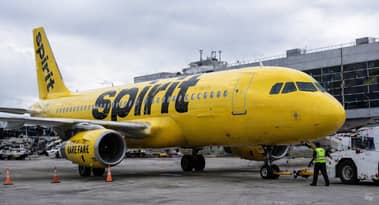
The Trump administration is nearing a potential rescue package for Spirit Airlines, as it faces mounting financial pressure and the risk of liquidation.
The Wall Street Journal reported the development, citing people familiar with the matter, that the US government is in advanced discussions to provide Spirit with up to $500 million in financing. In return, the government would receive warrants that could translate into a significant stake in the airline.
Government weighs rare single-airline intervention
The proposed deal would mark an unusual move by Washington, which has historically provided broad-based support to the airline industry during systemic crises rather than intervening to support a single carrier.
Past examples include the industry-wide aid packages following the September 11 attacks and during the COVID-19 pandemic, when airlines collectively received more than $50 billion in taxpayer support.
By contrast, a targeted rescue of Spirit would resemble past interventions where the government took stakes in specific companies, such as during the 2008–2009 financial crisis.
President Donald Trump signaled openness to such a move, citing employment concerns.
“Spirit’s in trouble, and I’d love somebody to buy Spirit. It’s 14,000 jobs, and maybe the federal government should help that one out,” he said on CNBC’s “Squawk Box.”
The Transportation Department and Commerce Department are both involved in the ongoing discussions, though neither has confirmed final terms.
Mounting financial pressure and bankruptcy struggles
Spirit Airlines, based in Dania Beach, Florida, has faced prolonged financial strain amid rising costs and intensifying competition from larger carriers offering similar low-cost options.
The airline filed for Chapter 11 bankruptcy in late 2024 under a multibillion-dollar debt load, exited court protection months later, and then returned to bankruptcy in August as high lease costs and debt pressures persisted.
More recently, the carrier has been in talks with creditors, who have weighed options including a potential liquidation.
The company has attempted to stabilize its operations by selling aircraft, streamlining its business, and raising fares.
It has also introduced premium seating options, including extra-legroom seats, in an effort to attract higher-paying customers.
Labor groups have made concessions as well. A spokesperson for the Association of Flight Attendants-CWA said in a CNBC report, “We are hopeful that the government will recognize the needs for emergency funds especially in the current economic environment.”
“The last thing our economy needs is tens of thousands more people out of work, and the last thing the travelling public needs is fewer choices in air travel", the statement added.
Rising fuel costs and industry pressures intensify
Spirit’s challenges have been compounded by a sharp rise in jet fuel prices, driven in part by geopolitical tensions linked to the Iran conflict.
Fuel is one of the airline industry’s largest expenses, and prices have more than doubled in some regions in recent weeks, putting additional strain on already fragile balance sheets.
Industry officials have warned that it could take months for global fuel supplies to stabilize, leaving carriers exposed to sustained cost pressures.

IAG share price eyes crash to 400p as jet fuel costs escalates
IAG share price forecast: what next for British Airways parent after earnings?
IAG share price in focus as Q2 earnings loom: buy or sell?
easyJet share price in focus as Apollo tables richer bid to outflank Castlelake
Why IAG and Rolls-Royce shares are surging this month
No results found
Loading articles...
Failed to load articles. Please try again.