
Gulf tanker rate shock deepens as one fixture hits 897% of benchmark rate
AI Sentiment: 18/100 Bearish
This score is generated through AI-driven analysis of the article's content.

powered by

Buy FRO and EURN. The 897% Gulf tanker booking signals extreme, persistent scarcity of tonnage plus high war-risk insurance—shipowners get paid for risk and for time stuck offshore. If mine clearance slips beyond the 30-day target, rates stay elevated and owners’ spot exposure should reprice upward quickly. Second-order: refiners may cut spot purchases, but that actually increases “time-charter” leverage for owners as cargoes get delayed and rebooked at higher levels.
Key Risk: A rapid, broad release of vessels (mine clearance + war-risk premiums falling) that crushes spot rates fast.
Sell VLO and PSX. Higher Gulf freight lifts landed crude prices and squeezes refining margins even as demand rises into summer. Second-order: if freight stays punitive, refiners shift to different crude grades/regions, raising feedstock mismatch costs and increasing turnaround/throughput risk—so margins don’t just compress; they become more volatile and harder to hedge.
Key Risk: Freight normalizes quickly or refiners secure cheaper crude/alternative supply that offsets the transport shock.
- Gulf tanker booked at nearly nine times benchmark rate.
- Refiners face soaring landed crude costs as freight spikes.
- Mine clearance delays, insurance premiums fuel shipping crunch.
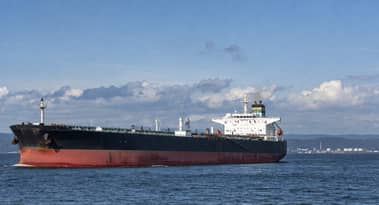
Freight markets in the Gulf have entered a phase of extreme volatility after Bloomberg reported that one oil tanker was booked at nearly nine times the benchmark rate, a deal that stunned traders and underscored the severity of the shipping crunch.
The charter, struck at 897% of the Worldscale benchmark, reflects how geopolitical uncertainty and vessel shortages are colliding to create one of the most expensive freight environments in decades.
Freight shock in the Gulf
The Worldscale system provides a baseline for freight costs, with percentages applied depending on market conditions.
A booking at almost nine times that level is virtually unprecedented, traders told Bloomberg, and signals how desperate charterers have become to secure tonnage.
The Gulf, already rattled by months of tension around the Strait of Hormuz, has seen a sharp reduction in available vessels as mine clearance operations continue and war‑risk insurance premiums soar.
The surge in rates comes just days after Washington and Tehran signed a framework agreement aimed at stabilising the region.
While the pact has eased fears of further escalation, the physical bottleneck remains.
Dozens of tankers are still waiting offshore, either stranded or delayed, leaving refiners scrambling to secure ships to move crude to Asia.
The imbalance between demand and supply has pushed charter costs to levels that many in the industry describe as unsustainable.
Refiners feel the squeeze
For Asian refiners, the implications are immediate. Higher freight costs translate into elevated landed crude prices, squeezing margins at a time when demand is rising into the summer peak.
Indian and Chinese buyers, who rely heavily on Gulf shipments, face the prospect of paying significantly more for each barrel once transport costs are factored in.
Analysts warn that if rates remain inflated, some refiners may reduce spot purchases, potentially slowing the pace of imports despite strong consumption trends.
The impact is also being felt in oil prices themselves. Elevated freight costs can offset downward pressure from increased supply, keeping crude benchmarks supported even as production rises.
Traders note that while the US–Iran agreement has paved the way for more barrels to flow, the shipping bottleneck means those barrels cannot reach markets as quickly or cheaply as expected.
This dynamic could sustain volatility in Brent and WTI futures well into the third quarter.
Insurance premiums are another driver of the surge. War‑risk cover for vessels transiting the Gulf has climbed sharply, with underwriters demanding higher fees to account for the lingering threat of mines and potential flare‑ups.
These costs are passed directly to charterers, compounding the already steep freight rates.
Shipowners, meanwhile, are reluctant to commit vessels without substantial compensation, further tightening supply.
Outlook for freight and oil
The extraordinary booking at 897% of the benchmark is not expected to be an isolated case.
Market participants told Bloomberg that unless mine clearance in Hormuz is completed within the 30‑day target, rates could remain elevated or even climb higher.
The uncertainty has prompted Gulf producers to accelerate pipeline projects designed to bypass Hormuz altogether, reducing reliance on costly tanker routes.
Saudi Arabia, the UAE, and Iraq are all expanding infrastructure to ensure exports can continue even if shipping lanes remain compromised.
Looking ahead, the freight market is likely to remain volatile. Analysts suggest that once clearance operations progress and more vessels return to service, rates could ease.
But the structural risks—limited tanker availability, high insurance costs, and seasonal demand—mean that volatility will persist.
For refiners and traders, the challenge will be balancing the need for crude with the soaring cost of moving it, a dynamic that could reshape trade flows in the months ahead.
The report underscores how shipping costs have become a critical variable in energy markets.
Even as supply chains adjust to geopolitical developments, the bottleneck has shifted from production to transport.
With one tanker booked at nearly nine times the benchmark rate, the Gulf freight market has entered a new phase of stress, one that could reverberate across global oil prices and refining margins for the rest of the year.
Here’s why Brent crude oil price is falling today and what's next

Oil has surged 13% this week: why the rally may struggle above $110

Why gold is still falling even as Middle East tensions keep getting worse

Oil’s $100 shock is spreading: what breaks first if Brent hits $120

Why is gold holding $4,400 despite Treasury yields near 4.84%?
No results found
Loading articles...
Failed to load articles. Please try again.