
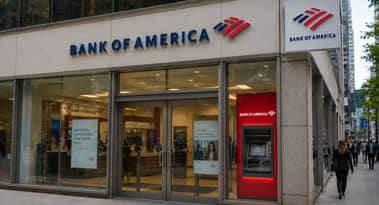
AI spending and Fed hopes fuel sharp rebound in investor sentiment, BofA finds
AI Sentiment: 78/100 Bullish
This score is generated through AI-driven analysis of the article's content.

powered by

Buy SOXX (or NVDA/AMD) as investor sentiment rebounds and AI capex expectations stay firm. The survey shows semis are the most crowded long trade (82%), and none are short—so flows should keep supporting the group while AI infrastructure spending remains resilient.
Key Risk: AI spending disappoints (hyperscalers cut capex or AI demand slows), breaking the earnings runway that semis are priced on.
Buy SPY (or QQQ) and reduce cash exposure. Fund managers cut cash to an ultra-low 3.6% and raised US equity overweight to the highest since Dec 2024, with a record 54% expecting “no landing.” That combination favors continued multiple support and earnings momentum in US markets.
Key Risk: The Fed turns hawkish again or growth cracks fast, forcing a sharp risk-off repricing of US equities.
- Global investor sentiment reaches its highest level since February.
- Fund managers increase equity exposure amid AI and Fed policy optimism.
- AI bubble concerns grow even as semiconductor trade remains highly popular.
Global investor sentiment reached its highest level since February, according to Bank of America's latest Global Fund Manager Survey.
Fund managers turned more optimistic on the economic outlook, AI spending and the prospect of a more dovish US Federal Reserve.
The survey found that investor confidence improved as respondents expressed greater optimism about economic growth, expectations for AI-driven capital expenditure and the likelihood of easier monetary policy.
The survey was conducted between July 2 and July 9, after the interim agreement to end the US-Iran war and largely before hostilities resumed.
Cash allocations fall as optimism increases
Bank of America said cash allocations among investors declined to an "ultra-low" 3.6% in July from 4.1% in June.
The decline reached a level that triggered the bank's contrarian sell signal, reflecting a significant rise in investor confidence.
The survey also showed a record share of respondents expecting a "no landing" outcome for the global economy.
A "no landing" scenario implies continued economic resilience rather than a sharp slowdown.
According to the survey, 54% of respondents now expect a "no landing" scenario for the global economy, marking a record high.
By comparison, only 2% of investors anticipate a hard landing.
Investors increase exposure to US equities
Fund managers also raised their allocations to US equities.
According to the survey, US equity allocations reached their highest overweight position since December 2024.
The findings suggest investors remain confident in the outlook for US markets despite broader concerns surrounding global economic conditions.
Technology also continued to attract strong support.
While some investors reduced their technology holdings during July, the survey found that none of the respondents reported holding a short position in the sector.
Semiconductor trade remains the most crowded
Long positions in global semiconductor stocks remained the market's most crowded trade for the third consecutive month.
According to the survey, 82% of respondents identified long semiconductor stocks as the most crowded investment position.
The continued preference reflects sustained confidence in companies expected to benefit from growing AI investment.
The survey also highlighted continued confidence in AI infrastructure spending.
A majority of respondents do not expect hyperscale technology companies to reduce their capital expenditure this year.
Specifically, 61% of investors said hyperscalers are unlikely to cut capital expenditure in 2026, while 28% expect spending reductions.
AI risks remain on investors radar
Despite optimism surrounding AI-driven investment, investors also identified AI-related risks as the biggest potential threat to financial markets.
According to the survey, 45% of respondents cited an AI bubble as the largest tail risk facing markets, making it the top concern among investors.
At the same time, expectations for US monetary policy remained largely accommodative.
The survey showed that 83% of respondents do not expect the Federal Reserve to raise interest rates before the US midterm elections in November.
Oil price expectations decline
The survey also showed investors becoming less bullish on oil prices over the longer term.
Fund managers lowered their forecast for oil prices at the end of 2026 to $71 per barrel, down from an expected $86 per barrel in June.
Overall, Bank of America's July Global Fund Manager Survey showed investor confidence rose to its highest level since February.
Optimism was driven by expectations of resilient economic growth, continued AI investment and a more dovish Federal Reserve.
However, concerns over a potential AI bubble remained the biggest market risk.
UBS sees two Fed hikes in 2026: what should investors buy

Fed Chair Kevin Warsh warns inflation may require more rate hikes
Fed minutes show several officials favored July rate hike as inflation persists

RBI keeps repo rate unchanged at 5.25% as volatile oil prices cloud inflation outlook

Fed holds rates in 9-3 vote; Warsh says decision not a pause, but a review
No results found
Loading articles...
Failed to load articles. Please try again.