
Why are Micron, SK Hynix stocks rallying today after CoreWeave, Super Micro earnings?
AI Sentiment: 82/100 Bullish
This score is generated through AI-driven analysis of the article's content.

powered by

Buy MU. CoreWeave’s capex upgrade and Micron’s own call that AI is reshaping demand faster than supply means Micron can keep pricing power into 2027. The market is also tightening, not loosening, which supports sustained DRAM/HBM strength. Key setup: strong AI infra signals + Micron expecting 2027 tighter than 2026.
Key Risk: HBM/DRAM supply ramps faster than expected and pricing power breaks.
Buy SK Hynix. The same AI infrastructure demand tailwind is hitting the world’s leading HBM supplier, and the article points to continued capacity constraints plus rising HBM premiums. If Nvidia’s Rubin Ultra ends up using less memory per chip but more chips overall, total HBM demand can still rise—benefiting Hynix disproportionately.
Key Risk: Nvidia’s chip design change reduces total HBM units shipped more than the market expects.
- CoreWeave and SMC earnings reassured investors of strong AI spending.
- Micron CEO has he expects 2027 memory supply to be even tighter than 2026.
- Nvidia's “de-spec” its Rubin Ultra offering could in increase demand for HBMs.
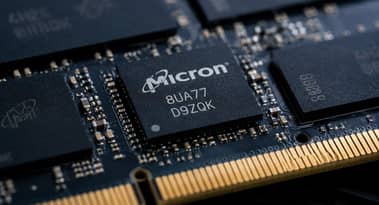
Memory and storage stocks surged on Wednesday as fresh results and upbeat forecasts from CoreWeave and Super Micro Computer reassured investors that spending on artificial intelligence infrastructure remains strong.
Micron Technology MU rose more than 6% in early trading, while South Korea's SK Hynix gained about 8%.
SanDisk climbed more than 7%, and Western Digital advanced over 6%.
The gains came as investors digested stronger-than-expected signals from companies at the heart of the AI infrastructure buildout.
CoreWeave and Super Micro Computer both jumped sharply, with their shares rising about 18% and 13%, respectively.
The strong results provided another boost to broader markets that were also benefiting from a softer-than-expected US inflation reading.
Coreweave, Super Micro establish that AI infra demand remains strong
CoreWeave raised its forecasts for annual revenue, adjusted operating profit and capital expenditure, pointing to sustained demand for its Nvidia-powered AI infrastructure.
The company operates data centres packed with high-end graphics processing units that are used to power generative AI workloads.
Those systems require large quantities of high-bandwidth memory, or HBM, as well as high-capacity DRAM, making memory suppliers such as Micron and SK Hynix important beneficiaries of the AI spending cycle.
Super Micro also offered an upbeat outlook, forecasting 2027 revenue above Wall Street expectations.
The projection underscored continued investment by data-centre operators seeking to expand their capacity to handle increasingly demanding AI workloads.
The company's fourth-quarter gross margin came in at 17.5%, above its preliminary estimate of 15%-17% and well ahead of its initial forecast of 8.2%-8.4%.
Micron sees an even tighter market through 2027
Recent comments from Micron have added to optimism surrounding the memory market.
At the KeyBanc Capital Markets Technology Leadership Forum 2026 on Monday, Micron executive vice president and chief business officer Sumit Sadana said AI was reshaping memory demand faster than the industry could add supply.
Sadana described a market characterised by strong pricing, robust customer demand and continuing capacity constraints.
He said Micron had seen stronger demand signals since its latest earnings report and expected 2027 to be even tighter than 2026.
The comments suggest that memory manufacturers could retain pricing power as AI infrastructure investment expands, despite efforts by producers to increase capacity.
Nvidia chip changes could boost HBM demand
Another potential catalyst for memory suppliers is Nvidia's upcoming Rubin Ultra platform.
UBS analyst Timothy Arcuri said Monday that Nvidia appeared to be considering lower-memory versions of the chip, a move that could initially appear negative for HBM suppliers.
The Information reported that Nvidia was testing configurations with lower memory capacity amid concerns over HBM availability.
However, Arcuri argued that using less memory per chip could allow Nvidia to manufacture more chips.
As a result, total HBM consumption could ultimately be higher in 2027 than previously expected.
Arcuri also said memory suppliers were increasing the premium charged for HBM.
He now expects HBM average selling prices to rise about 79% year over year, compared with his previous estimate of 67%.
NAND market also showing signs of strength
The improving outlook extends beyond HBM.
Arcuri expects NAND flash contract pricing, which is relevant to suppliers such as SanDisk, to benefit from stronger-than-expected demand for server and storage solid-state drives.
That demand is helping offset weakness in the personal-computer market.
While the analyst expects sequential growth in NAND average selling prices to be less powerful than previously forecast, he said the overall demand backdrop remains constructive.
He raised his forecast for NAND bit demand growth to 23% this year and 26% in 2027.
Together, the developments suggest that the AI infrastructure boom is continuing to support a broad section of the memory industry, with tight supply and strong data-centre demand potentially keeping the market favourable for suppliers well into next year.

Micron stock falls 3% as Taiwan unions threaten strike over bonuses

Duolingo stock jumps as charts flash warning amid transition from growth to value

Tesla stock falls 3%: here's what's dragging the stock down today

Duolingo stock surges 5% as this analyst sees 42% upside

Apple stock outlook under Ternus: AI is key, foldable iPhone a potential catalyst
No results found
Loading articles...
Failed to load articles. Please try again.