
KOSPI rebounds as chip stocks recover while Nikkei 225 slides on bond shock

AI Sentiment: 35/100 Bearish
This score is generated through AI-driven analysis of the article's content.

powered by

Buy iShares MSCI South Korea ETF (EWY). The index is rebounding because chip earnings power is holding up: Samsung and SK Hynix reversed hard, and exports are surging (semiconductor exports nearly tripled; AI memory demand strong). Even with higher global yields and oil, Korea has a real earnings cushion that Japan’s tech complex lacks right now.
Key Risk: AI memory demand breaks and export growth rolls over fast, so the chip-led support disappears.
Sell Tokyo Electron (8035.T), Lasertec (6920.T), and Renesas Electronics (6723.T). The article flags the direct transmission channel: Japan’s 10-year yield hitting ~3% (highest since 1996) is pressuring expensive tech valuations, and a weak yen plus rising crude raises costs further. This is a valuation-and-cost squeeze, not just a short-term dip.
Key Risk: The Bank of Japan backs off tightening (or yields fall quickly), removing the valuation pressure on Japanese tech.
- Nikkei 225 falls 1% as chip stocks slide and Japan bond yields reach 3%.
- KOSPI trims losses as SK Hynix gains despite fresh Middle East concerns.
- Brent tops $91 as rate-hike bets keep Asian equities under new pressure.
Asian stocks came under pressure on Tuesday as another surge in global bond yields collided with higher oil prices, leaving Japan’s Nikkei 225 and South Korea’s KOSPI navigating a difficult mix of inflation and interest-rate risks.
The Nikkei fell about 1% to 65,647 in morning trading as semiconductor shares retreated, while the KOSPI recovered sharply from an opening loss of more than 1% to trade just 0.2% lower around 6,809 by late morning.
Brent crude climbed above $91 after renewed US-Iran fighting, while Japan’s benchmark 10-year bond yield touched 3% for the first time since 1996.
Nikkei 225 feels the bond shock first
Tokyo’s technology sector bore the brunt of the selloff as higher yields again challenged valuations.
Tokyo Electron dropped about 4.1%, Lasertec lost 3.1% and Renesas Electronics declined 3%. The moves came as the 10-year Japanese government bond yield reached 3%, its highest level in almost three decades.
The yen remained near 160 per dollar, adding another complication.
Markets are now pricing roughly a 73% probability of a Bank of Japan rate increase this month, while US Treasury Secretary Scott Bessent has publicly suggested Japan needs further tightening.
For the Nikkei, the combination is uncomfortable. Higher Japanese yields pressure expensive technology shares, while a persistently weak yen raises import costs just as crude prices are climbing again.
KOSPI finds support in the chip trade
South Korea initially suffered an even sharper selloff, with the KOSPI falling 1.24% shortly after the open.
Samsung Electronics dropped more than 2% and SK Hynix fell about 1.2% in early trading.
By late morning, Samsung had almost erased its decline and SK Hynix had reversed to a gain of about 2%, helping the index recover most of its losses. POSCO Holdings also rose more than 2%.
The resilience comes against an unusually strong export backdrop. South Korean exports surged 68.7% from a year earlier in August to $98.26 billion.
Semiconductor exports almost tripled to a record $46.65 billion as AI-related memory demand remained exceptionally strong.
That gives the KOSPI a fundamental cushion even as global rates and geopolitics weigh on sentiment.
Oil and Warsh keep Asia defensive
The wider regional picture remained cautious. MSCI’s Asia-Pacific gauge slipped about 0.2%, while Australia’s S&P/ASX 200 fell around 0.4% and Hang Seng futures declined by a similar amount.
Brent climbed above $91 as the US and Iran exchanged strikes for the first time in about a month, reducing hopes that shipping through the Strait of Hormuz will normalise quickly.
Rising energy costs are again feeding into inflation expectations.
At the same time, the US 10-year Treasury yield has climbed towards 4.78%, its highest since early 2025, after Fed Chair Kevin Warsh used Jackson Hole to reinforce his willingness to tighten policy if inflation fails to ease.
Chris Larkin of E*Trade told Bloomberg that unexpectedly strong US labour data this week could now be treated negatively by markets because it would strengthen the case for a September rate increase.
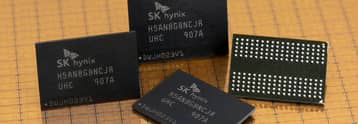
SK Hynix stock rebounds, but a new HBM4 risk is getting harder to ignore

Shein’s $1.7B IPO was heavily subscribed, so why did the stock crash 10%?

Dow falls 380 pts as Iran conflict lifts oil prices and rate hike concerns

Evening digest: Amazon faces FTC suit, gold falls as oil rises

Why is Micron stock gaining today
No results found
Loading articles...
Failed to load articles. Please try again.