
Nestlé plans ice-cream sale, waters exit in portfolio reset under new CEO
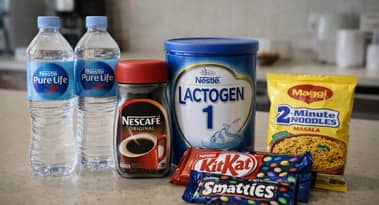

Nestlé is moving to streamline its sprawling portfolio, announcing plans to sell its remaining ice-cream business and eventually exit its waters and premium beverages unit as part of a broader effort to refocus the group around four core categories.
The Swiss food giant said on Thursday that it would sell its ice-cream operations to its long-standing joint venture Froneri and target a divestment of its waters and premium beverages arm by 2027.
The reshaping leaves the company concentrated on coffee, petcare, nutrition and food, a structure management says will allow for sharper execution and faster decision-making.
The overhaul marks one of the most significant strategic resets in recent years for the maker of KitKat chocolate and Nescafe coffee, as it seeks to regain momentum after operational missteps, leadership upheaval and a costly infant-formula recall.
Focus on simplifying the business
Chief executive Philipp Navratil, who took the helm after a turbulent period that saw two abrupt CEO changes in a year, said the company was accelerating efforts to simplify its organisation and prioritise its strongest businesses.
“We are focusing our portfolio on four businesses, led by our strongest brands, with prioritised resources and a simplified organisation,” Navratil said in a statement.
Speaking later on a call with analysts, he described the remaining ice-cream business as profitable but peripheral, saying it had become “a distraction” relative to Nestle’s larger growth engines.
As part of the restructuring, the company said it would merge its nutrition and health-science divisions into a single unit.
Anna Mohl, who headed the health-science business, will step down as part of the change.
Nestle had already signalled that parts of its portfolio could be put up for sale, launching strategic reviews of its vitamins and water businesses before Navratil formally assumed the top job.
In October, he said the group would not shy away from further cuts, outlining plans to eliminate 16,000 roles as it tightened costs and reallocated investment.
Analysts say plan to slim down portfolio standard
Nestle’s move mirrors similar actions by other consumer goods groups seeking to unlock value and simplify operations.
Rival Unilever completed a spin-off of its ice-cream division in December, creating Magnum Ice Cream as a standalone business.
Keurig Dr Pepper last year struck a deal involving JDE Peet’s while outlining plans to separate its coffee and beverage operations, and Reckitt agreed in mid-2024 to sell a portfolio of home-care brands.
Analysts broadly view Nestle’s strategy as conventional but sensible.
"Nestle's new strategic plan to slim down its portfolio and hone in on four categories--coffee, petcare, nutrition, and food--seems to be pretty standard," RBC Capital Markets analysts James Edwardes Jones and Wassachon (Fon) Udomsilpa wrote in a note.
They said even though the waters and premium beverages business has performed well in parts of the Americas, Nestle is pressing ahead with the sale.
"Going forward, Nestle's plan seems sensible," they said.
A recall still clouds the outlook
The strategic overhaul comes as Navratil works to stabilise the company after a crisis in its infant-formula business.
What began as a precautionary recall linked to the presence of cereulide, a toxin that can cause nausea and vomiting in infants, expanded into a global recall spanning more than 60 countries.
Nestle said the recall process has now been completed and that factories are operating at full capacity to meet demand.
Still, the company warned that the disruption would weigh on growth this year.
Nestle forecast organic sales growth of 3% to 4%, including a 0.2 percentage-point hit from the recall, while cautioning that uncertainty around potential knock-on effects could push results towards the lower end of that range.
Early signs of stabilisation
Despite the challenges, Nestle posted fourth-quarter organic sales growth of 4%, beating analysts’ expectations of 3.55%, according to FactSet.
For 2026, the company is targeting organic growth of 3% to 4% and an improvement in its underlying trading operating profit margin, which stood at 16.1% in 2025.
Total sales for 2025 fell to 89.49 billion Swiss francs from 91.35 billion francs a year earlier, while net profit declined 17% to 9.03 billion francs.
Underlying trading operating profit dropped 8.4% as the group invested more heavily to support future growth.
Jefferies analysts described the portfolio changes as measured rather than dramatic, noting that much of the plan had been flagged in advance.
UBS, meanwhile, pointed to early progress, highlighting confectionery, beverages and petcare as the strongest growth drivers in the final quarter.

Google makes record $15B AI infrastructure bet in Finland

Rolls-Royce stock: The bull case is strong, but these risks could trigger a drop

Lloyds share price flashes diamond reversal, bearish divergence: what next?

What next for Taylor Wimpey share price after distributions cut?

Top CAC 40 shares to watch: LVMH, Kering, Hermes, Airbus, Société Générale
No results found
Loading articles...
Failed to load articles. Please try again.