
Eli Lilly stock jumps 6% after strong earnings and raised guidance
AI Sentiment: 82/100 Bullish
This score is generated through AI-driven analysis of the article's content.

powered by

Buy LLY. The earnings beat plus raised 2026 revenue and EPS guidance confirms demand is outpacing pricing pressure: Mounjaro sales +125% and Zepbound US revenue +80% with volume growth doing the heavy lifting. This is a clean “fundamentals up” setup, not just a one-quarter pop, and the market is likely to keep rerating the stock as guidance moves higher.
Key Risk: A sustained drop in prescription volume (not just lower realized prices) that forces future guidance back down.
Buy NVO. Lilly’s strength validates the whole GLP-1 obesity franchise and expands the category’s credibility with payers. Even with competitive pressure, category growth tends to lift the leaders’ revenue pools; NVO should benefit from continued GLP-1 adoption and its own scale in obesity/diabetes.
Key Risk: Evidence that competitive dynamics (pricing, formulary exclusions, or pill uptake) permanently shift share away from NVO.
- Eli Lilly beats Q1 estimates and raises 2026 revenue outlook to $82–$85 billion.
- Mounjaro and Zepbound drive strong sales growth despite pricing pressure.
- Focus shifts to rollout of new obesity pill Foundayo amid rising competition.
Eli Lilly reported stronger-than-expected first-quarter earnings and revenue on Thursday, driven by robust demand for its blockbuster weight-loss and diabetes drugs, prompting the company to raise its full-year guidance.
The pharmaceutical giant now expects 2026 revenue to range between $82 billion and $85 billion, up from its earlier forecast of $80 billion to $83 billion.
It also lifted its adjusted profit outlook, projecting full-year earnings between $35.50 and $37 per share, compared with a prior range of $33.50 to $35.
The share price of the company was up by over 6% during premarket hours.
Blockbuster drugs Zepbound, Mounjaro fuel growth
Demand for the company’s flagship drugs, Zepbound and Mounjaro, continued to underpin its performance, even as pricing pressures persist in the US market.
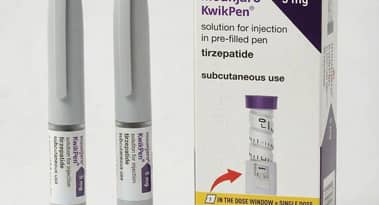
Mounjaro posted $8.66 billion in quarterly sales, marking a 125% increase from a year earlier and comfortably beating analyst expectations of $7.26 billion, according to StreetAccount.
Zepbound, launched about three years ago, generated $4.16 billion in US revenue during the quarter, up 80% year over year.
The figure also exceeded estimates of $4.04 billion, despite a decline in realised prices.
The continued momentum of these therapies has helped Eli Lilly deliver a string of strong quarters, as rising prescription volumes offset lower pricing.
Earnings and revenue beat expectations
The company reported adjusted earnings per share of $8.55, well ahead of analyst estimates of $6.66, according to LSEG data.
Revenue came in at $19.80 billion, surpassing expectations of $17.62 billion and representing a 56% increase from the same period last year.
US revenue rose 43% to $12.1 billion, driven by a 49% increase in volume, reflecting higher demand for Mounjaro and Zepbound.
However, this was partially offset by lower realised prices for Zepbound and some other treatments.
Net income for the quarter stood at $7.4 billion, or $8.26 per share, compared with $2.76 billion, or $3.06 per share, a year earlier.
Focus shifts to new obesity pill launch
While injectable therapies remain the company’s primary growth driver, attention is increasingly turning to its newly approved GLP-1 obesity pill, Foundayo, which launched in the second quarter and was not included in the latest results.
The rollout is expected to feature prominently in discussions with investors, particularly as the drug enters a competitive market alongside Novo Nordisk’s rival pill Wegovy, which had an earlier start in the US.
Early data suggests a measured start.
Leerink Partners analyst David Risinger last week said initial prescription trends for the pill have been “modest,” highlighting the challenges of scaling new treatments in a competitive landscape.
Long-term demand outlook remains strong
Despite near-term pricing pressures, Eli Lilly remains optimistic about the long-term growth trajectory of the GLP-1 category.
The company expects to benefit from broader insurance coverage, including potential Medicare support for obesity treatments later this year, as well as continued global demand for its existing therapies.
Chief Executive Dave Ricks has previously indicated that lower prices in the US could help expand access and drive higher prescription volumes.
He also expects the number of patients using GLP-1 drugs globally to increase from about 20 million at the end of last year to 30 million by the end of 2026.

Salesforce stock surges 12%: did earnings just kill ‘SaaSpocalypse’ fears?

Dick’s Sporting Goods stock falls 19% as company cuts annual forecasts

Why is Walmart stock falling 7% despite earnings beat and raised outlook?

Alibaba earnings today: can AI cloud growth finally break its losing streak?

AVAV stock double bottoms as AeroVironment earnings loom
No results found
Loading articles...
Failed to load articles. Please try again.