
Nvidia stock continues to struggle even as AI peers soar: buy, sell, or hold?

AI Sentiment: 42/100 Bearish
This score is generated through AI-driven analysis of the article's content.

powered by

Buy Micron Technology (MU). The news highlights investors rotating within AI toward memory/storage as AI infrastructure expands; Micron already surged on the same tape, and the core driver is still high-bandwidth memory demand and pricing. If China chip access improves (H200) and more AI models get trained on Nvidia GPUs, memory demand rises across the stack, not just at the GPU layer. Key risk: AI capex slows or memory pricing collapses faster than supply tightness can offset.
Key Risk: AI spending slows or HBM/memory prices fall sharply, wiping out the demand/pricing tailwind.
Buy AMD. Nvidia’s relative underperformance despite strong AI catalysts signals market preference shifting to other compute suppliers; AMD has outperformed Nvidia this year and should keep benefiting as customers diversify GPU/accelerator sourcing. The second catalyst—SpaceX training Grok 4.5 on Nvidia—doesn’t remove the diversification trade; it mainly reinforces that AI compute demand stays hot, which supports AMD’s share gains and multiple expansion. Key risk: Nvidia reasserts dominance quickly (new platform/software advantage) and AMD’s share gains stall.
Key Risk: Nvidia regains clear performance/eco-system leadership and AMD’s share gains stop.
- Nvidia slipped even as semiconductor stocks rallied broadly on Thursday.
- Investors continue rotating toward memory and other AI infrastructure plays.
- TD Cowen said Nvidia remains well positioned for sustained AI demand.
Nvidia stock NVDA slipped on Thursday, giving back some of the previous session's gains even as semiconductor stocks broadly rallied, underscoring investors' continued preference for other parts of the artificial intelligence supply chain.
Shares were down 1.1% at $201.76 in midday trading after jumping 3.7% on Wednesday.
The Nasdaq Composite rose 0.9%, the S&P 500 gained 0.7%, and the Dow Jones Industrial Average added 223 points, or 0.4%.
Chip stocks outperformed, with the VanEck Semiconductor ETF climbing 3%.
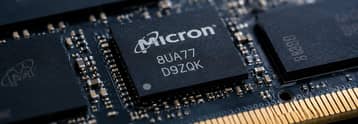
Micron Technology surged 7%, Sandisk gained 7%, while several other semiconductor names also advanced.
China report and SpaceX provide fresh catalysts
Wednesday's rally was fueled by a report from technology publication The Information that Beijing plans to allow Chinese companies to purchase some of Nvidia's H200 artificial intelligence chips.
The report raised hopes that Nvidia could regain access to part of the Chinese market after US export restrictions significantly reduced its sales in the country.
Another positive development came late Wednesday, when Elon Musk's SpaceX announced its latest artificial intelligence model, Grok 4.5.
The company said the model was trained using "tens of thousands" of Nvidia's latest GB300 graphics processing units.
If Grok 4.5 proves competitive against models from Anthropic and OpenAI, it could reinforce Nvidia's leadership in AI computing ahead of the broader rollout of its next-generation Vera Rubin platform, which is expected in the second half of the year.
Investors continue rotating across the AI trade
Despite the recent catalysts, Nvidia has struggled to match the performance of many semiconductor peers this year.
After surging more than 1,100% between late 2022 and the end of 2025, the stock has gained only about 7.6% so far in 2026.
That compares with gains of 9.6% for the S&P 500, 16% for the Nasdaq 100, and 74% for the Philadelphia Semiconductor Index.
The divergence reflects a broader rotation within the artificial intelligence trade rather than a deterioration in Nvidia's business fundamentals.
Investors have increasingly shifted toward other parts of the AI supply chain, particularly memory manufacturers, storage companies, and other semiconductor firms expected to benefit from expanding AI infrastructure spending.
Micron Technology has been among the biggest beneficiaries of that rotation as demand and pricing for high-bandwidth memory chips continue to strengthen.
Nvidia rivals, including Advanced Micro Devices and Intel, have also significantly outperformed the stock this year.
The shift has left Nvidia trading at around 18 times projected earnings over the next 12 months, according to Bloomberg data, its lowest forward valuation since before the artificial intelligence boom began.
The lower valuation comes even as Wall Street analysts continue to raise earnings estimates for the company, suggesting investor caution has been driven more by changing market preferences than weakening business performance.
TD Cowen sees durable AI demand
TD Cowen reiterated its Buy rating and $275 price target on Nvidia following meetings with Chief Executive Officer Jensen Huang, Chief Financial Officer Colette Kress, and Head of Investor Relations Toshiya Hari.
The brokerage also maintained Nvidia as one of its top investment ideas.
According to TD Cowen, Nvidia executives emphasized that demand for AI computing capacity continues to exceed available supply.
The firm said Nvidia pointed to rising rental prices for legacy GPUs, expanding enterprise AI adoption, and recently signed cloud agreements at premium pricing as evidence that compute capacity remains constrained.
TD Cowen also said Nvidia's opportunity extends beyond graphics processors, arguing that the company's combination of hardware and software positions it to benefit from the continued buildout of AI infrastructure.

SCHD ETF rally has stalled as a major risk emerges despite soaring inflows

Bloom Energy stock surges 8% as S&P 500 inclusion boosts investor interest

ALLW: Is this Ray Dalio’s All Weather fund a good ETF to buy today?

SpaceX stock could see massive buying on Nasdaq 100 rebalance: will SPCX rally?
Micron stock: a coiled spring ready to pounce ahead of earnings?
No results found
Loading articles...
Failed to load articles. Please try again.